Catching Games for Kids Outside: Start With Short Tosses
Start catching games for kids outside with scarves, short tosses, and bounce-before-catch choices in a clear park space.
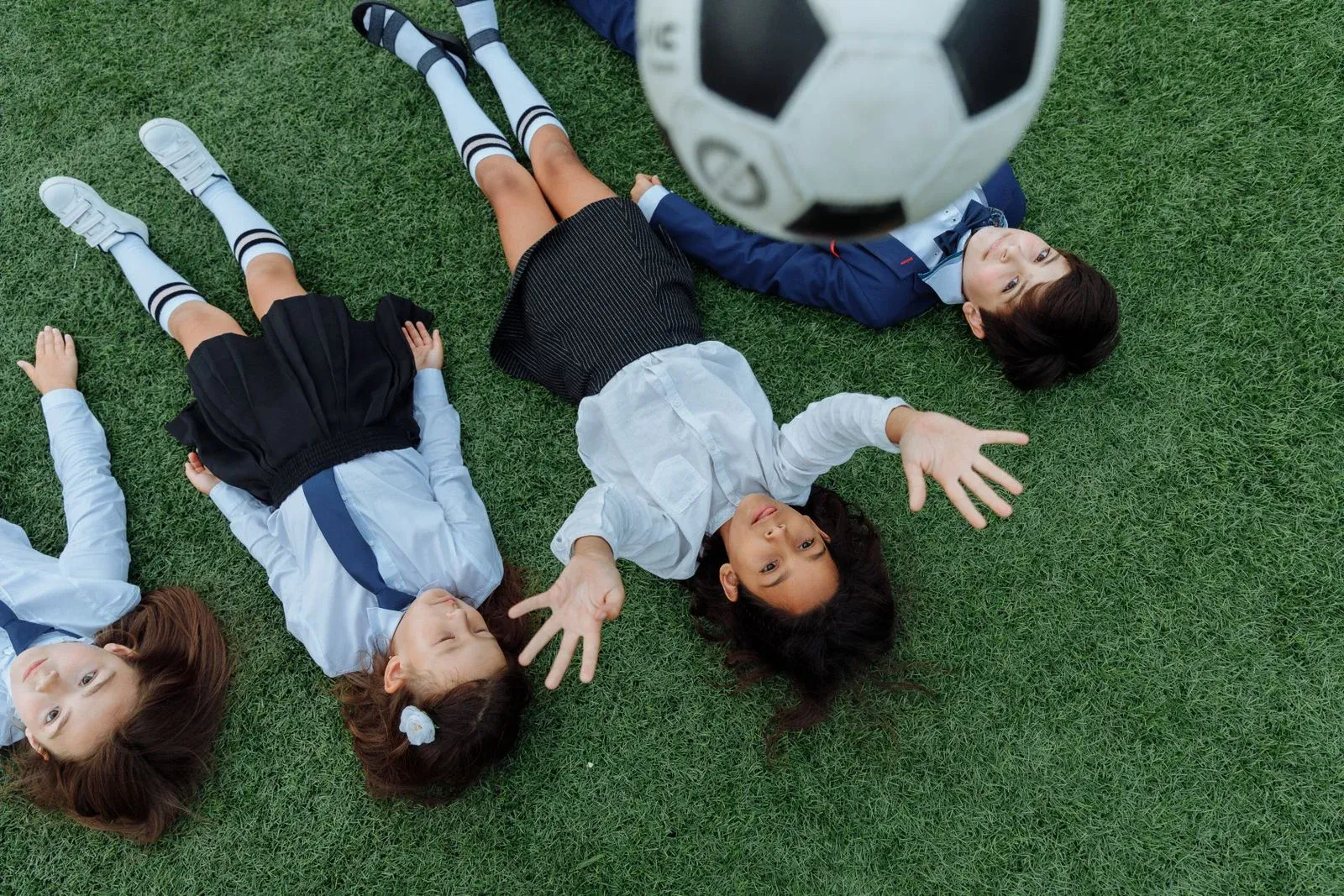
Catching games are easier to start with a scarf, a large soft ball, or a gentle bounce than with a fast throw. Use a short distance and a clear return path. A child can be the retriever, caller, or target holder when catching is not their preferred role. The point is a shared game, not a perfect catch.
Choose the object and lane
Follow the object’s age label and inspect it before play. The CPSC Toy Safety FAQ explains the role of safety requirements and age information for children’s toys. Choose a clear area away from paths, roads, swing arcs, slide exits, and other groups. The National Park Service’s Leave No Trace principles support keeping play compact and considerate.
Begin with the adult holding the object at the child’s chest level. Ask whether the child wants a handoff, a bounce, or a toss. That choice makes the first turn feel predictable.
Four ways to play
Scarf float
Hold one corner of a light scarf, let it fall, and invite the child to catch it with two hands. The adult can lower the starting point. A child who does not catch can point to where the scarf lands and return it. Use one scarf at a time so the play space stays clear.
Two-hand handoff
Stand close and place a soft ball directly into the child’s hands. The child hands it back. After several turns, take one small step back. Return to a handoff whenever the child wants an easier turn. There is no reason to increase distance on every turn.
Bounce and catch
Bounce a large soft ball once between adult and child. Keep the bounce low and the lane short. The child can stop the ball with a hand or foot if catching feels difficult. If the ball rolls away, the adult retrieves it while the child waits at the boundary.
Target hands
The adult holds hands open as a target. The child tosses a soft object underhand from a marked spot. A parent can move the target closer or lower. Give the child the option to roll instead. The ball-rolling games guide has a shorter lane when throwing becomes too wide.
How do you keep the game calm?
Use one object and one thrower. Call “ready” before each turn. If a child throws early, retrieve the object and restart without a lecture. If a nearby person enters the lane, stop the game and move. Avoid catching games near dogs, babies, or a path where someone may step into the throw.
For a toddler, use handoffs and scarf floats. For ages 5–7, let the child choose between a bounce, short toss, or partner roll. Keep the adult close enough to stop a stray object.
End with a retrieval job
After the last turn, ask the child to carry the object back to the bag while the adult checks the ground. Say “catching is finished” before moving to free play. A clear ending keeps the ball from becoming a loose item in a shared space.
For a child who is not ready to catch, begin with target games for kids and let the adult hold the target.
Sources
- CPSC, Toy Safety FAQ, retrieved 2026-09-06.
- National Park Service, Leave No Trace Seven Principles, retrieved 2026-09-06.
Explore more park games.