Jumping Games for Preschoolers: Lines, Islands, and Pauses
Try simple jumping games for preschoolers with ground lines, two-foot choices, and pause cues. Switch to walking when the surface changes.
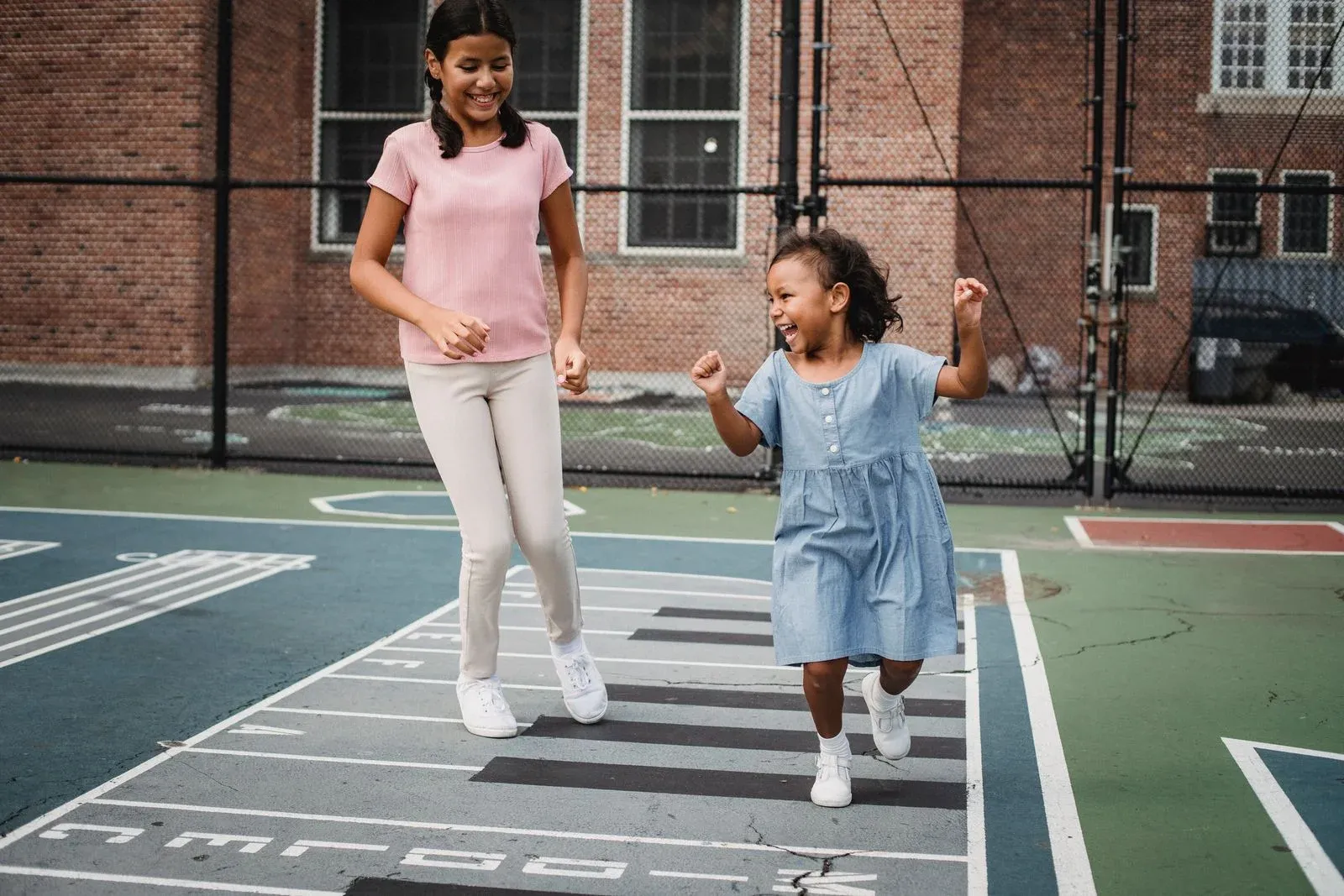
Preschool jumping games can stay simple: two feet together, a short distance, and a clear pause. Use existing seams or approved chalk marks on level ground. Do not use benches, rails, rocks, or playground edges as jumping platforms. The adult checks the surface and gives children permission to switch to walking.
Check the surface first
Look for loose gravel, holes, roots, puddles, and traffic. Choose a clear space away from paths, swing arcs, slide exits, and other visitors. The National Park Service’s Leave No Trace principles support staying on appropriate surfaces and being considerate of others.
Begin with one small jump in place. Children who do not want to jump can step, reach, or make a statue. This article gives game ideas, not a developmental test.
Four jumping games
Line and pause
Point to a ground seam or draw one line where permitted. The child jumps over it, then freezes. The adult crosses only after the child has moved clear. Keep the line short and the pause predictable.
Island steps
Draw or imagine three large islands. Children step or jump from one to the next. The adult calls “water” for a pause and “shore” for ordinary walking. Leave enough space between children; the islands do not need to be close together.
Copy the jump
The adult shows a tiny two-foot jump, then a step, then a reach. The child copies or chooses one action. Change only one movement at a time. For a child who is tired, make every round a step-and-reach sequence.
Jump to the color
Place two colored scarves from home on the ground, well away from a path. Call one color. The child walks or jumps toward it, then returns beside the adult. A child can point to the color instead of moving.
Adjust the game by energy level
For a child who is new to jumping, make the first round a reach-and-step: reach toward the line, step over it, and pause. Once that feels easy, invite a two-foot jump without asking for height or distance. An older preschooler can choose the next color or make a two-step sequence, while the adult still decides where the lane ends.
Keep one child in the lane at a time when several children are waiting. The next child can point to the color or call “pause.” If a child lands near another player, widen the spacing and shorten the route. If the child starts running, change every cue to walking until the group is together again.
Do not use a puddle, curb, bench, or loose object as a challenge. Wet shoes, a crowded surface, or fading light are good reasons to stop jumping and use balance games for preschoolers outside or a seated imitation game. Finish by saying “last jump, then walk” and collect scarves before free play.
If a child lands unevenly, do not turn the moment into a correction lesson. Ask them to find a comfortable stance, step back to the adult, and choose walk, reach, or statue for the next turn. If several children are jumping at once, return to one child in the lane and make the watcher the caller. The adult decides when the surface is clear enough to resume.
How do you avoid pressure?
Never count how high or far a child jumps. Count turns, or let the child choose the next action. If the surface becomes crowded or wet, switch to balance games for preschoolers outside or a walking route. Stop if children begin landing on each other or moving toward equipment exits.
End after every child has chosen one movement. Say “last jump, then walk” before the final turn. Pack any scarves or chalk and leave the lane open.
For a circle-based activity with fewer landings, try circle games for preschoolers and use standing motions.
Sources
- National Park Service, Leave No Trace Seven Principles, retrieved 2026-09-06.
- Playworks, Red Light, Green Light game library, retrieved 2026-09-06. Used for stop-and-go cue design; the jumping games are original adaptations.
Explore more park games.