Dribbling Games for Preschoolers With One Ball
Try dribbling games for preschoolers with bounce-and-stop cues, standing taps, and one short partner lane in a clear park space.
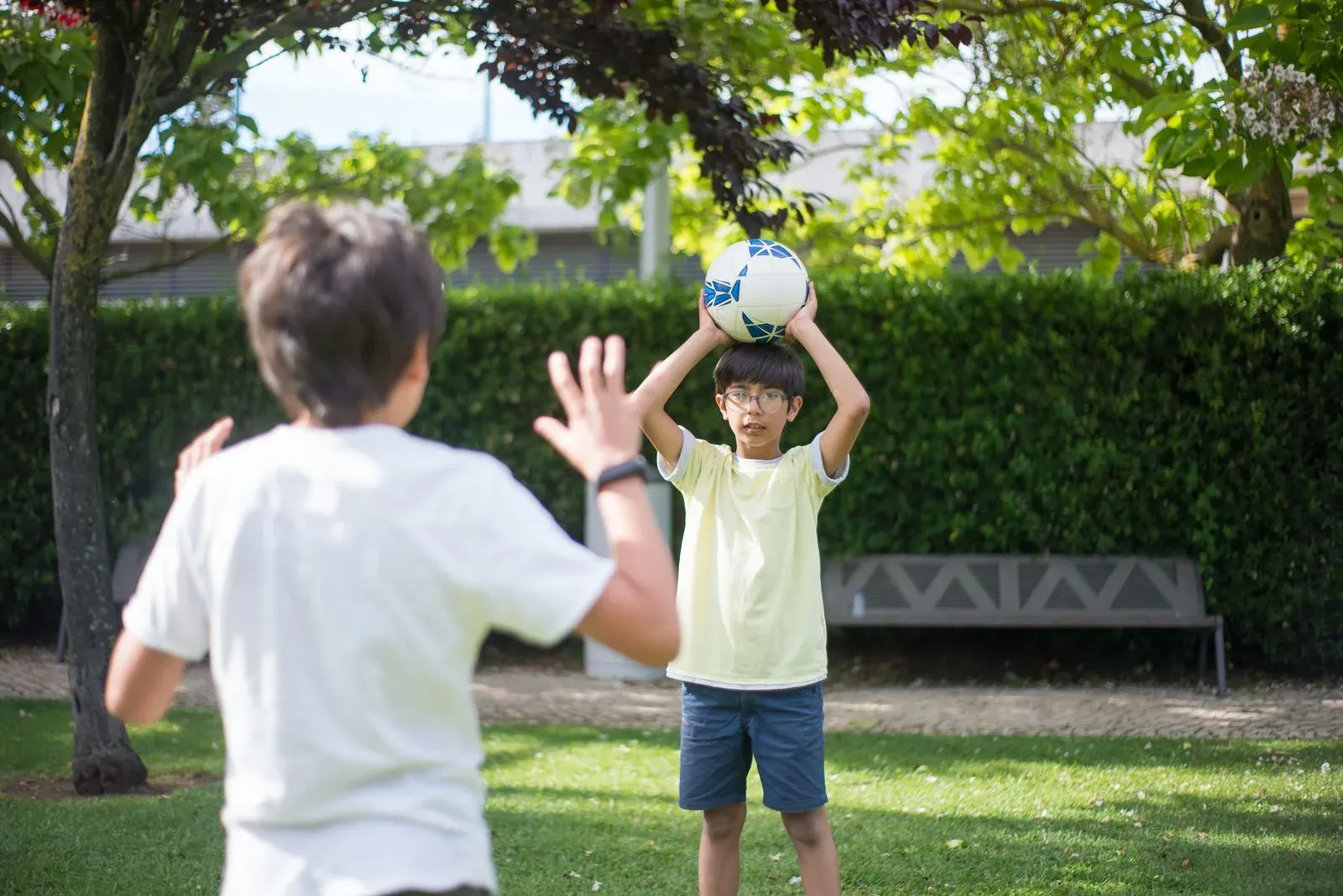
Preschool dribbling games can start with one bounce and one stop. Use a ball that fits the child’s age label, a clear patch of ground, and an adult who retrieves the ball. The goal is a repeatable play loop: bounce, stop, return. A child can also tap the ball, roll it, or carry it when bouncing feels too difficult.
Choose a small lane
Stay away from roads, paths, swing arcs, slide exits, and other groups. Use an imaginary lane rather than placing objects across the ground. The CPSC Toy Safety FAQ explains the role of age information and children’s product requirements. Follow the ball’s instructions and inspect it before play.
Keep the adult close to the ball. The National Park Service’s Leave No Trace principles also support keeping the activity on a suitable surface and being considerate of visitors.
Three dribbling games
Bounce and catch
The adult holds the ball at the child’s waist and lets it fall. The child catches it with two hands. Once that is familiar, the child pushes the ball down once and catches it. The adult can count “down, catch” to keep the rhythm. If the ball rolls away, the adult retrieves it.
Bounce at the mark
Use a chalk mark only where drawing is permitted, or choose a visible seam in the pavement. The child stands beside the mark and bounces the ball once without moving forward. The adult stands close enough to stop a chase. A child who does not want to bounce can place the ball on the mark and tap it.
Partner lane
Two children stand close. One bounces once, and the other catches. Switch after every turn. Keep the lane short and use a handoff if the bounce travels outside it. A parent can stand between partners and call “ready” before each turn.
How do you make it easier?
Lower the starting point, remove the bounce, or let the child sit. Change one detail at a time. Do not add a second ball to make the game more exciting; one visible ball is easier to retrieve. Link to ball-rolling games for preschoolers when a rolling lane fits the surface better.
If the child throws the ball, stop and model “down, catch.” If throwing continues, put the ball away and switch to a no-ball rhythm game. A game ends when the adult cannot keep the ball inside the lane.
A short close
Give each child two turns, then announce the final bounce. Put the ball away before moving. Check the ground for chalk pieces or other supplies. The child can carry the ball to the bag while the adult checks that the route is open.
For a child who is still learning foot control, use soccer games for toddlers and keep the ball lane short.
Sources
- CPSC, Toy Safety FAQ, retrieved 2026-09-06.
- National Park Service, Leave No Trace Seven Principles, retrieved 2026-09-06.
Explore more park games.