Playground Games for Kids That Keep Equipment Optional
Use playground games for kids that fit around shared equipment. These arrival, waiting, and transition ideas keep play simple and respectful.
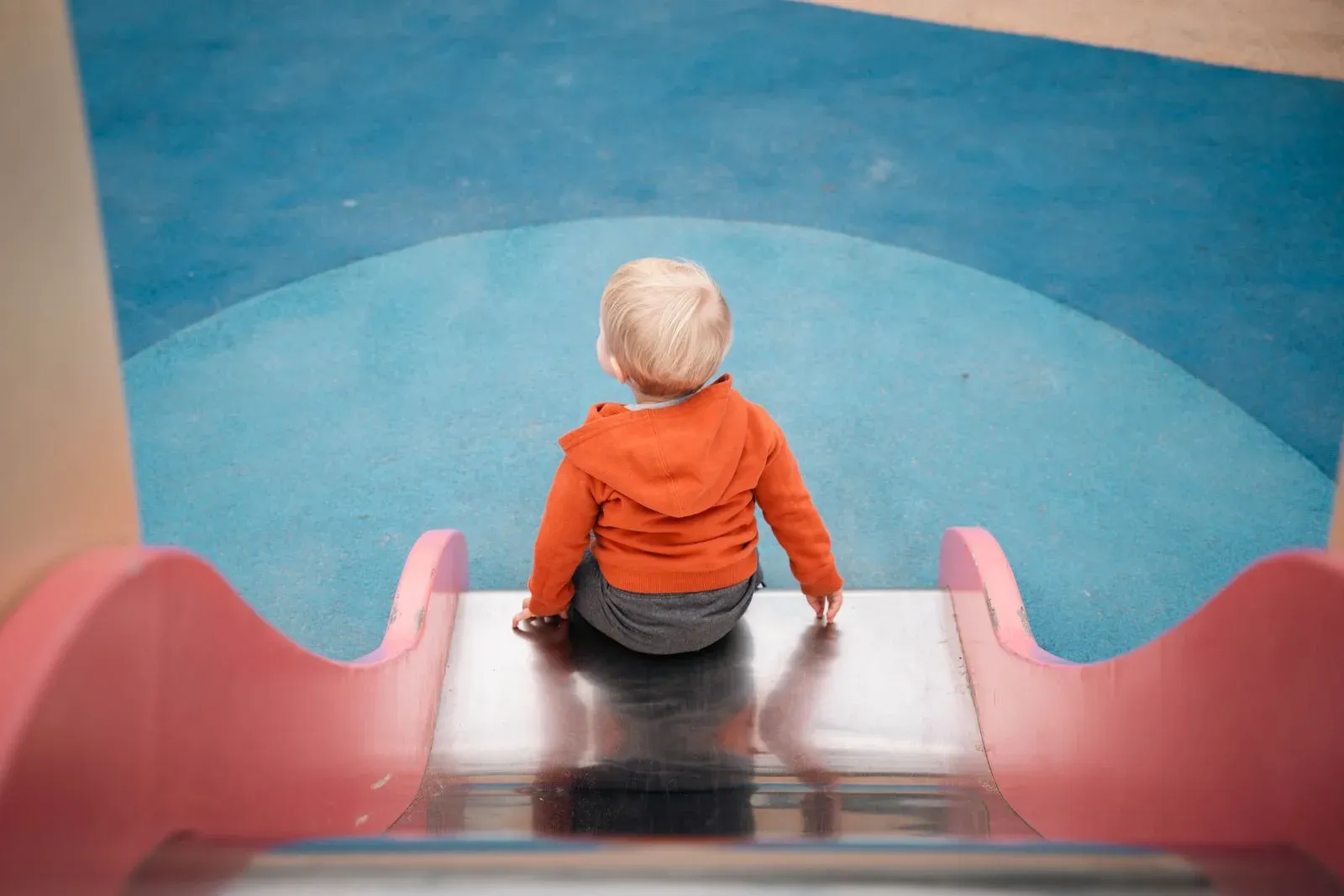
Playground games can happen near equipment without claiming a slide, swing, or climbing structure. Use the open area beside the play zone for arrival games, waiting games, and transitions. The adult watches the equipment and the activity at the same time. Keep children out of slide exits and moving swing paths, and follow any posted local rules.
Make the equipment optional
Choose a spot where children can see the playground but do not need to cross its traffic lanes. Explain the boundary in one sentence: “We play between this bench and me, then wait for the next open turn.” The National Park Service’s Leave No Trace principles include being considerate of other visitors. A compact activity leaves room for other families.
These games are prompts, not instructions to modify playground fixtures. Do not attach objects to equipment, throw toward climbers, or ask children to jump from a height. When a child is ready to use the structure, stop the game and supervise that play according to the park’s rules.
Four games for the play zone edge
Playground statue tour
Stand where you can see the equipment. The adult names one visible feature without asking children to touch it: “Find something high,” “find something red,” or “find a place with a curve.” Children point, then make a statue. This gives a child something to notice while another child takes a turn.
Wait-and-copy
One child leads a quiet movement beside the adult: tap knees, reach up, turn once, or march in place. The others copy. Change leaders after three movements. Keep feet planted when the space is tight. This works when a family is waiting for a swing or for a sibling to finish.
Path watcher
Choose a stationary landmark and watch the path for a minute. When the adult says “clear,” the group walks to the marker and back. If the path is not clear, children make a slow-motion statue. The game teaches waiting through a concrete cue without sending anyone into traffic.
Playground story
Tell a story that uses the equipment as scenery: “The slide is a hill in our story, and the bench is the rest stop.” Children act out the story on the ground with marching, looking, and sitting. Let a child add one sentence. Keep the story away from pretending to use the structure in an unsafe way.
How do you handle a long wait?
Use one short round, then check the equipment again. Avoid promising a turn based on a timer because another child may be using the space. If a child becomes frustrated, name what is happening: “The swing is busy. We can watch, play statues, or walk with me.” A choice can be smaller than the whole playground.
For toddlers, point-and-copy games work better than games with several rules. For ages 5–7, let a child be the path watcher while an adult stays responsible for the boundary. Link to quiet outdoor games for toddlers when the play area is especially loud.
End the transition clearly
Say what happens next: “One more statue, then we wash hands,” or “After this story, you may choose the open slide.” Gather anything you brought and check that no chalk, ball, or scarf was left near the equipment. Then hand attention back to the playground.
For a smaller child who needs less noise and fewer crossings, use quiet outdoor games for toddlers beside the adult.
Sources
- National Park Service, Leave No Trace Seven Principles, retrieved 2026-09-06.
- Playworks, Red Light, Green Light game library, retrieved 2026-09-06. Used for clear stop-and-go cues; these playground waiting games are original adaptations.
Explore more park games.