Portable Play Tunnels for Park Outings: Options Compared
Compare portable play tunnels by age guidance, open size, folded storage, setup, cleaning, and transport.
Choose a portable play tunnel by the child’s age, the open footprint, the packed shape, and the surface where an adult can supervise it. A tunnel that fits in storage can still be too large for a crowded park or too awkward for a walk.
This guidance draws on the linked manufacturer pages and product listings. No setup, stability, durability, or hands-on ranking is claimed.
One branded tunnel to check against the park
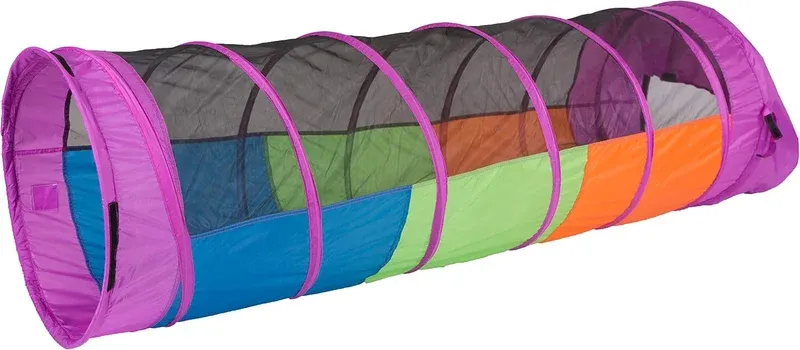
The Pacific Play Tents Peek-A-Boo I See You 6-foot crawl tunnel is listed for ages 3–10 and measures about 6 feet long by 19 inches in diameter. It collapses flat, uses padding over spring steel, and has mesh for visibility; the maker lists mild-soap wipe care for indoor or outdoor use. Choose it only when the adult can keep the tunnel visible and clear of paths; skip a purchase if the park does not allow portable structures.
6-foot crawl tunnel
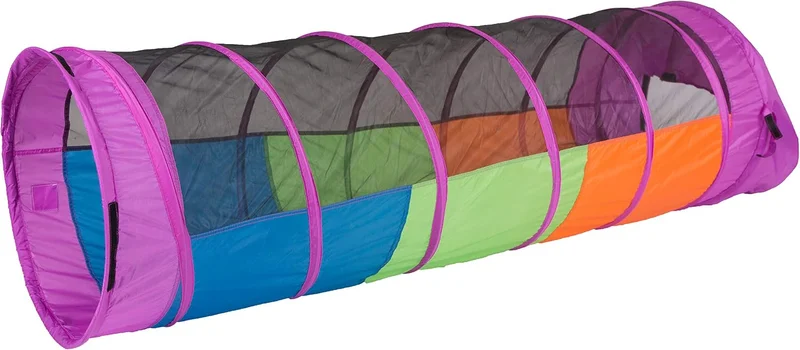
Pacific Play Tents Peek-A-Boo I See You 6-foot crawl tunnel
Best for: A tunnel the adult can keep visible and clear of paths
- Age (listing)
- 3-10
- Size
- About 6 ft long, 19 in diameter
- Storage
- Collapses flat
- Build
- Padding over spring steel, mesh for visibility
Compare the open and stored sizes
The official IKEA BUSA play tunnel page lists a 145-centimeter length, a 46-centimeter diameter, no assembly, a press-together storage method, and a manufacturer age recommendation from 18 months. Recheck the current page and local availability before buying.
The Melissa & Doug Giddy Buggy Tunnel page describes a nearly five-foot tunnel, a padded steel frame, wipe-clean materials, an opened size, a folded size, and adult assembly. Those details make it a different transport and setup choice from a press-together tunnel.
Measure the car, closet, and route. If the tunnel travels by foot or transit, compare its packed dimensions with the adult’s water and food load.
Check age and supervision
Use the maker’s exact age guidance. The BUSA page lists an 18-month recommendation; the Melissa & Doug page displays 3+ years. These are product-page statements, not a substitute for adult supervision or the child’s ability.
Choose level, clear ground and keep the tunnel where the adult can see both ends. Do not place it across a path or near moving equipment. Inspect the frame, seams, and fasteners before use.
Compare setup and cleanup
No-assembly designs may be faster for a spontaneous outing. A framed tunnel may hold its shape differently but require adult setup and a larger carry load. Read the care instructions: IKEA lists hand washing and no tumble drying for BUSA; Melissa & Doug describes wipe-clean materials for Giddy Buggy.
The one-bag park kit explains how to keep a portable toy separate from food and cleanup supplies. Use the park visit checklist for the ground and final-piece sweep.
Make the route decision
Choose a compact, quick-use tunnel for a short walk-in stop only if the adult can carry it comfortably. Choose a larger tunnel when the family drives close to the play area and has room for setup. Recheck the exact product page, age label, dimensions, and care instructions before purchase.
Reserve the tunnel’s space
Measure the open tunnel against the park surface and leave a clear area at both ends. Decide where children wait, where the adult stands, and where the tunnel goes when play ends. If the tunnel crosses a walking route or blocks sight lines, it does not belong in that spot.
For a toddler outing, keep one adult within reach and inspect the frame or fabric after every move. A quick fold and a visible storage bag make the final collection easier.
Explore more park outings.