The One-Bag Park Kit for Toddlers and Preschoolers
Build one manageable park bag with supplies for play, food, cleanup, and the trip home.
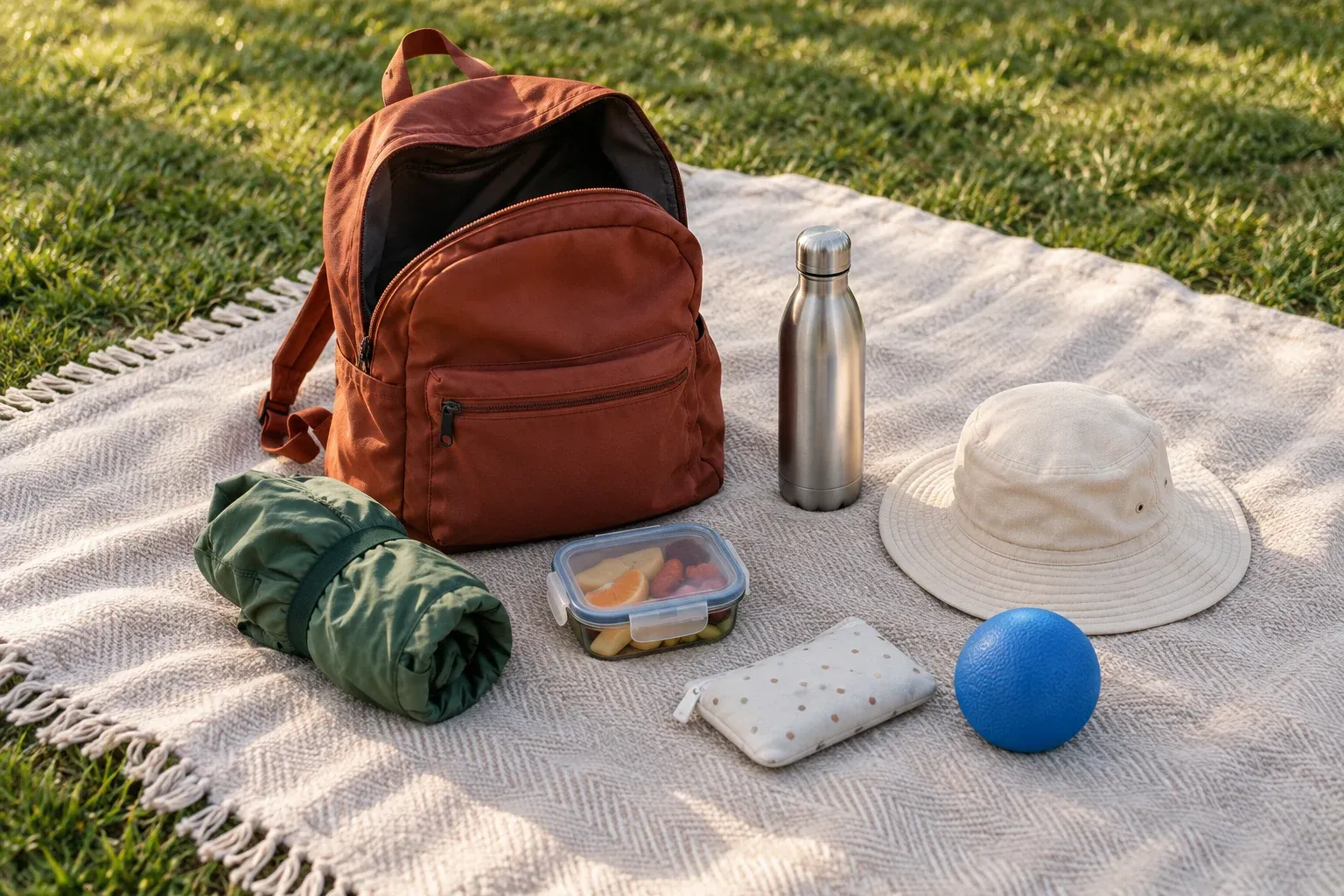
One park bag works when it has a job for each pocket. The goal is not to carry every possible toy or snack. It is to make the next useful item easy to find while one adult is helping a child.
Start with the visit length and route. A short playground stop can use a small daypack. A picnic or transit trip may need a larger bag, but it should still have the same zones so the family knows where things go.
Give the bag four zones
Reach-first zone: Put water, the first snack, keys, phone, and any urgent medication where an adult can reach them quickly. Keep food closed until you are ready to serve it.
Cleanup zone: Group wipes, tissues, hand-cleaning supplies, a small trash bag, and a wet or dirty clothing bag. A reusable pouch keeps a used item from touching food.
Change zone: Pack one spare outfit for a child who may get muddy, wet, or have a toileting accident. A spare top and socks may be enough for a short visit; a full outfit is easier for a longer outing.
Pause zone: Store the blanket or sit pad, meal containers, and one small activity for the walk home or a waiting period. Keep the activity limited so packing up stays quick.
The park outing packing list by visit length helps decide how much belongs in each zone. If the bag is still too full, use the last-minute park stop plan to cut it back.
Use containers that can do more than one job
A snack pouch can hold a spare shirt after it is empty. A small cloth bag can hold a wet swimsuit or a used napkin. A zippered pocket can carry a departure snack until the family is ready to leave. The point is to keep the bag’s structure after supplies change during the visit.
Avoid loose single items at the bottom. They make it hard to find the one thing a child needs and increase the chance that a small piece is left on the ground. Put tiny supplies in a container with a lid or zipper.
If the pause zone includes a toy, check the CPSC toy guidance for the maker’s age label and small-part warnings before packing it for a younger child. The bag layout is a convenience system; it does not replace the product’s instructions or active supervision.
Let children own one small part
Children ages 2–7 can help with a simple job that matches their ability:
- A toddler can place a hat in the bag.
- A preschooler can return an empty bottle.
- An older child can check for a jacket, snack container, and toy.
The child’s job is to return the item, not to carry the whole family’s safety plan. An adult still checks water, food, medicine, and clothing before leaving.
Reset the bag before it becomes a project
At the end of each outing, take out trash and wet items first. Put unused food away according to its storage needs. Return the refillable supplies to their zones. Then add the next day’s spare clothing.
Do this at home or at the car, not while a child is waiting at the park gate. A 60-second reset keeps the bag ready for a spontaneous stop.
For a picnic, add the park picnic checklist. For a visit with a baby and older sibling, adapt the same zones with the baby and older sibling park plan.
When one bag is not enough
Use a second container when a family member needs a separate medical, feeding, or diaper setup, or when the route requires a bulky seat or shade item. Keep the everyday kit in one bag anyway. The family should be able to make a short visit without rebuilding the entire load.
Explore more park outings.