Park Outing Packing List by Visit Length
Use a short, medium, or half-day packing list for a park trip with toddlers and preschoolers.
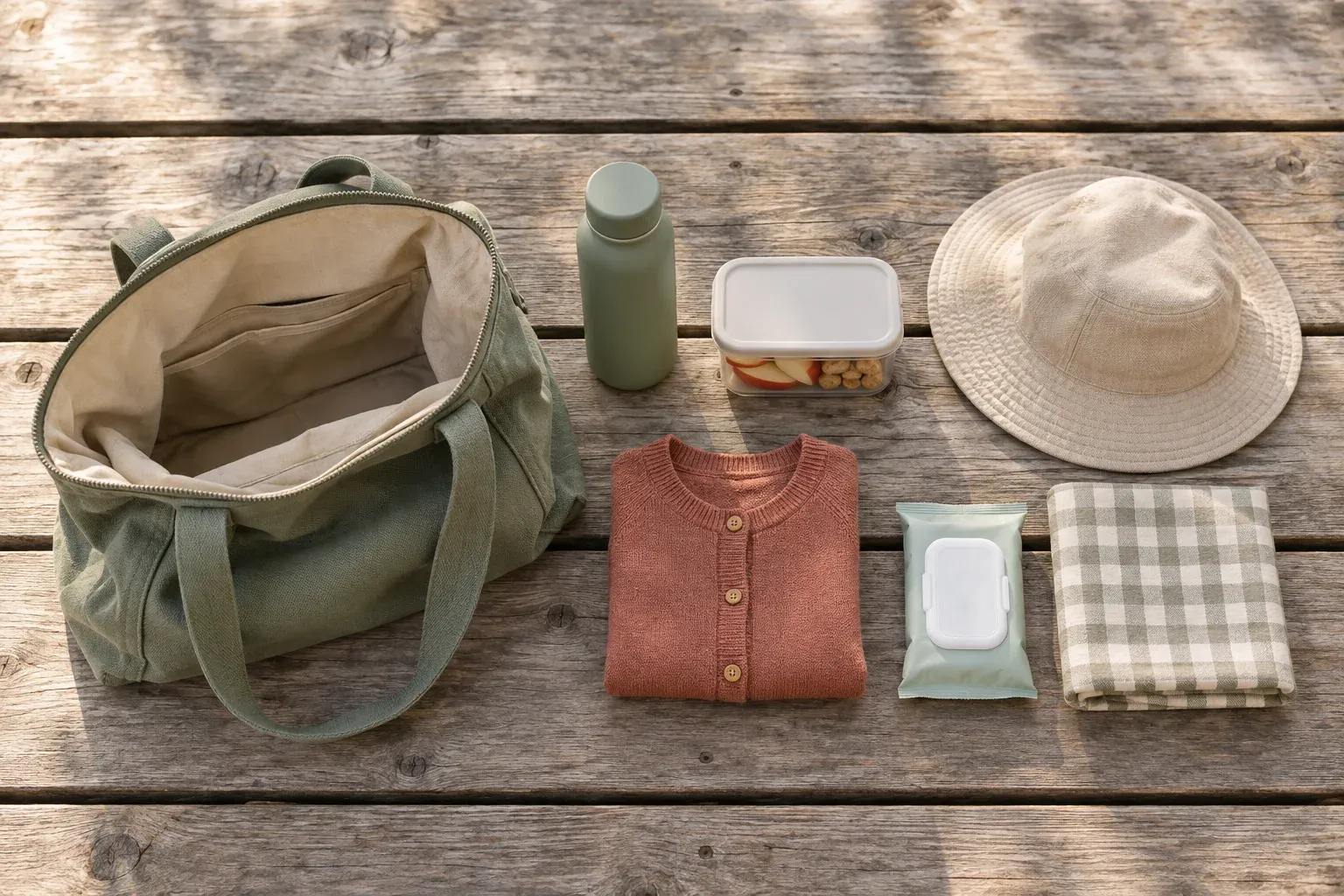
The right park bag depends on how long you expect to stay. A 20-minute stop needs water, a small snack, and a way home after a spill. A longer outing needs food, layers, a sit-down spot, and enough backup clothing to keep one small problem from ending the visit.
If the longer list includes perishable food, use the USDA Food Safety and Inspection Service guidance for hiking and camping to plan cooling, transport, and cleanup. The visit lengths below are packing decisions, not a substitute for the food’s storage instructions.
Use the list below as a starting point, then remove anything your park already provides. Check the forecast, the route from the car or transit stop, and whether bathrooms or drinking fountains are open.
For a 15- to 30-minute stop
Keep this load small enough to carry with one hand while helping a child.
- Water for each child and adult
- One easy-to-eat snack per child
- Tissues or a few wipes
- One spare pair of underwear or pants if a child is toilet learning
- A small bag for wet or dirty clothing
- Sunscreen or a hat when the weather calls for it
- Phone, keys, and any required medication
Skip a full toy kit when the stop is built around the playground or an open lawn. The shorter the visit, the more useful it is to make leaving easy. Put the keys and the departure snack in the same pocket so you do not unpack the entire bag at the exit.
For a quick stop after school, pair this list with the after-school park routine. If you are stopping on the way home without preparation, the last-minute park stop plan gives you a smaller sequence.
For a 45- to 90-minute outing
Add the pieces that support a pause between activities:
- A larger water supply or a refill plan
- Two small snacks, or a snack plus a simple picnic
- A lightweight sit pad or blanket
- A spare shirt and socks
- Wipes, tissues, and hand-cleaning supplies
- A small bag for trash and clothing
- One portable activity that works away from the main play area
- A layer for changing wind or shade
Pack food in portions that can be handed out without opening every container. If two children eat at different times, give each child a labeled pouch or container. That prevents the “one more snack” debate from turning into a bag search.
For a picnic-centered visit, use the park picnic checklist. For a visit planned around a meal and a slower break, use the 90-minute park picnic outing plan.
For a half-day visit
A half-day outing needs a resupply decision. Decide whether you will return to the car, use a fountain, buy food, or carry everything before you leave.
- Enough water for the route and expected time, plus a refill plan
- A meal and snacks in separate portions
- A blanket or seats for eating and resting
- Spare clothes for each child who may get wet, muddy, or sweaty
- A layer for each child and adult
- Sun or rain protection suited to the forecast
- Wipes, tissues, hand-cleaning supplies, and trash bags
- Diaper or toileting supplies
- Any medication and a small first-aid pouch
- A phone battery plan if the outing is far from home
Do not add every possible contingency. Instead, choose the one condition most likely to change the plan: heat, rain, a long walk, or limited bathrooms. Pack for that condition and set an exit time.
Pack in departure order
Put the things you need first at the top: water, keys, and the first snack. Put spare clothes and cleanup supplies in a separate inner bag. Keep the meal flat and protected. Put the sit-down item where an adult can reach it without taking the bag apart.
Before leaving the park, use the same three-step reset every time: collect people, collect food and trash, then check the ground and nearby play area. This is especially useful when a child wants to leave in a hurry.
The park visit checklist turns that reset into a reusable routine, while the one-bag park kit helps when several small bags have become difficult to manage.
A simple rule for editing the list
If an item solves a problem that has never happened on your route, leave it home for now. If the same problem has ended two outings, give that item a permanent place in the bag. This keeps the kit useful without making every park visit feel like a move.
Explore more park outings.