Freeze Dance Outdoors: A Simple Park Game Without Elimination
Set up freeze dance outdoors with a phone, a clear patch of ground, and no-elimination rules that work for toddlers and preschoolers.
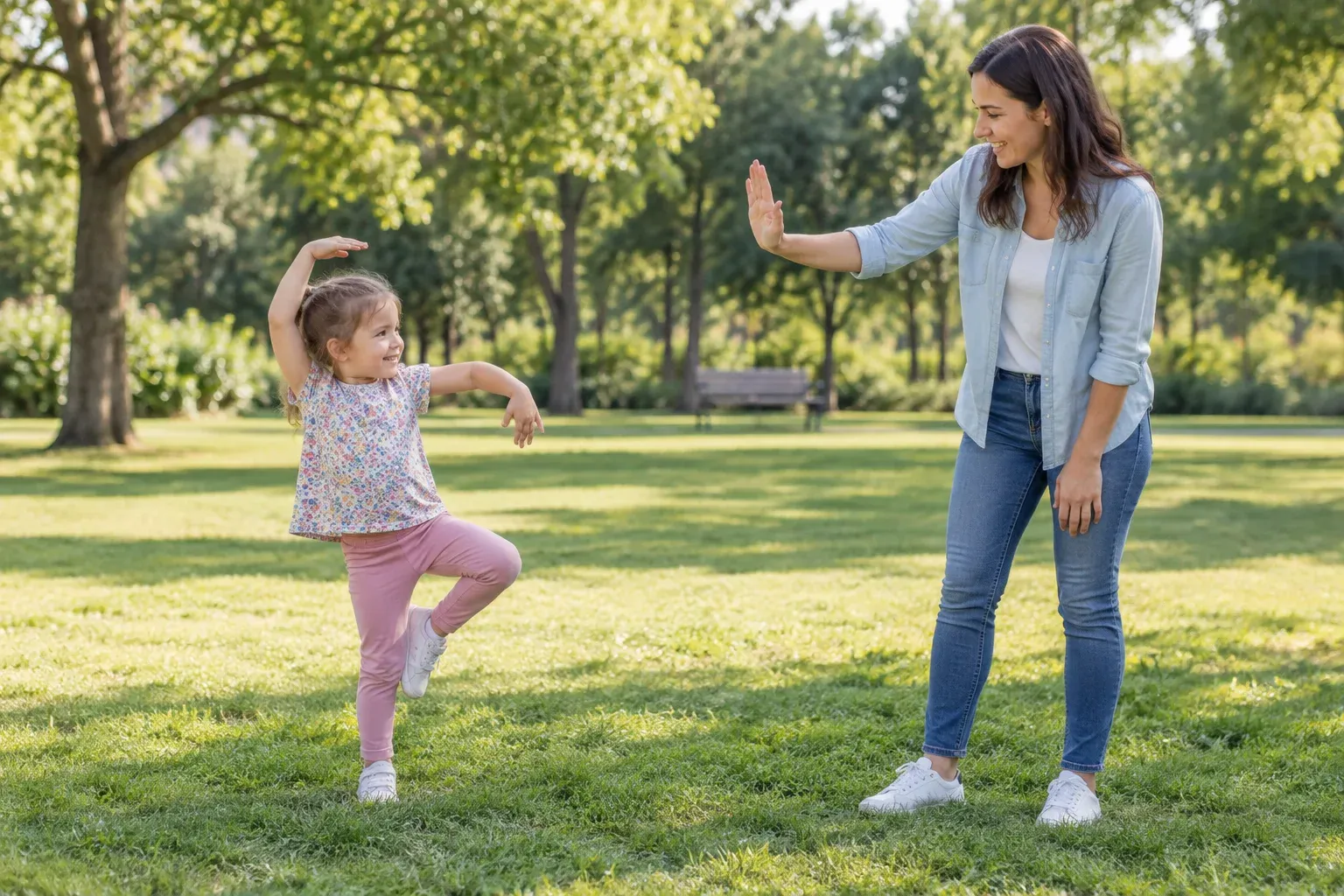
Outdoor freeze dance is a short music-and-movement game: children dance while the music plays, then hold a pose when it stops. Use a clear boundary, keep the volume considerate, and let everyone rejoin after a wobble. A parent can run it with one child by humming, clapping, or tapping a simple rhythm instead of bringing a speaker.
Pick the right park spot
Choose a level surface away from paths, play equipment exits, roots, and loose objects. Mark the boundary with words or natural landmarks; do not tie anything to trees or plants. Keep the group small enough that each child has room to extend both arms. The National Park Service’s Leave No Trace principles include being considerate of other visitors, so use a quiet setting or keep music low.
Playworks describes Dance Freeze as an activity in which players dance while music plays and freeze when it stops. Its guidance also uses a no-elimination approach. This version keeps the same shape and adds park-friendly ways to pause.
How to play
Tell children, “Dance inside the space. When the music stops, freeze until it starts again.” Demonstrate a small pose. Play ten to twenty seconds of music, pause, and count to three. Start again. The first round should use walking, swaying, clapping, and arm movements. Add turns or knee taps only when the group has room.
If someone keeps moving, call it a “wobble” and invite a reset pose. A child can become the music stopper, pose caller, or lookout. These jobs give children an active role without requiring a perfect freeze. Keep phones or speakers with the adult and stop the music before moving location.
Four easy variations
- Shape freeze: Call circle, star, or tall tree before the music starts.
- Partner mirror: Two children copy each other’s dance without touching.
- Slow-motion round: Everyone moves slowly until the next freeze.
- Leader pose: The child who stopped the music chooses a pose for the group.
Avoid running, spinning close to others, eyes-closed dancing, and movements that send a child toward equipment or a path. If the ground is damp, use standing poses only.
How can one adult play with one child?
Hum a short tune and stop humming. The child freezes when the sound stops. You can also clap a steady beat, then hold your hands still. Let the child decide whether the next round uses big arms, tiny steps, or a statue pose. Keep the dance zone small and stand between the child and nearby traffic.
For a toddler, make the pause predictable: hum for three beats, stop for two, then start. For ages 5–7, let the child control the timing. Link to parent-child park games when the family wants quieter partner play.
When should you stop?
End after every child has chosen one pose, or after three to six minutes. Say, “Last dance, then water,” before the final round. Gather any device, check the ground for dropped items, and leave the spot ready for the next visitor. A short, tidy ending matters when the game happens in a shared public space.
For a route with rotating leaders instead of music, try follow-the-leader outdoor play and keep the pace walking.
Sources
- Playworks, Dance Freeze game library, retrieved 2026-09-06.
- National Park Service, Leave No Trace Seven Principles, retrieved 2026-09-06.
Explore more park games.