Outdoor Games for 2-Year-Olds: Short Park Activities
Try outdoor games for 2-year-olds that use walking, rolling, pointing, copying, and carrying with an adult close by.
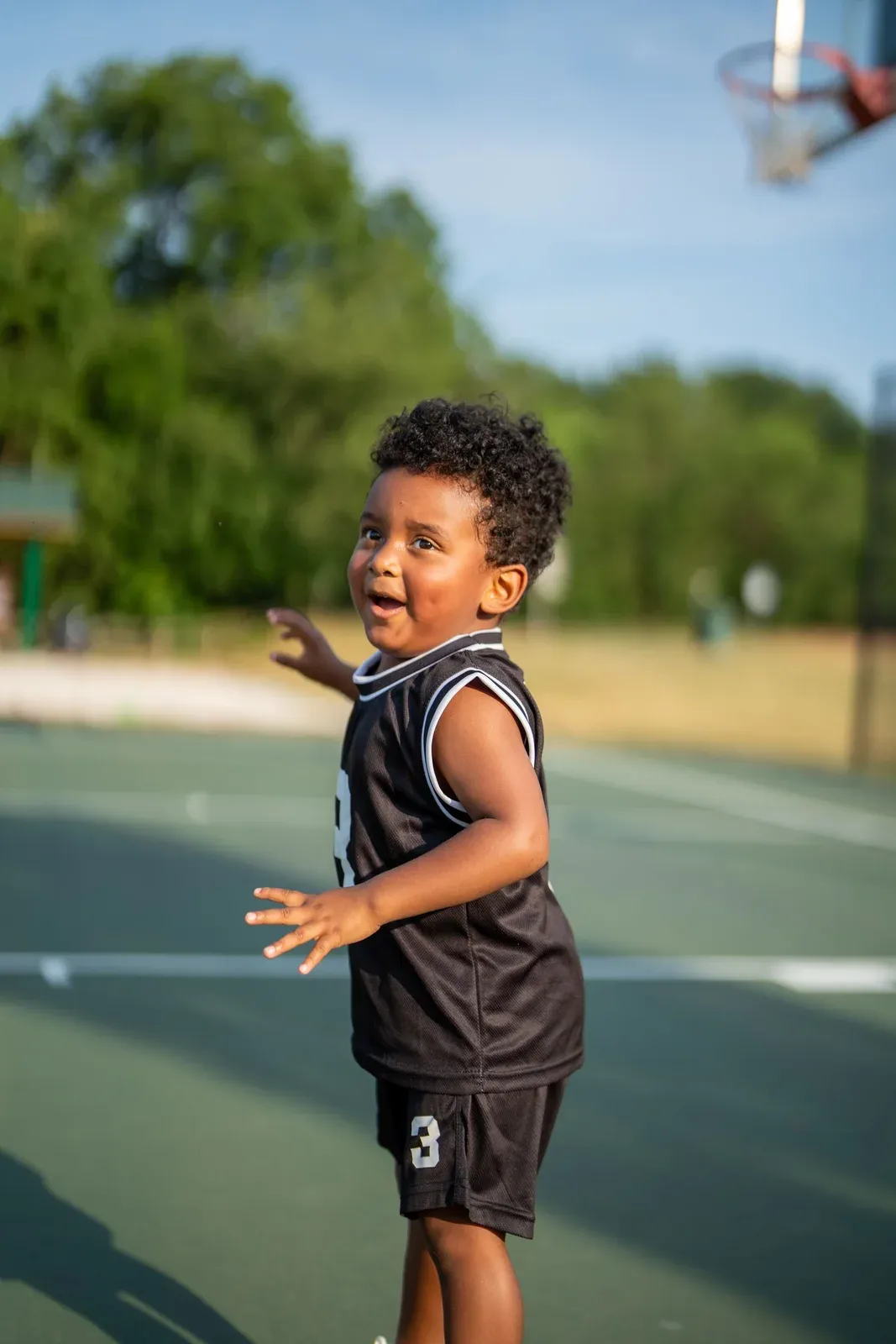
Two-year-olds can join a park game when the adult keeps the rule short and stays close. Use one action, one landmark, or one turn at a time. The five ideas below are invitations. A child can watch, wander, return, or end the activity. None of them requires a purchase or assumes a particular developmental outcome.
Set up a small play area
Choose a clear surface away from roads, parking areas, swings, slide exits, and crowded paths. Stand close enough to help the child stop or change direction. Tell the child where the game happens: “We are walking between this bench and me.” Check posted rules before using chalk or bringing a ball.
The National Park Service’s Leave No Trace principles include staying on durable surfaces, leaving natural objects where they are, and being considerate of other visitors. Those simple boundaries make toddler games easier to supervise.
Five games for age two
Walk and touch
Choose a safe landmark and walk to it together. The adult says “touch knees,” “wave,” or “turn,” then returns to ordinary walking. Keep the movement optional. A child who is holding hands can make the action with one free hand.
Roll and stop
Sit on flat ground and roll a soft ball a very short distance. The child stops it with a hand, then pushes it back. If the child chases the ball outside the boundary, shorten the lane or switch to a scarf that cannot roll far.
Copy one thing
Make one slow movement. Reach, clap softly, or make a statue. Wait for the child to copy or invent another movement. Follow the child’s action once, then offer a new turn. The copycat games guide has variations for a child who wants to lead.
Carry and return
Give the child a scarf or soft toy from home. Walk together to a landmark, place the object in the adult’s hand, and walk back. Do not use park rocks, sticks, or plants as the item. A child can be the “helper” who decides which visible landmark comes next.
Stop-and-go steps
Hold hands and take two steps on “go,” then pause on “stop.” Use the same rhythm several times. Practice in place before walking. If the child keeps moving, make the adult stop too and turn the cue into a shared pause.
What if the child is not interested?
Stop prompting and let the child play freely. You can model one turn beside them, then move on. A child may return after watching. If not, the visit still has value as outdoor time. Use quiet outdoor games for toddlers when the child needs a calmer transition.
Avoid turning the game into a test. Say “You can try,” rather than correcting how a child rolls, walks, or copies. The adult’s role is to keep the area clear, explain the next action, and respect the child’s choice to pause.
A short ending
Choose one final game, say “last turn,” then pack the ball or scarf. Offer water and name the next step. Two-year-olds often handle a clear finish better when the adult does not introduce a new challenge during the final round.
Sources
- National Park Service, Leave No Trace Seven Principles, retrieved 2026-09-06.
- CPSC, Toy Safety FAQ, retrieved 2026-09-06. Used for the general reminder to follow product age labels when a toy is brought to the park.
Explore more park games.