Relay Games for a Kids' Birthday Party Without Pressure
Use relay games for a kids' birthday party that rotate delivery, walking, and helper roles without making speed the goal.
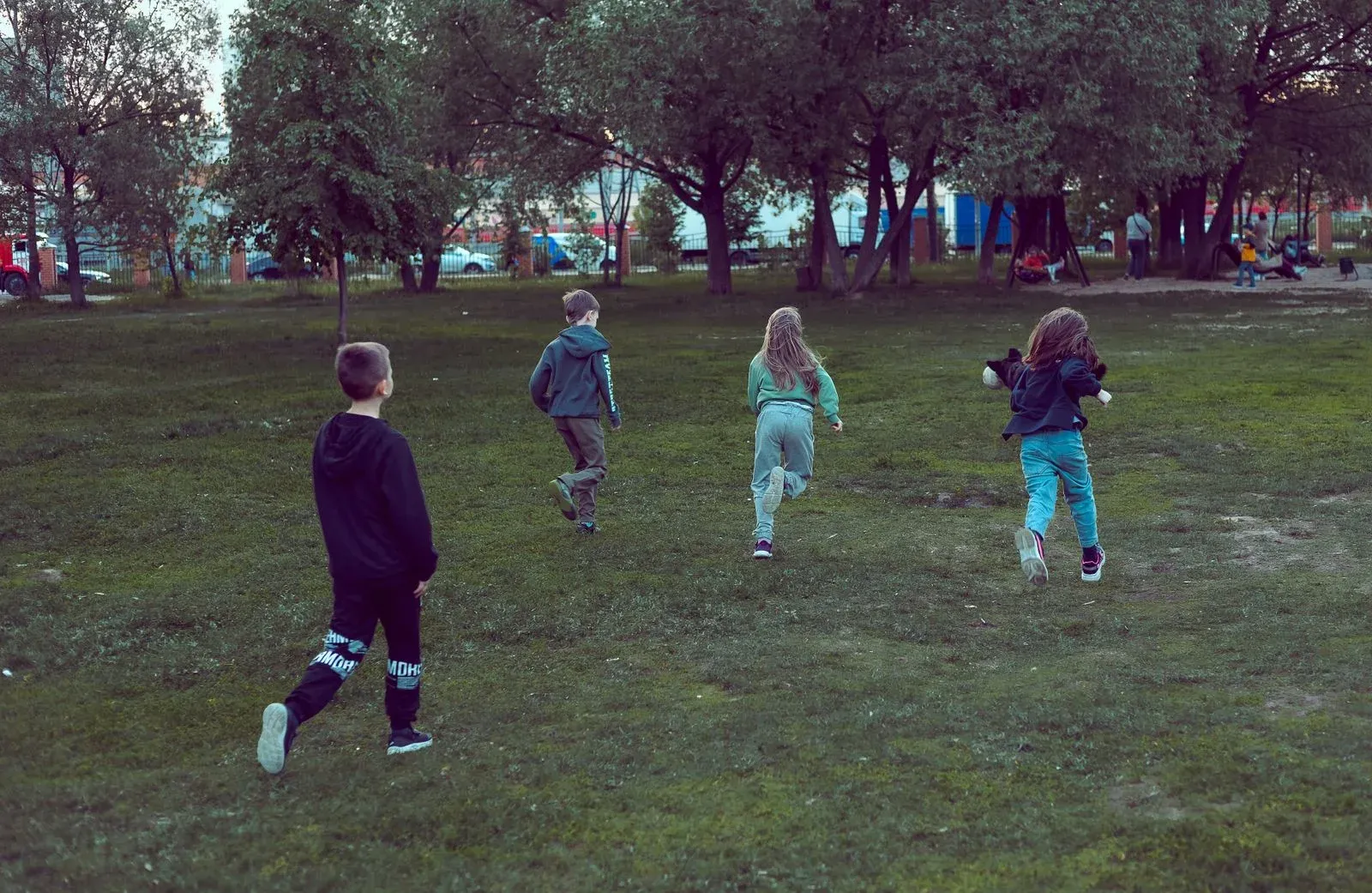
A birthday relay can be a series of turns rather than a race. Children carry, walk, point, or help a team reach a shared destination. Remove the speed comparison and keep the route short. A child can pass, watch, or become the caller while another child takes a turn. A holiday version is the Pot of Gold relay in St. Patrick’s Day games for preschoolers.
Set the relay lane
Choose a clear route away from roads, paths, swing arcs, slide exits, and other groups. Mark the start and finish with landmarks rather than objects placed on the ground. The National Park Service’s Leave No Trace principles support keeping shared paths open and packing out supplies.
Explain that the group is finishing together. Playworks’ cooperative games guide recommends clear rules, group reflection, and another try for cooperative challenges.
Four relay formats
Parcel walk
One child carries a scarf from the adult to a landmark and back. The next child takes the scarf. An adult can walk beside younger children. The team succeeds when everyone has had a turn, not when one child finishes first.
Partner route
Two children walk side by side to the finish and return. One calls “pause,” and the other calls “go.” Keep both adults near the lane. If a child runs, shorten the route and restart at walking pace.
Color delivery
The caller names a color. The child carries a matching scarf from the adult to a parent-held target. Use only items from home. A child who cannot find the color can point to it instead.
Helper relay
One child walks while another child carries the story card or calls the landmark. Swap jobs at the finish. Do not make children hold hands unless they choose to; helpers can walk nearby.
Adjust the relay by age
For toddlers, replace the lane with a three-step delivery between the adult and a visible marker. The child can carry the scarf, point to it, or hand it directly to the adult. For preschoolers, add a partner route with a pause cue. For ages 5–7, let a child choose the landmark or remember the next job, while the adult still watches the route.
Use one object at a time. If a handoff becomes confusing, the adult keeps the object and calls each child forward. If a child misses a turn, give them the caller or watcher job and invite them into the next delivery. If the park becomes crowded, move the finish closer rather than widening the lane. Do not place cones, bags, or decorations across a shared path.
At a party, run the relay once before deciding whether to repeat it. Ask the group whether walking, carrying, or helping felt best, then choose the next format from that answer. The point is a shared sequence with a visible ending, so a child can finish by returning to the adult even when the object never reaches the far landmark. For an Easter party, a bunny hop relay with plastic eggs is in Easter egg games for kids.
Use a clear finish phrase such as “delivery complete, back to the group.” This helps a child know when to stop without running through the next turn. If the group loses the sequence, place everyone beside the adult, demonstrate one delivery, and invite a new first child. A reset is part of the game; it is not a failed round.
How do you avoid pressure?
Use words such as “your turn” and “our finish,” never “first” or “slowest.” Give a seated role to a child who needs a break. The adult retrieves objects and watches crossings. If the group becomes too spread out, stop and regroup. Link to noncompetitive party games for games that do not use a relay pattern.
Finish after every child has done one job. Announce the final delivery, collect the scarf, and leave the route clear for other visitors.
For a calmer party reset with no relay crossings, use noncompetitive party games and keep the group together. For two classic single-run races, see sack race and three-legged race for little kids. For a slow-walk race with a spoon and a plastic egg, see the egg and spoon race guide.
For more ideas by age and equipment, see our list of playground games for kids. See the field day games for preschoolers plan for how to use a relay as a station.
Sources
- Playworks, Putting Play Back in Playground cooperative games guide, retrieved 2026-09-06.
- National Park Service, Leave No Trace Seven Principles, retrieved 2026-09-06.
Explore more park games.