Best Pocket Microscope for Kids: Is More Magnification Useful?
A researched guide to pocket microscopes for kids, comparing portability, lighting, magnification claims, specimens and park practicality.
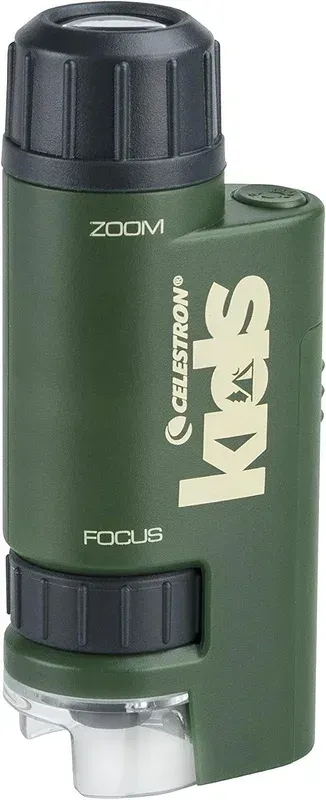
This is a researched comparison, not a field-tested ranking. A pocket microscope earns space when a child already wants to inspect a safe, stationary subject at a table. Higher magnification narrows the view and increases setup, so choose for focusing and handling before choosing the biggest number.
For a child who wants a tiny, battery-lit tool, Celestron Kids Pocket Zoom Microscope (44116) is the most direct match in this comparison. The listing describes 60x–120x zoom, an LED illuminator, a pocket-sized body and batteries not included; Celestron also provides a manufacturer product page. For a wider first view, Carson Pocket Micro (MM-450) lists 20x–60x LED viewing, while Carson MicroBrite Plus (MM-300) lists 60x–120x LED viewing.
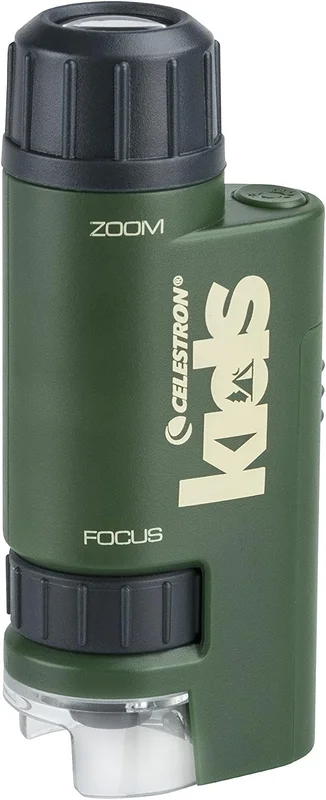
Celestron Kids Pocket Zoom Microscope
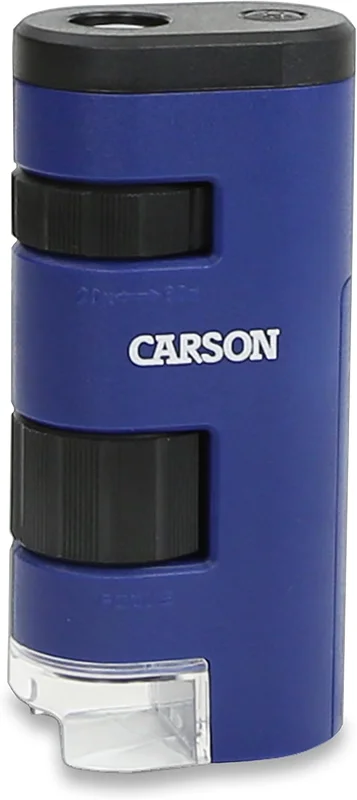
Carson Pocket Micro
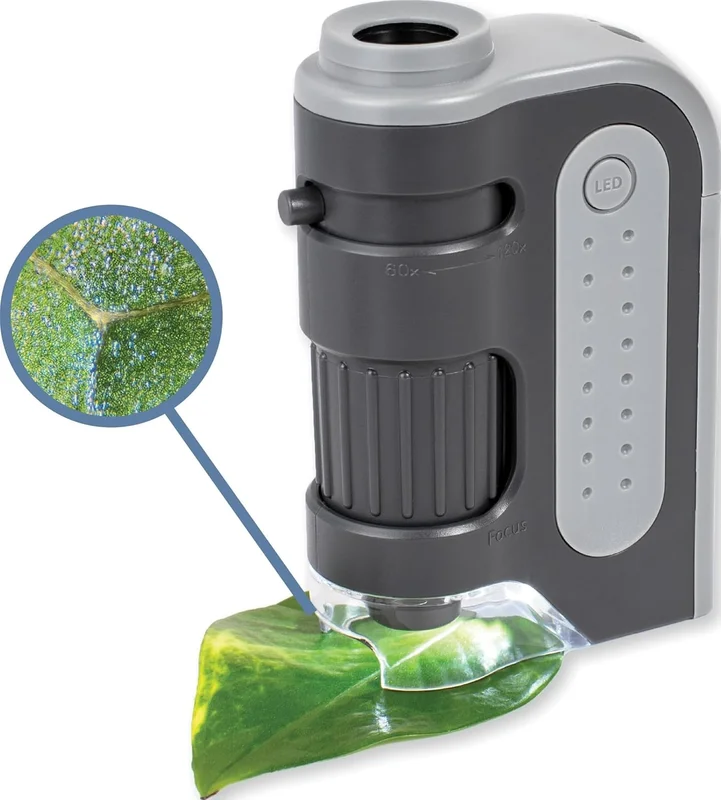
Carson MicroBrite Plus
Compare the practical setup
| Product | Choose it when | Supported details | Limit to plan around |
|---|---|---|---|
| Celestron Kids Pocket Zoom | A child wants a compact zoom tool and an adult can manage batteries | Model 44116; 60x–120x, LED illuminator, pocket format, batteries not included | An age grade is not confirmed here; treat this as an adult-operated tool for shared viewing |
| Carson Pocket Micro | The child needs a lower starting range for larger details | MM-450; 20x–60x and LED; Carson’s instructions specify one AA battery, not included | The adult still needs to place the subject under the lens and focus it |
| Carson MicroBrite Plus | A family already uses slides or wants a higher listed range | MM-300; 60x–120x and LED; Carson’s instructions specify one AA battery, not included | A larger number can make it harder to locate a subject; use a stable surface |
Carson’s Pocket Micro starts at 20x, which gives a more forgiving entry point for a leaf vein, fabric, or other stationary detail. MicroBrite Plus and the Celestron model start at 60x. That can be useful after an adult has placed the subject, but it is less forgiving when a child is trying to find the view alone.
Match the microscope to the park
These are handheld field tools, yet the activity still needs a seat, stable subject, light, and time. A park bench can work for an adult-led look at a safe, permitted object. A moving trail, wet grass, or a child who wants to run is a better match for a notebook or hand lens.
The magnifying glass guide compares tools with less setup. The leaf identification book guide shows how a child can compare visible features without putting a specimen under high magnification.
Set an age and safety boundary
The Celestron title is aimed at children, while the Carson materials reviewed here do not provide a clear age grade. For ages 3–7, an adult should handle batteries, focusing, and any prepared slide. Use only a safe stationary object the park allows you to observe. Never collect a live creature, unknown fungus, or material from a protected area.
Carson’s instructions warn against looking at the sun or placing the lighted microscope directly on an eye. Keep the tool pointed at the work surface and remove the battery for long storage as directed.
Decide whether more magnification helps
Borrow a microscope or try a hand lens first. Ask whether the child can find one subject, hold the tool steady, and describe one change in texture or color. If the answer is yes, choose the lower 20x–60x starting range for easier locating. Choose a 60x–120x model when the adult will set up the view and the child wants to return to tiny details.
Product details were checked against current Amazon listings and manufacturer instructions on 2026-09-12; availability, age labels, and specifications can change. The products above were not field-tested by this site.