Animal Tracks Activities for Kids: Read Signs, Not Wildlife
Use animal-track activities for ages 4–7 to compare prints and signs without following, feeding or approaching wildlife.
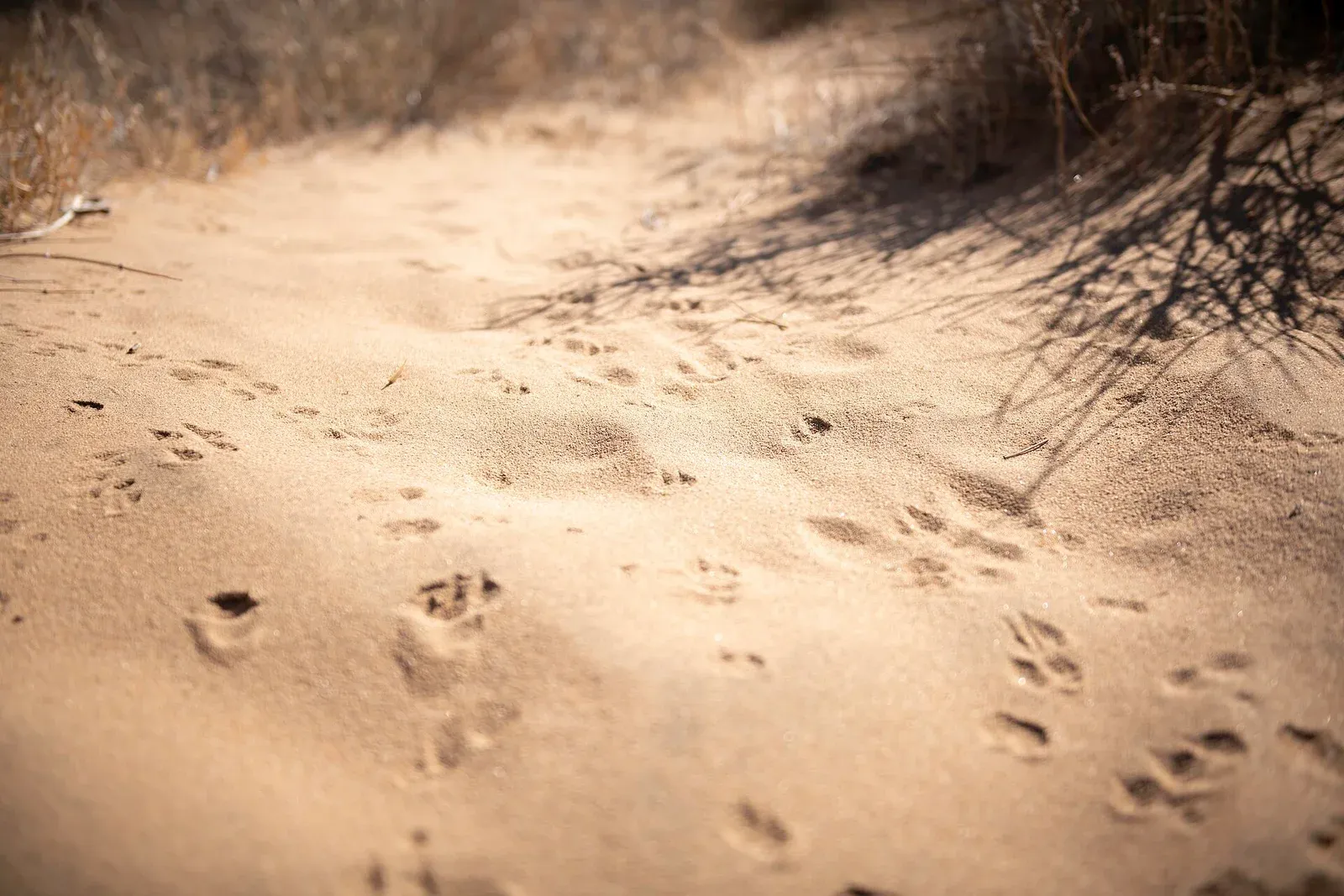
Animal tracks are clues, not a reason to follow an animal. Look for prints from a path or stable viewing place, compare visible shapes, and record what you actually see. A single print may be incomplete, blurred, or made by an animal you cannot identify.
The U.S. Geological Survey animal tracks reference can help an adult compare examples. It is better to say “possible small paw print” than to promise a species from uncertain evidence.
Find signs from a safe place
Tracks may appear in mud, sand, snow, or soft ground. Stay on the path or on a durable surface when the park asks you to. Do not step into a track to test it, smooth the ground, or move a nearby object.
Look from the side rather than bending over an unstable edge. If a child wants a closer view, take a photograph from where you are. A track can be studied later.
Use three comparison clues
Shape: Is the print round, long, split, or unclear? Notice the outline without tracing it.
Pattern: Are there one or several prints? Do they form a line, cluster, or scattered marks? Avoid telling a story about where the animal went.
Surface: Is the mark in mud, snow, dust, or wet grass? The surface can change the shape.
Use “maybe” throughout. The nature observation routine helps children separate a visible detail from a guess.
Make a track record
Draw the outline as best you can, add the date and surface, and write one question. A child can make a simple symbol instead. If the track is in snow, record whether the edges look fresh or softened, without touching it.
Compare two tracks only when they are clearly separate. Do not measure with a ruler placed on the ground near wildlife signs. A hand comparison from a distance is enough.
The snow nature activities page adds melt and texture observations for winter visits.
Leave wildlife alone
Do not follow a trail, approach a den, touch scat, feed an animal, or use food to attract wildlife. If you see an animal, stop and give it space. The National Park Service Leave No Trace principles recommend respecting wildlife from a distance.
Use a compare-and-draw sequence
Start with one print that is easy to see from the path. Ask the child to point out its outline, number of sections, and direction. Move to a second mark only after the first has been described. An adult can sketch two simple shapes side by side without naming an animal. The child can then say which details match and which are different. This keeps the activity about careful noticing rather than guessing correctly. If the mark is unclear, label it “unknown” and continue. A track can be partly covered, made by a person, or too worn to identify.
Sources and related reading
- U.S. Geological Survey, Animal Tracks
- National Park Service, Leave No Trace Seven Principles
- Continue with winter nature activities.
- Use nature journal prompts for a record.
Explore more nature play.