Cooperative Outdoor Games for Kids: Everyone Has a Job
Try cooperative outdoor games for kids where the group moves together, shares an object, and rotates jobs without a winner.
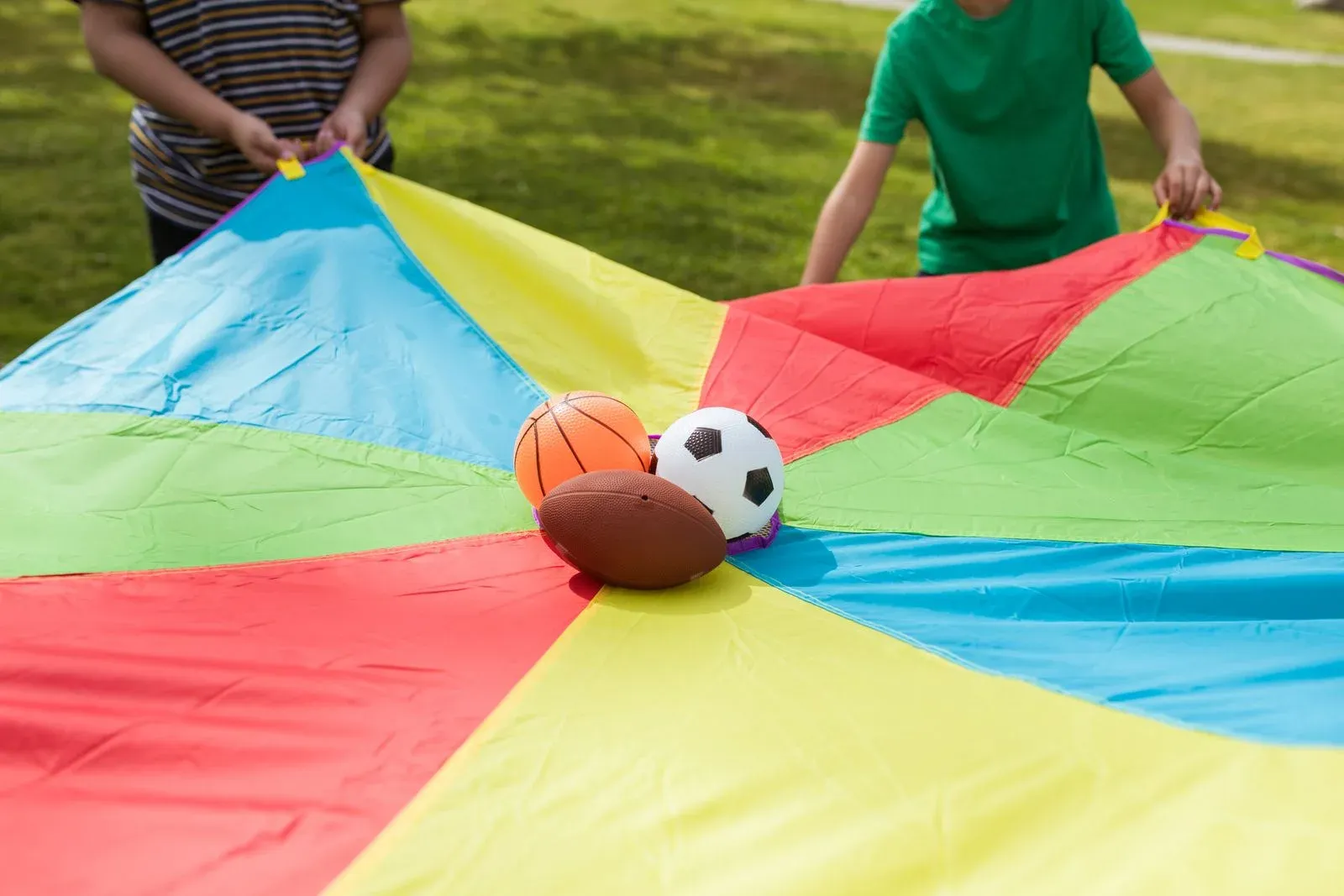
Cooperative outdoor games work when children can see the shared goal and each person has a job. One child can call, another can carry, and another can watch the route. The group completes a task together. These games are original park adaptations informed by Playworks’ cooperative games guide, which emphasizes explaining the challenge, pausing for group reflection, and trying again.
Choose a shared boundary
Use a clear area away from roads, paths, swing arcs, slide exits, and other groups. Keep the group compact and leave a route for visitors. The National Park Service’s Leave No Trace principles support planning ahead and being considerate of other visitors.
Explain three roles before the first round: caller, movers, and adult lookout. Rotate the child jobs while the adult keeps the boundary.
Four cooperative games
All arrive together
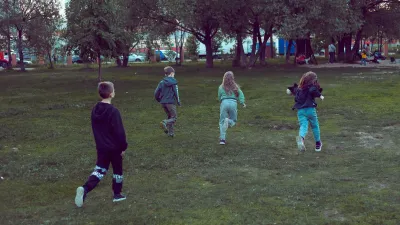
Choose a landmark no more than a short walk away. The caller names the destination. The movers walk together, and the group pauses when the last person arrives. The adult can shorten the route at any time.
Pass the soft parcel
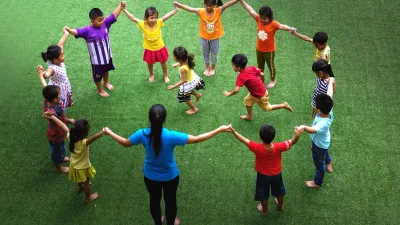
Children pass a scarf or soft ball around a small circle. The group goal is one complete round without dropping it. A child can place the object into the next person’s hands. Keep the object low and use one item.
Shape switch
The adult calls line, circle, or pairs. Children arrange themselves without pushing or touching. When the shape is complete, the caller says “reset,” and everyone returns to a standing group. A child can point to the next shape instead of calling it.
Story relay without racing
One child carries a pretend message to the adult, then tells the next child where the story goes. The group walks the message from landmark to landmark. The adult controls the order and pace. The story ends when everyone returns to the starting point.
What makes a group game inclusive?
Offer a seated role, a walking role, and a watching role. A child can join for one round and then observe. Avoid using physical speed or memory as the only way to contribute. Ask, “What job would you like?” rather than assigning a child a deficit label.
If the group gets competitive, repeat the shared rule and remove the score. Noncompetitive party games has more formats for birthday groups. If the park becomes crowded, shrink the goal to one circle or one short walk.
Close with a group check
Ask children what job they liked, then announce the last round. Pack any objects and check the ground. The adult can end the activity while the group is still successful, then move to free play.
For a birthday group that needs a shorter reset between rounds, use noncompetitive party games. A no-winner version of two classic races is in sack race and three-legged race.
For more ideas by age and equipment, see our list of playground games for kids. Older preschoolers can add radios to a team game, and the kids walkie talkie guide compares three sets. If you want a group prop, the best play parachute for kids guide compares sizes by group. See the field day games for preschoolers plan for how to use these games as stations.
Sources
- Playworks, Putting Play Back in Playground cooperative games guide, retrieved 2026-09-06.
- National Park Service, Leave No Trace Seven Principles, retrieved 2026-09-06.
Explore more park games.