Simon Says Outdoor Game: Movement Prompts for a Park
Run Simon Says outdoors with a clear play zone, simple movement prompts, and preschool variations that keep children participating.
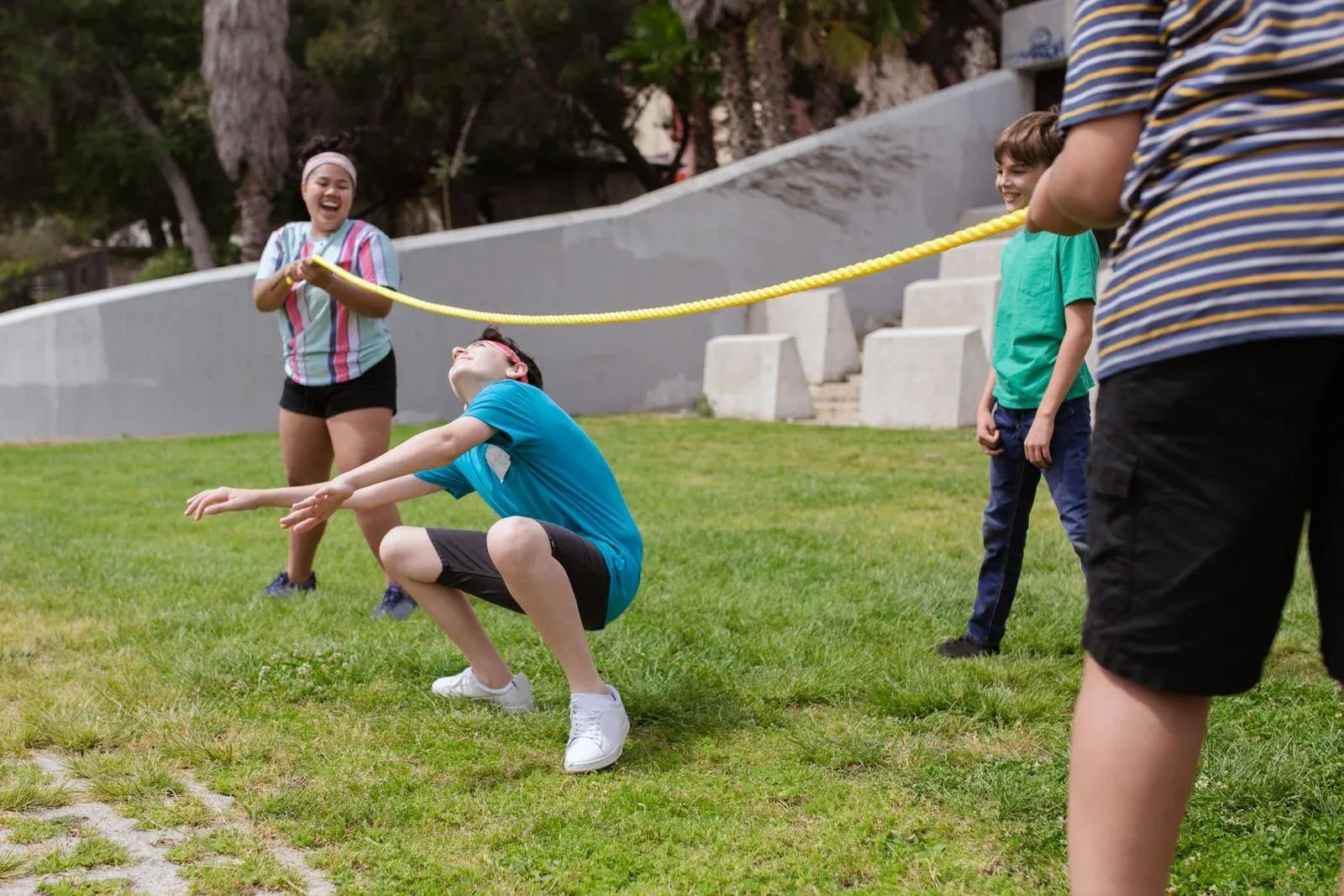
An outdoor Simon Says game needs a small, visible play zone and commands that keep bodies spaced apart. The caller gives one movement only after saying “Simon says.” For younger children, remove the elimination rule. Everyone can make a funny reset movement and stay in the next round.
Set up a clear space
Choose a flat area with no nearby swings, slide exits, benches, or moving traffic. Ask children to stand where they can stretch their arms without touching anyone. If the park is busy, use a seated or standing-in-place version. Keep your voice low enough that it does not compete with other groups.
Playworks’ Simon Says game library recommends a practice round and clear spacing. It also lists movement prompts such as running in place, hopping, and balancing. For this park version, stay with movements that fit the surface and the child’s comfort.
How to play
Explain the one rule: follow the movement only when the caller says “Simon says” first. Give a practice command: “Simon says touch your shoulders.” Then give a command without the phrase: “Touch your toes.” If a child follows the second command, say, “That was a practice trick. Make a star shape and join the next call.”
Use one command at a time. Start with touch your head, reach high, turn once, march in place, freeze, and make a quiet animal sound. Let children take turns as caller. A preschool caller can hold up a picture or demonstrate the movement while an adult says the words.
A low-pressure command menu
- Simon says tap your knees.
- Simon says reach for a cloud.
- Simon says make two tiny steps.
- Simon says freeze like a statue.
- Simon says point to the finish landmark.
- Simon says make a butterfly shape with your arms.
Avoid commands that send children toward another person, require eyes closed, or ask them to climb, jump from height, or lie in a traffic lane. The caller should not use “run” unless the group has a wide, empty area and a clear stop plan.
What should happen when someone moves early?
Use a reset instead of sending the child out. Options include making a statue, giving the caller a high five, or choosing the next safe command. The group remains together, and the rule still matters because the child waits for the next turn. If a child finds the trick confusing, play three commands with no trick first.
For a toddler, replace the phrase with a visible cue. Say “Simon says” while touching your shoulders, then invite the child to copy. When that is familiar, keep the movement but vary the cue. The parent-child park games guide has more one-adult variations.
End before the rules get noisy
Stop after every child has called once, or after five minutes. Ask the last caller to choose a closing movement everyone can do. Then gather any cards or objects and move to another activity. On a crowded day, use a seated version and keep the game beside the adult.
For a stop-and-go game with a clear route, try red light green light and shorten the course for younger children.
Sources
- Playworks, Simon Says game library, retrieved 2026-09-06.
- National Park Service, Leave No Trace Seven Principles, retrieved 2026-09-06.
Explore more park games.