Wet Bags for Park Trips and Potty-Training Backups: Options Compared
Compare wet bags by closure, capacity, wash care, handle, and the kind of damp clothing a park trip creates.
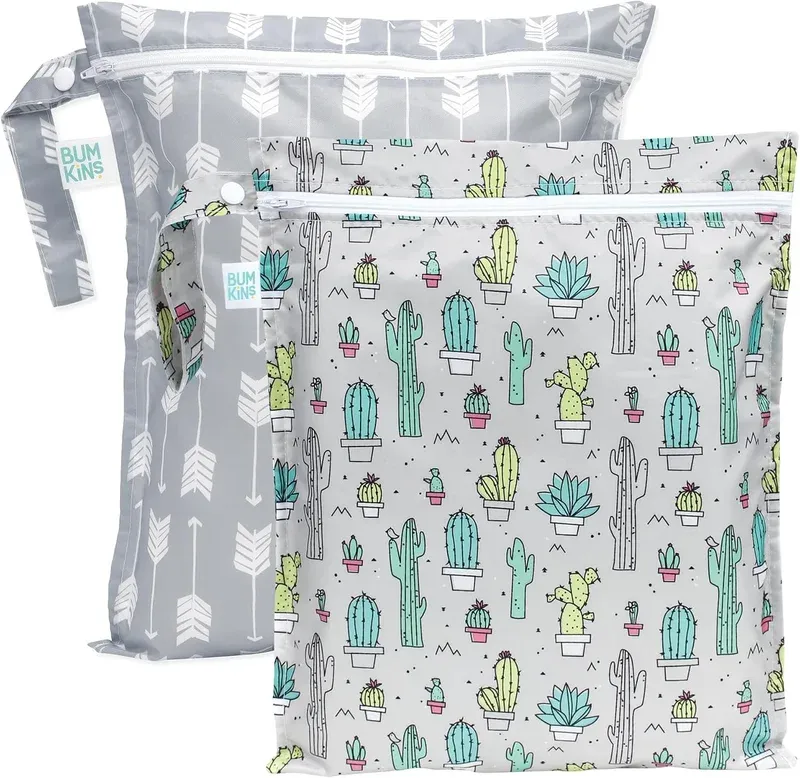
A wet bag is a small boundary between damp clothing and the rest of the park kit. Choose it by the amount of clothing you normally carry, the closure you can use quickly, and the care instructions you will follow.
This guidance draws on the linked manufacturer pages and product listings. No leak, odor, durability, or hands-on test is claimed.
Two formats with different jobs
The Bumkins Wet Bag 2-pack uses polyester with embedded TPU, heat-sealed seams, a snap handle, and a 336-cubic-inch capacity. The listing says it can be machine or hand washed and also says the zipper is not fully leakproof. Use it for damp clothing or a potty-training backup, with an outer barrier for very wet or soiled items.
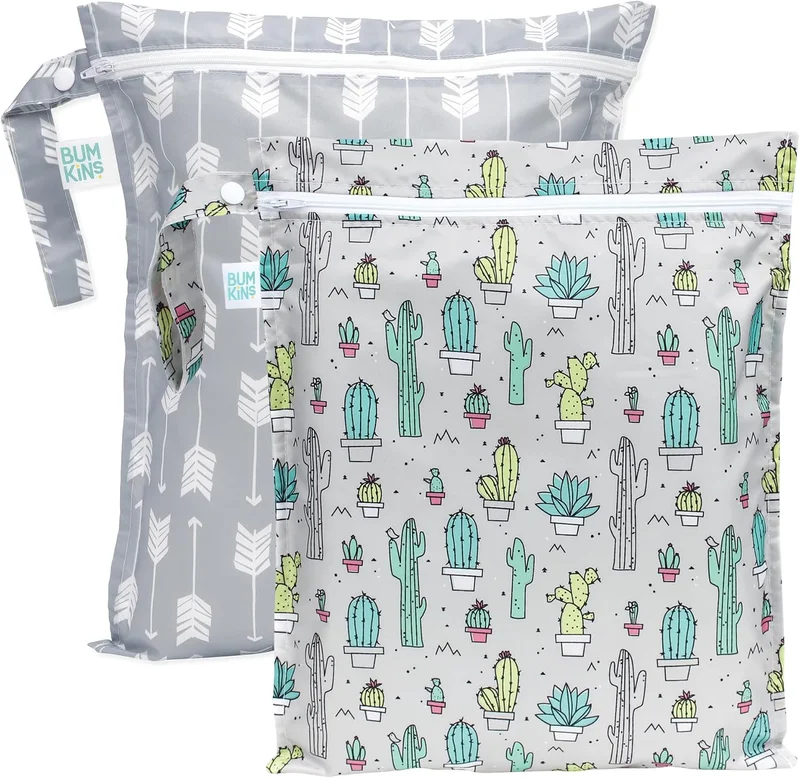
Bumkins Wet Bag 2-pack
The Skip Hop Wet/Dry Bag is a larger 12-liter format with two sections, a waterproof PEVA lining, a strap, and machine-washable care. Choose it when separating wet and dry clothes or carrying a larger change of clothes matters; it is still a clothing container rather than food storage.
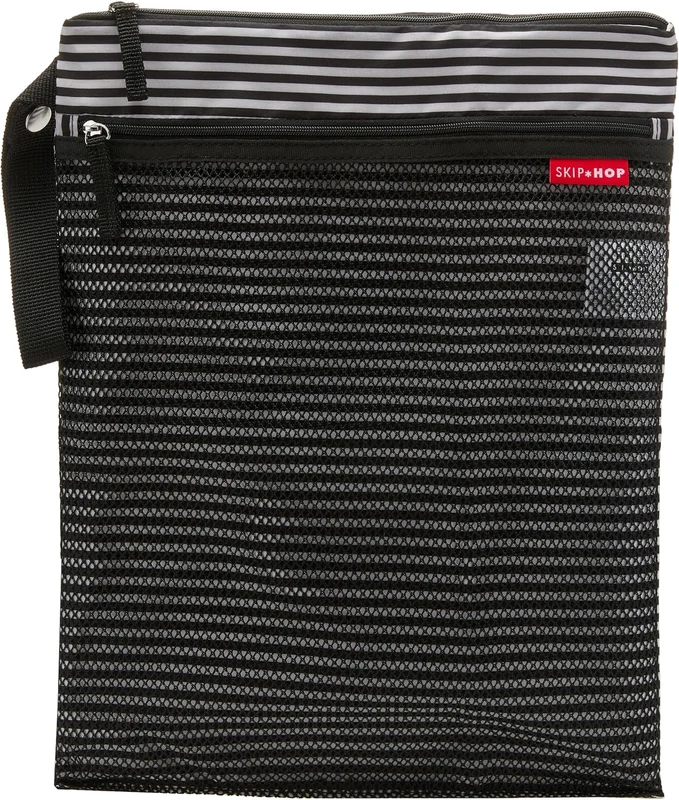
Skip Hop Wet/Dry Bag
Match the capacity to the problem
A small bag may hold a wet shirt and socks. A larger bag may hold a complete outfit after a potty-training accident or a wet swimsuit and towel. Put the actual backup clothes in a bag at home to check the size before buying.
The potty-training park plan explains why a complete backup should stay accessible. For a short outing, do not carry a large bag simply because it could hold more.
Compare closure and handling
Look at the zipper, drawstring, snap, or other closure on the exact product. Ask whether an adult can close it with one hand and whether the child can avoid opening it by accident. A handle or loop can make a wet bag easier to carry separately while the park bag is being reset.
The official Bumkins Wet Bag product page and wet bag collection show the current product form and maker-listed features. Recheck capacity, closure, materials, and washing directions for the exact size or print.
Read the care directions
A wet bag should not become a permanent storage place for damp items. Empty it when you get home, follow the manufacturer’s washing and drying instructions, and store it dry. Check seams and the closure after cleaning.
Do not describe a bag as odor-proof or leakproof unless the maker makes that claim for the exact product and gives the conditions. Use a second outer bag if the clothing is very wet or soiled and your family’s care routine requires it.
Separate food and clothing
Keep the wet bag in the cleanup or change zone, away from snack containers. A bag can contain damp clothing without being a food-storage item. The one-bag park kit shows how to keep those zones apart.
Choose by route
For walking or transit, a lighter bag with a secure handle may be easier to manage. For a car trip, capacity and washing convenience may matter more. The car-free outing plan helps make that tradeoff explicit.
Recheck the maker’s current size and care page before purchase. A wet bag earns its place when it keeps the backup clothing contained and is easy to reset after every visit.
Put the clean backup outfit beside the empty wet bag before leaving home. After an accident or splash, the adult can move the dry clothes into place, seal the used items, and continue or return home. Restock the dry outfit and open the bag to dry as soon as the family returns.
Explore more park outings.