Nature Bingo for Kids: Notice More on a Park Walk
Use a flexible nature bingo game for ages 3–7 with look-only squares, short rounds, mixed-age jobs and low-impact park rules.
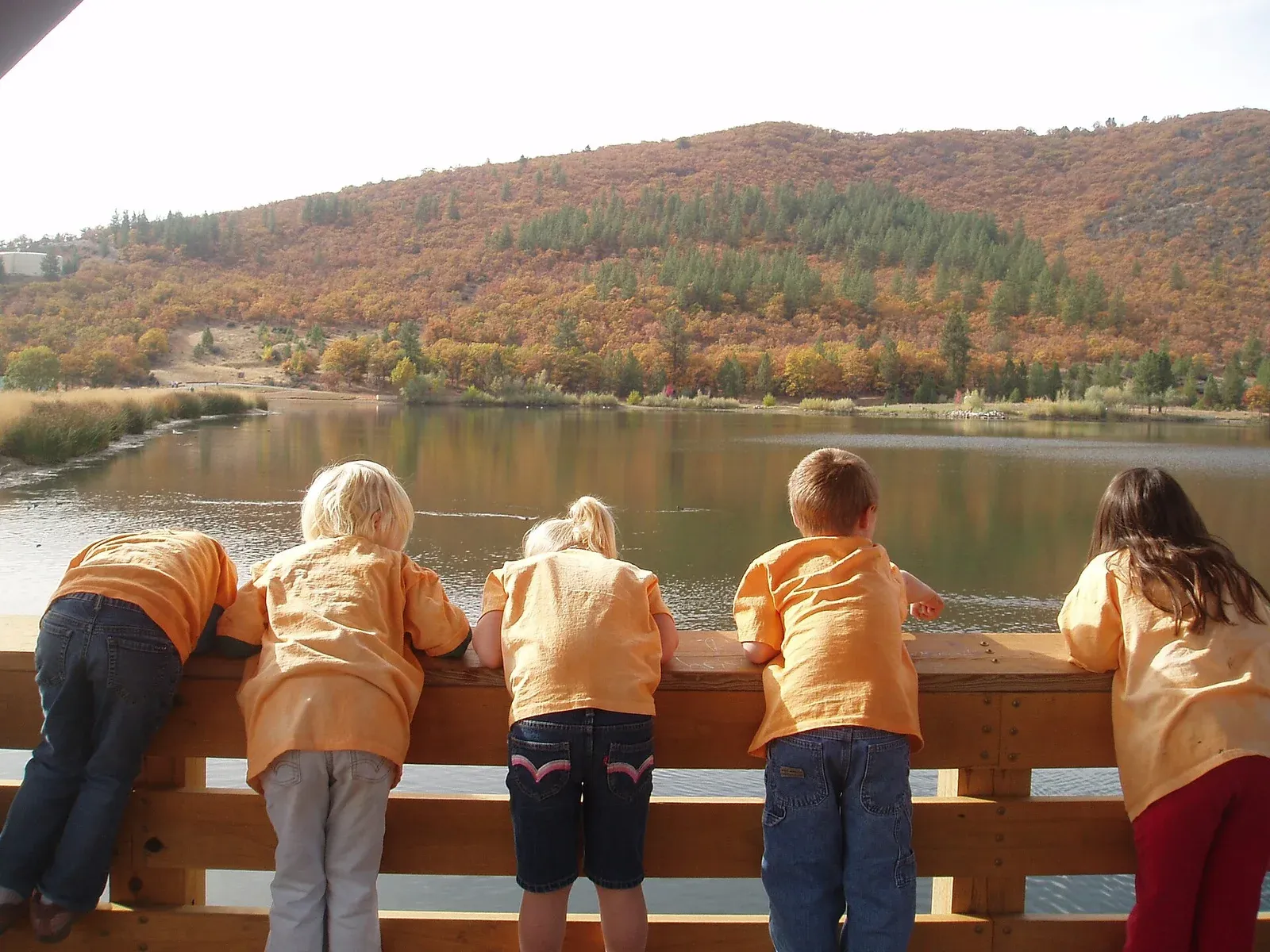
Nature bingo gives a park walk a little shape without requiring children to identify every plant or animal. Use squares such as “something yellow,” “a bird sound,” “a long shadow,” or “a repeating pattern.” Children can point, describe, draw, or photograph a square. They do not need to pick anything up.
The National Park Service’s Leave No Trace guidance includes leaving natural objects where they are and respecting wildlife from a distance. Build those rules into the game from the first square.
Choose squares that reward noticing
A good square has one visible idea and more than one possible answer. “Find an oak leaf” is narrow and depends on local knowledge. “Find a leaf with a point” lets children participate in many parks.
Try these square ideas:
- A rough surface.
- A smooth surface.
- Something that is moving.
- Something that is still.
- A sound you cannot see.
- A shadow longer than your hand.
- Two shades of the same color.
- A pattern that repeats.
- A place where water could collect.
- A sign that an animal was nearby.
- A tree with branches pointing in different directions.
- Something that makes you ask a question.
You can use three squares for a toddler’s short walk, a row of five for a preschooler, or a full grid for older children. Keep the categories visible on a phone or in a notebook. The game should be playable without a special printed sheet.
Run a short round
Choose one meeting point and explain the boundary before moving. Walk together for two or three minutes, then stop. Ask each child to share one square. This “walk, stop, share” rhythm keeps the activity from spreading into planted areas or toward water.
When a child claims a square, ask for evidence in child-friendly language. “What did you see that made you choose that?” A sound can be described as high, low, repeated, or far away. An animal sign can remain a possibility. “Maybe” is a good nature word.
Avoid calling a row the winner if the group includes a child who prefers watching. Celebrate a careful description, a new question, or a kind choice to leave something alone. The nature scavenger hunt guide has more open-ended clue ideas if a bingo card starts feeling repetitive.
Make it work for mixed ages
Give young children a pointing job. Give older children a recording job. An adult can keep the route and translate a child’s description into a note. Children can also work in pairs, with one person looking and the other listening.
For a child who does not want a busy grid, use three “notice cards”:
- Find a color.
- Find a sound.
- Find a shape.
For a child who wants more challenge, add a comparison: “Find two leaves that are different in one way and alike in one way.” This encourages careful looking without turning the outing into a quiz.
Keep the game low-impact
Bingo squares should never ask children to touch wildlife, enter a nest area, pull flowers, or disturb bark and soil. If a park has a “no collecting” rule, follow it. Even where collecting is allowed, a look-only version is easier to supervise and leaves more for the next visitor.
Finish by asking each child to choose one square to revisit next time. A repeated walk becomes a small record of seasonal change, much like the observations described in the National Park Service phenology lesson.
Sources and related reading
- National Park Service, Leave No Trace Seven Principles
- National Park Service, Exploring Seasonal Changes with Phenology
- Pair this with nature color hunt ideas.
- Use nature play for mixed ages when siblings need different jobs.
Explore more nature play.
.jpg)