Balance Games for Preschoolers Outside: Stay Low and Play Fair
Use ground-level balance games for preschoolers outside: statues, wide-foot challenges, gentle lines, and partner copying.
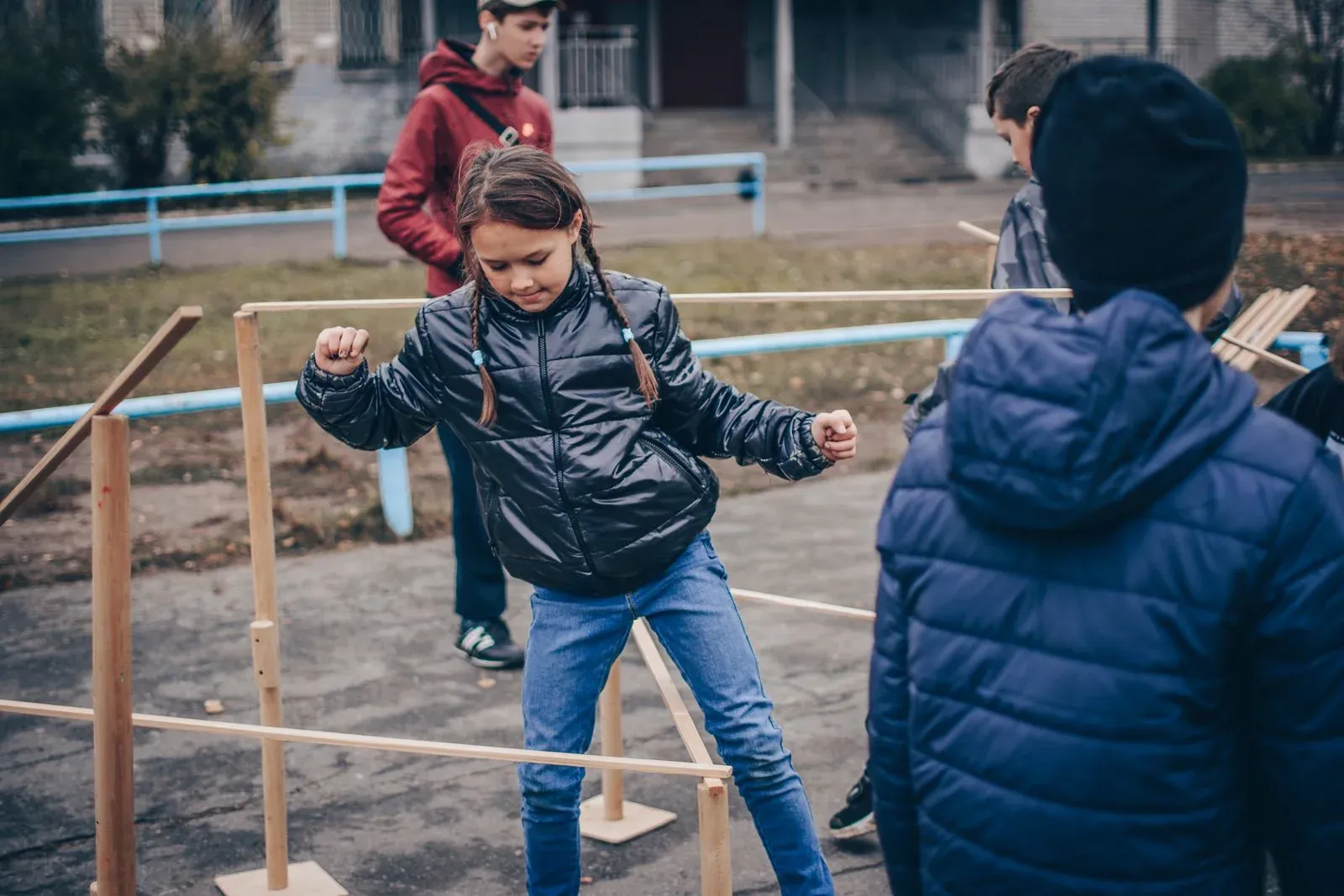
Preschool balance games can stay close to the ground. Use standing statues, wide-foot poses, short lines, and partner copying on a clear surface. Do not turn benches, rails, curbs, or playground edges into balance beams. A child may hold an adult’s hand, keep both feet down, or choose a walking version.
Choose a stable surface
Check for roots, loose gravel, puddles, holes, and nearby traffic. Choose a patch away from paths, swings, slide exits, and other groups. The National Park Service’s Leave No Trace principles support staying on suitable surfaces and keeping shared areas open.
Tell children the game is about making a shape or pausing, not staying up longer than another child. If a child wobbles, the adult can say, “Find your feet,” and restart.
Four low-level balance games
Statue gallery
The adult calls a shape: tall tree, wide star, or small mouse. Children hold the pose for a count of two, then walk normally. Let a child choose the next shape. Keep the poses on the ground and avoid closed eyes.
Line walk
Use a visible pavement seam or a chalk line where drawing is allowed. Walk beside the line with arms open, then step across it. The adult walks beside the child. If the line becomes busy, move away and use an imaginary line.
Wide and narrow feet
Stand with feet wide, then bring them closer, then return to an ordinary stance. The child chooses when to change. This game needs no route and works beside a bench or picnic area.
Partner mirror
One person makes a slow standing pose. The other copies. Switch after three poses. A seated child can copy hand and shoulder shapes. The copycat games guide has more options for a child who prefers imitation to holding still.
Change the challenge without raising the risk
Use one variable at a time. A younger preschooler can stand with feet wide, touch knees, and return to ordinary standing. An older child can make a two-pose sequence, such as tall tree then wide star, while the adult says the order. The child can also choose whether to hold a pose for one breath or two; there is no need to count for a long time.
Try a “find your feet” round when a child wobbles. The adult names left foot, right foot, or both feet, and the child points or taps. If that is still too much, sit together and copy hand shapes. A child who wants movement can walk along the visible seam instead of balancing on it. Keep both feet on the ground whenever the surface is wet, crowded, or unfamiliar.
For two children, give one the pose-maker role and the other the mirror role, then switch. Keep the adult beside the pair so the game does not turn into pushing or a race. End after each child has chosen one shape, before the group begins looking for higher surfaces.
If attention fades, use a three-part reset: name the feet, make one pose, then walk to the adult. This gives the child a finish without asking for another challenge. Shoes, coats, and unfamiliar ground can change how a pose feels, so let the child choose a wider stance or a handhold. The adult can model that choice and then end the round.
When should you switch?
Switch to walking when the ground becomes wet, the area fills, or children start pushing for space. Avoid making balance a contest. Give each child one leader turn, then close with ordinary walking. A two-minute game is enough when the park is busy.
Say “last pose” before the final round. Check that no chalk or personal objects remain on the ground, then move to free play. The adult remains responsible for the route and the decision to stop.
If a child wants to move instead of hold a pose, switch to jumping games for preschoolers and keep the landing area clear. When a child is ready for a rope, the jump rope games for preschoolers start with the rope on the ground.
For more ideas by age and equipment, see our list of playground games for kids.
Balance steps can join a walk-through obstacle course for toddlers. A flat hoop on the grass works as a balance station, and the hula hoops for kids guide lists sets. Hopping on one foot comes next for many children, and how to teach a child to skip builds on it.
Sources
- National Park Service, Leave No Trace Seven Principles, retrieved 2026-09-06.
- Playworks, Dance Freeze game library, retrieved 2026-09-06. Used for freeze-and-rejoin structure; the ground-level adaptations are original.
Explore more park games.