Best Bird-Watching Books for Kids: Start With the Right Job
Choose bird-watching books for ages 3–7 by job: story, field identification, activity, or recording, with publisher evidence and clear limits.
This is a researched comparison, not a field-tested ranking. Start with the job the book must do: a first bird outing, a field identification question, an activity at home, or a reference for an older reader. For ages 3–4, an adult-read book or a short picture list usually works better than an advanced field guide.
For a child age 5+ who wants a complete first outing, Toysmith Little Birder Set combines kid-sized binoculars with a pocket bird guide and bird ID cards. Toysmith lists the set for ages 5+ and shows the contents on its manufacturer page. For a book-only reference, National Geographic Kids Bird Guide of North America, Second Edition is listed for ages 6–9 and covers 150 species through detailed and mini-profiles.
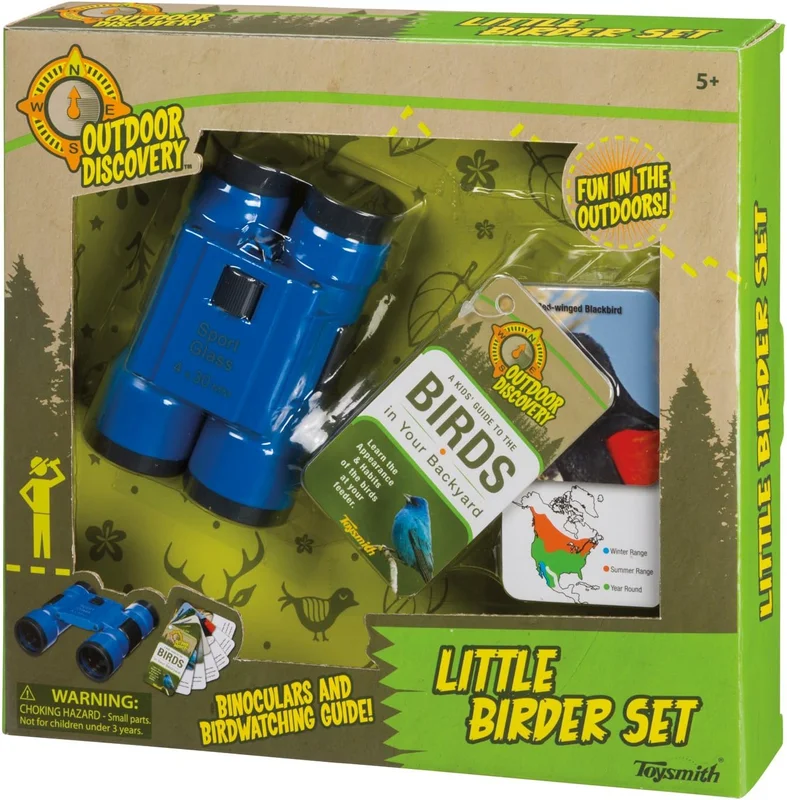
Toysmith Little Birder Set
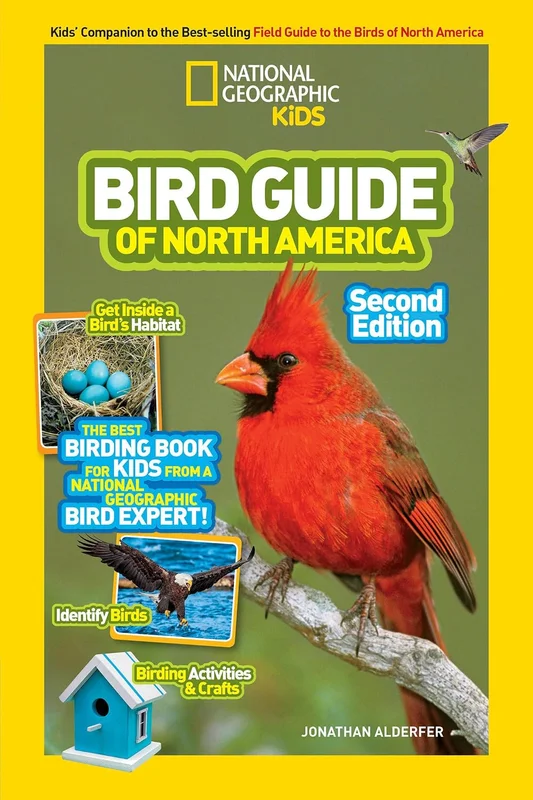
National Geographic Kids Bird Guide of North America, Second Edition
Match the book to the outing
| Job | Product to consider | Supported details | Fit limit |
|---|---|---|---|
| Carry one simple birding set | Toysmith Little Birder Set | Model 6005; binoculars, 20-page pocket guide, bird ID cards, and bag; Toysmith lists ages 5+ | It is a small starter set, not a full species reference |
| Compare common birds across North America | National Geographic Kids Bird Guide | Second edition with 50 detailed and 100 mini-profiles; listed reading age 6–9 | A younger child will need an adult to read and narrow choices |
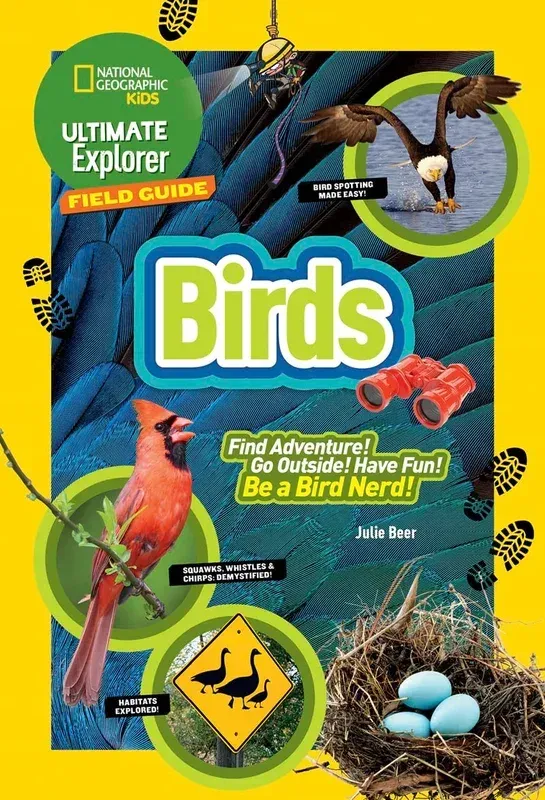
| Ask “what should we look and listen for?” | Ultimate Explorer Field Guide: Birds | Portable photo-filled guide with prompts and coverage of U.S. birds; listed reading age 8–12 | Use it as an adult-led or older-sibling guide for ages 3–7 |
| Keep a deeper family reference | The Young Birder’s Guide | 300 common U.S. and Canadian birds, photos, drawings, range maps, checklist, facts, vocalizations, and habitat | Listed reading age 9–12; too advanced for independent preschool use |
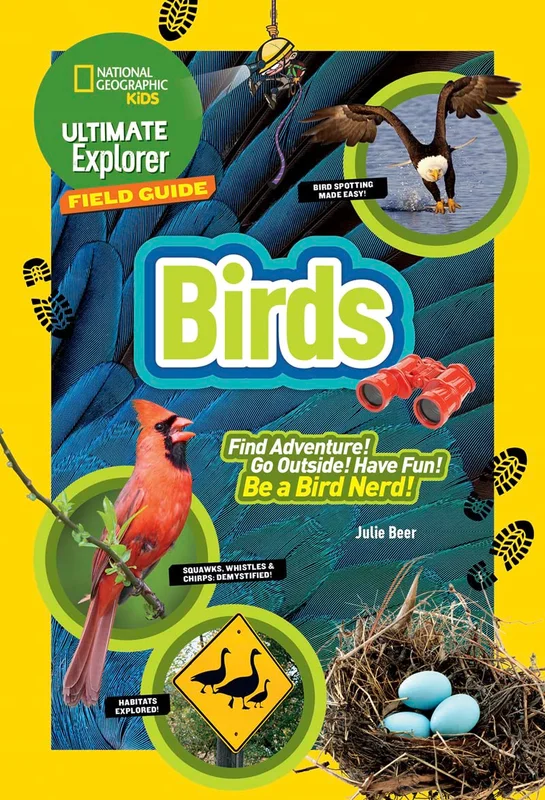
Ultimate Explorer Field Guide: Birds
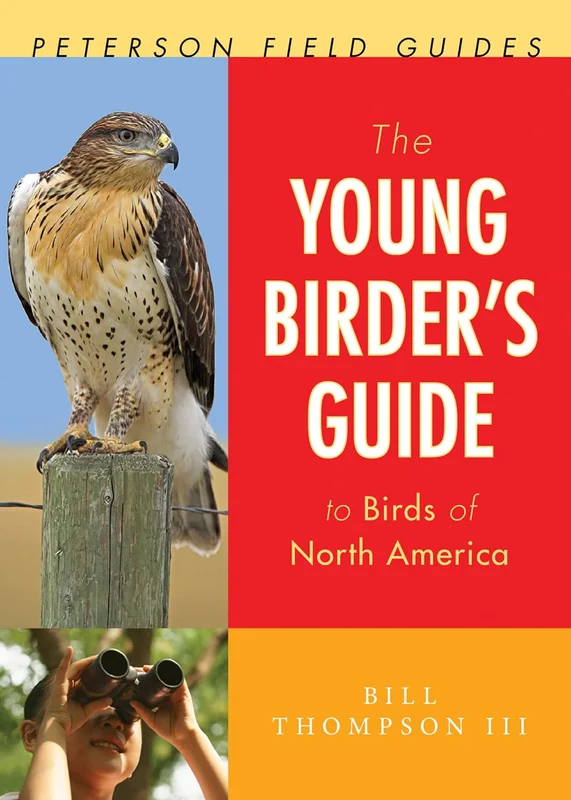
The Young Birder’s Guide
The Little Birder Set is a practical first choice when the child wants to carry something and look at nearby birds. The National Geographic guide is the stronger book choice when the family wants one volume for repeated North American observations. The other two books make more sense when an adult or older sibling will translate the details.
Build a book-and-look routine
Keep the question narrow: “Was that bird larger than the robin?” or “Did it stay in the tree or on the ground?” Read one page before walking, then close the book and listen. This keeps the guide from replacing the actual observation.
The kids’ field-guide comparison explains regional coverage and reading-age limits. For a gear-free outing, use bird watching with kids and let a child describe a bird without naming it.
Know when a different book is better
A storybook can be the right answer when the child wants a read-aloud rather than identification. The books compared above focus on activities and identification rather than picture stories. Choose the book that matches the child’s question, then use a library copy to test whether the pages invite another walk.
Field guides should support tentative language. Record “small brown bird near the fence” before choosing a name. Do not approach nests, feed wildlife, or use a book as permission to leave a marked path.
Product details were checked against current Amazon listings and manufacturer pages on 2026-09-12; editions, availability, age labels, and specifications can change. The products above were not field-tested by this site.