Best Kids Field Guide for Birds: Pick by Format and Use
A researched guide to kids’ bird field guides, comparing regional coverage, page design, portability and whether a child can use one outside.
This is a researched comparison, not a field-tested ranking. For ages 3–5, choose a book an adult can read aloud. For ages 6–7, choose a guide that matches the family’s region and the child’s patience. A compact regional guide can be more useful than a larger North America book that stays on a shelf.
If the family lives in the eastern United States and wants a visual guide for an older child, Smithsonian Kids’ Field Guides: Birds of North America East is the most targeted option here. Its listing describes identification by color, size, shape, song, and habitat, with a 6–10 reading age. For broader coverage, National Geographic Kids Bird Guide of North America, Second Edition is listed for ages 6–9 and describes 50 detailed profiles plus 100 mini-profiles.
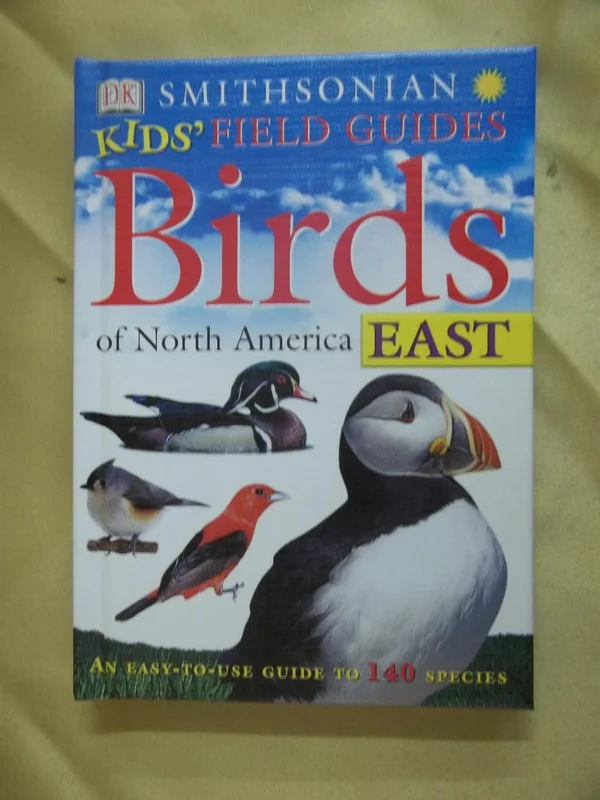
Smithsonian Kids’ Field Guides: Birds of North America East
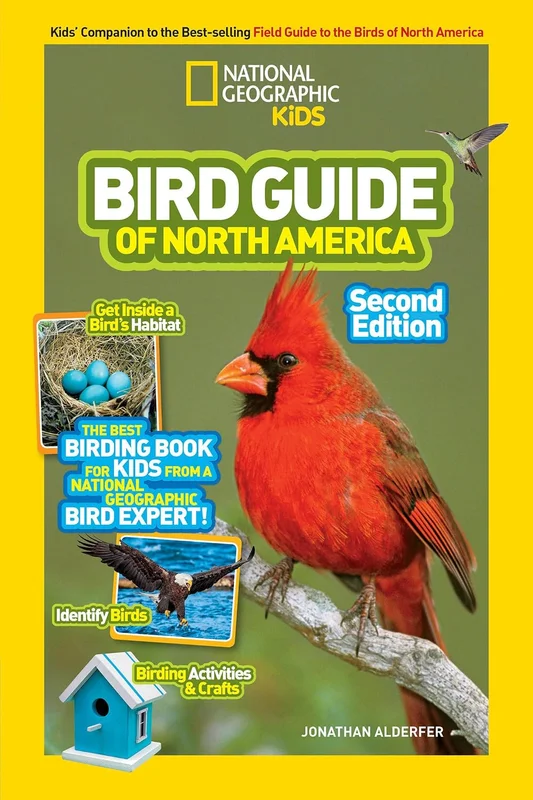
National Geographic Kids Bird Guide of North America, Second Edition
Compare field-guide jobs
| Guide | Best fit | Supported details | Limit for ages 3–7 |
|---|---|---|---|
| Smithsonian Kids’ Field Guides: Birds of North America East | Ages 6–7 in the eastern U.S. with an adult nearby | 160 pages; identification by color, size, shape, song, and habitat; listed reading age 6–10 | Regional coverage is for eastern North America; younger children need an adult reader |
| National Geographic Kids Bird Guide of North America | Ages 6–7 who want broad North America coverage | Second edition; 50 detailed profiles and 100 mini-profiles, for 150 species in the listing description; listed reading age 6–9 | Its larger format may need a backpack or adult support |
| Peterson First Guide to Birds of North America | An adult-led compact reference | Condensed guide to common North American birds; 128 pages and a small 3.75-by-7.25-inch format; listed reading age 11+ | Treat it as an adult-read reference for this audience |
| The Young Birder’s Guide to Birds of North America | A family reference for older siblings | 300 common U.S. and Canadian birds, photos, drawings, range maps, checklist, facts, vocalizations, and habitat; listed reading age 9–12 | It is too advanced for independent use by most ages 3–7 |
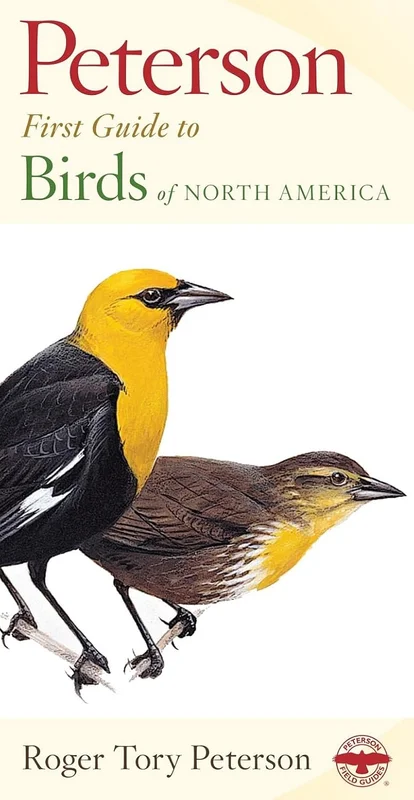
Peterson First Guide to Birds of North America
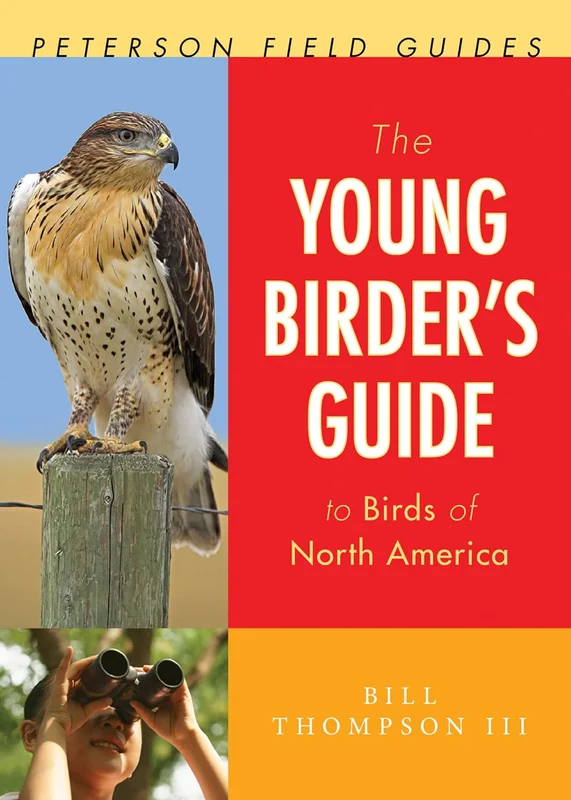
The Young Birder’s Guide to Birds of North America
The Smithsonian guide earns the first look when regional coverage fits. A child can compare a bird’s visible color and shape while the adult reads the smaller text. Choose the National Geographic guide when the family travels across regions or wants more species in one volume.
The Peterson and Young Birder guides are useful household references for adults or older siblings. Their listed reading ages make that role clear. They can answer an adult’s question during a walk without becoming a demand that a preschooler identify every bird.
Use a guide without forcing certainty
Start with one clue: size, color, song, habitat, or behavior. Say “this may be” until the adult has compared more than one feature. A drawing or voice note can preserve the observation when the book is too slow to open.
Use bird watching with kids for a short route and bird identification games when naming every bird would make the walk tiring. A field guide should extend attention, not turn the outing into a quiz.
Borrow before buying
Check a library copy for regional fit and page handling. Watch whether the child returns to the same section, can point to a matching clue, and wants to carry the book. Buy a dedicated guide when that pattern repeats. Keep identification tentative and leave birds, nests, and feathers where they are.
Product details were checked against current Amazon listings on 2026-09-12; editions, availability, age labels, and specifications can change. The products above were not field-tested by this site.