Best Bug Catcher Kit for Kids: Humane Features to Check
A researched guide to bug catcher kits for kids, comparing ventilation, viewing, small parts, release routines and park rules.
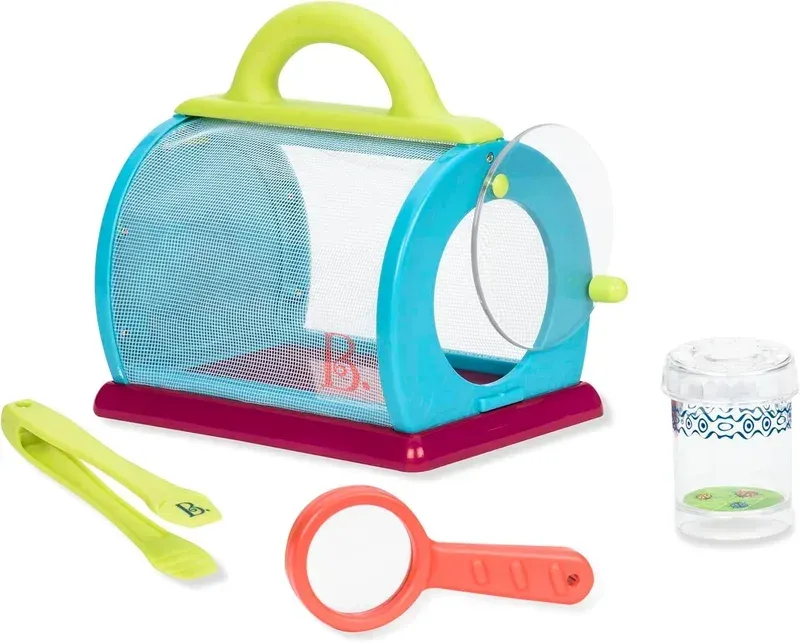
This is a researched buying guide, not a field-tested ranking. Choose the smallest kit that supports a permitted, short observe-and-release routine: for ages 3–4, a simple mesh habitat can be enough; for ages 4+, a larger habitat adds viewing options; for ages 5+, a single soft-bristle catcher reduces loose parts. Skip capture when the park requires look-only observation.
For a younger child who needs a simple set, B. toys Bug Bungalow (BX1524Z) is listed for ages 3+ and includes a mesh case, magnifying container, magnifier, and tweezers. For ages 4+, National Geographic Bug Catcher Kit (NGBUGHAB) is made by JMW Sales, Inc. under the Blue Marble brand and includes a 360-degree habitat, two magnifying viewers, a net, and tweezers. For ages 5+, Educational Insights GeoSafari Seek & Peek Bug Catcher is a single soft-bristle catcher with a squeeze handle and 2x viewing window. These listed features help compare handling; they do not make a kit automatically humane in every use.
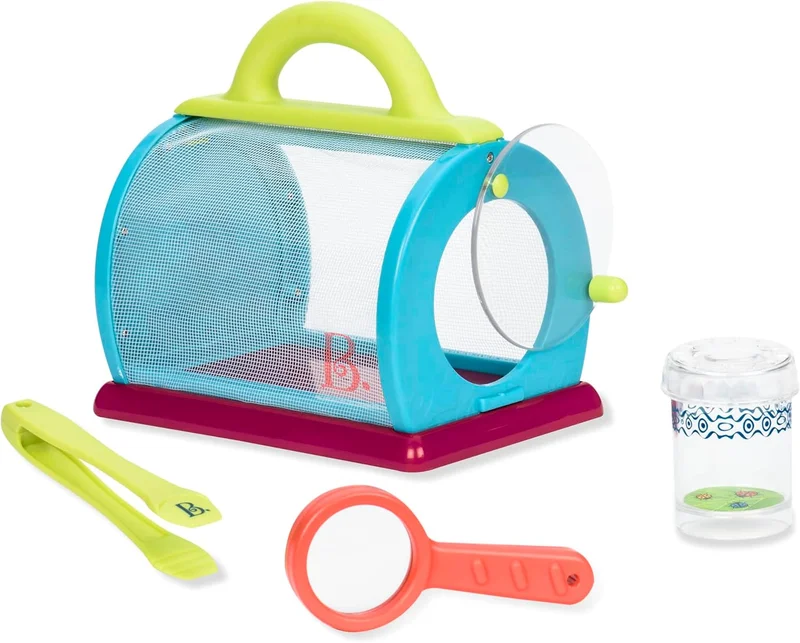
B. toys Bug Bungalow
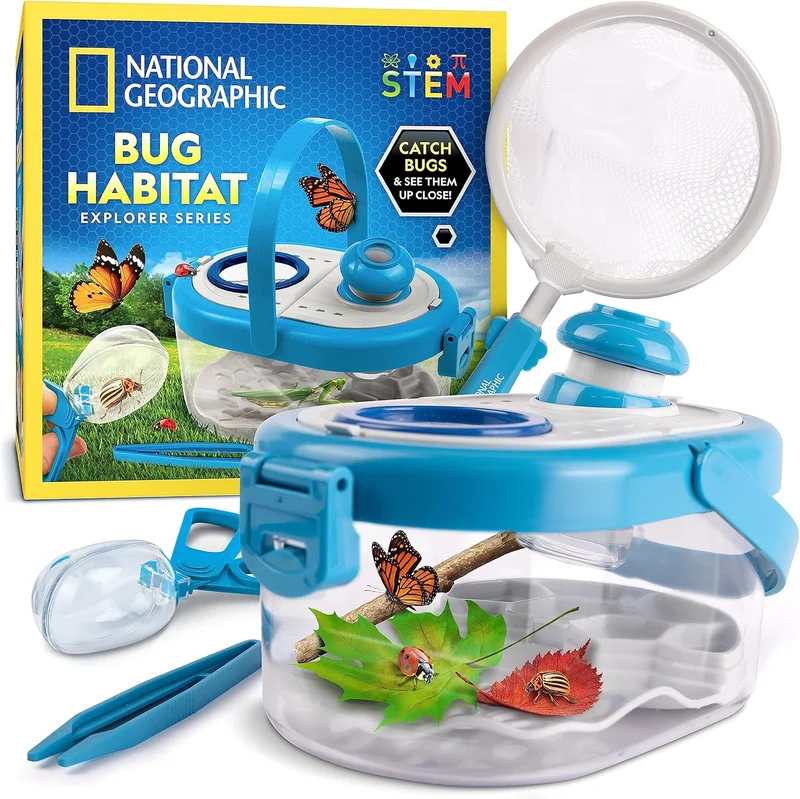
National Geographic Bug Catcher Kit
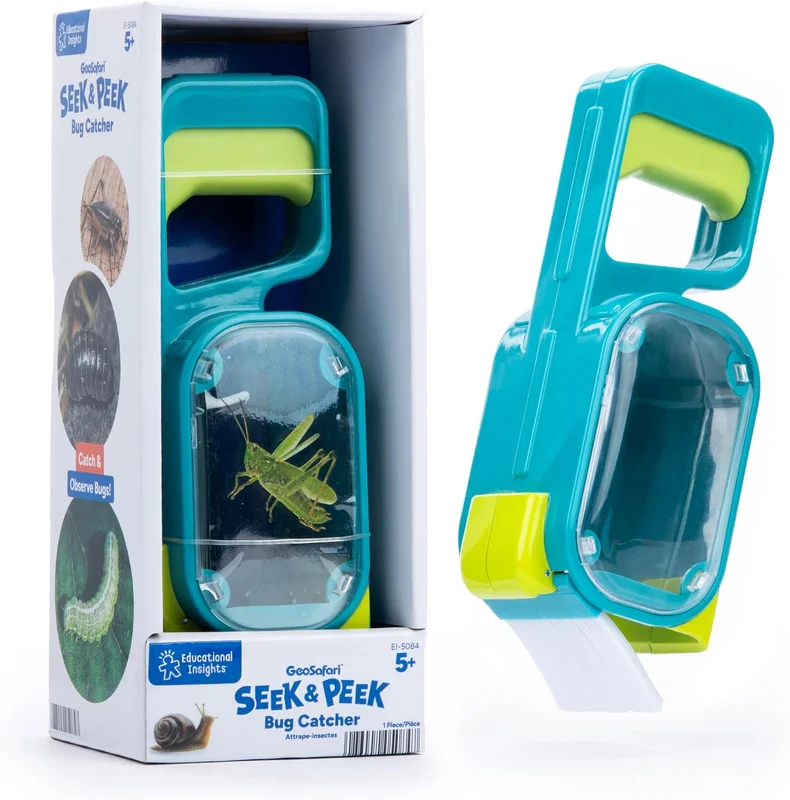
Educational Insights GeoSafari Seek & Peek Bug Catcher
Compare the formats
| Product | Best fit | Supported details | Tradeoff |
|---|---|---|---|
| B. toys Bug Bungalow | Ages 3+; one child making a short, close look | Four pieces: mesh case, magnifying container, magnifier, tweezers; model BX1524Z; manufacturer recommended age 3–8 | More pieces than a bare viewer; the adult manages the tweezers and release |
| National Geographic Bug Catcher Kit | Ages 4+; a family wanting a habitat and multiple ways to view | NGBUGHAB; 360-degree habitat, removable base, latching lid, two magnifying viewers, net, tweezers; no batteries listed | Larger kit to carry and clean; brand and manufacturer identity are Blue Marble/JMW Sales, not National Geographic |
| GeoSafari Seek & Peek Bug Catcher | Ages 5+; a child who wants to catch and release one small subject | Model 5084; soft bristle door, easy-squeeze handle, 2x viewing window | It is a single catcher, so it does not provide a separate habitat or group viewing |
| GeoSafari Bugservatory | Ages 5+; an adult-led habitat activity | Model 5086; habitat plus Seek & Peek catcher, secure latch, handle, multiple viewing windows, and guide | More setup, parts, and time; use only for a brief, shaded observation |
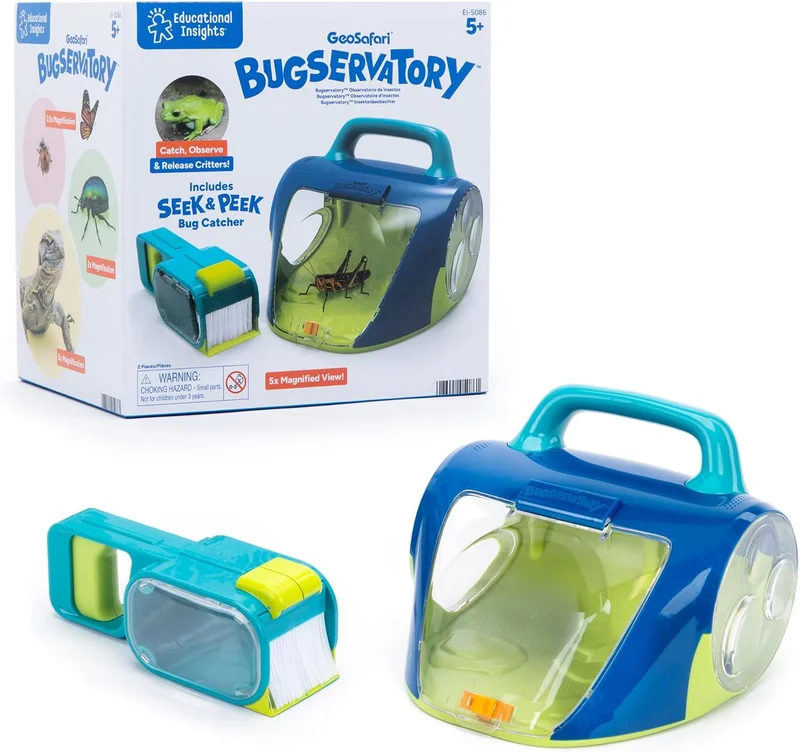
GeoSafari Bugservatory
Check the habitat before the feature list
Ventilation, a secure lid, a shaded viewing place, and a clear release routine matter more than a long tool list. B. toys describes a mesh case and a swing-up door for release. National Geographic’s listing describes a removable base and latching lid. Educational Insights describes a soft-bristle catcher rather than a tool that pinches the insect. Those details help compare handling, but they do not remove the need to choose an appropriate subject.
Use the bug viewer guide if the child only needs a container. Use insect observation for kids when the better choice is no capture.
Set the routine before the child catches anything
The adult checks the park rule, chooses a safe subject, decides how long the look will last, and identifies the release spot. Never handle stinging insects, spiders, nests, droppings, unknown animals, or anything a child wants to taste. Keep a container out of direct heat and release the animal where it was found.
A kit with a net, tweezers, and several viewers is useful only if the family will carry, supervise, and clean every piece. A notebook and a look-only route may answer the same question without moving a living creature.
Use the no-capture baseline
Try one visit with a pencil and ask the child to record color, shape, movement, and where an insect rested. If pointing and drawing are enough, do not add a catcher. If the child repeatedly wants a closer look and the park permits it, choose the least complex format that matches the child’s age and the adult’s capacity to supervise.
The hand lens versus bug viewer guide explains why a stationary lens often creates fewer risks and cleanup steps.
Research note and sources
Product details were checked against current Amazon listings and manufacturer pages on 2026-09-12; availability, age labels, and specifications can change. The products above were not field-tested by this site.