Hand Lens vs. Bug Viewer for Kids: Choose the Right Close Look
Compare a handheld lens and a lidded bug viewer for kids by subject, movement, ventilation, supervision, cleanup and park rules.
This is a researched comparison, not a field-tested ranking. Choose a hand lens when the subject can stay where it is; choose a bug viewer only when an adult has confirmed a brief observe-and-release activity is allowed and the child can follow it. For many ages 3–7 park walks, the hand lens or bare eyes creates fewer decisions.
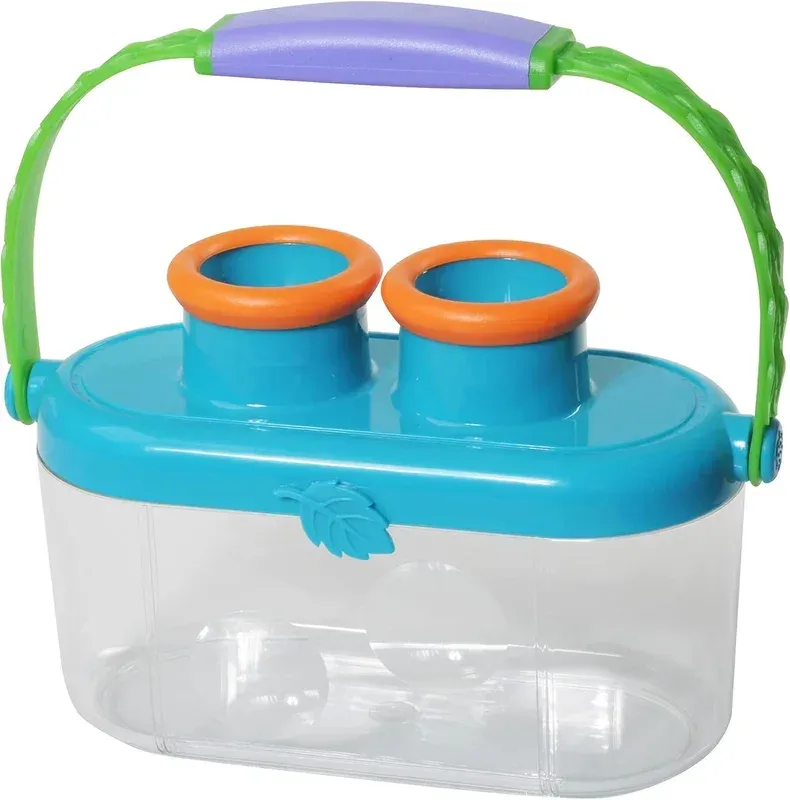
For a stationary close look, Learning Resources Primary Science Magnifier & Tweezers (LER2777) is the more contained choice: the manufacturer lists a 4.5x lens, 4.5-inch viewing area, built-in stand, 6-inch tweezers, washable plastic, and ages 3+. For a lidded viewer, Educational Insights GeoSafari Bugnoculars (EI-5091) are listed as a catch-and-observe tool with an air-holed lid and magnifying viewing points; the manufacturer description describes ages 3+ and multiple eyepieces. These tools solve different problems.
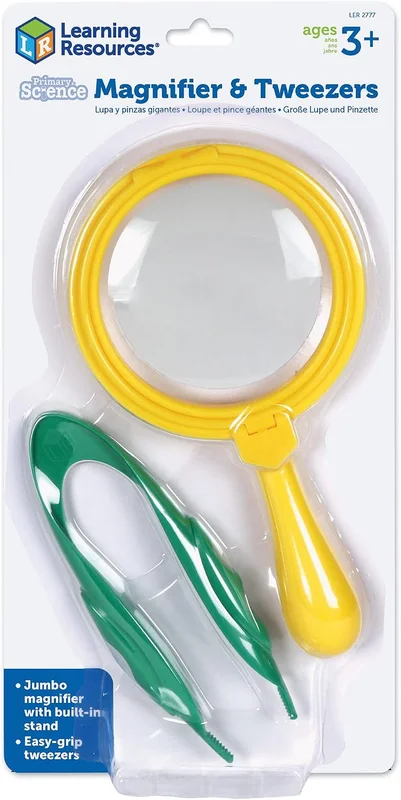
Learning Resources Primary Science Magnifier & Tweezers
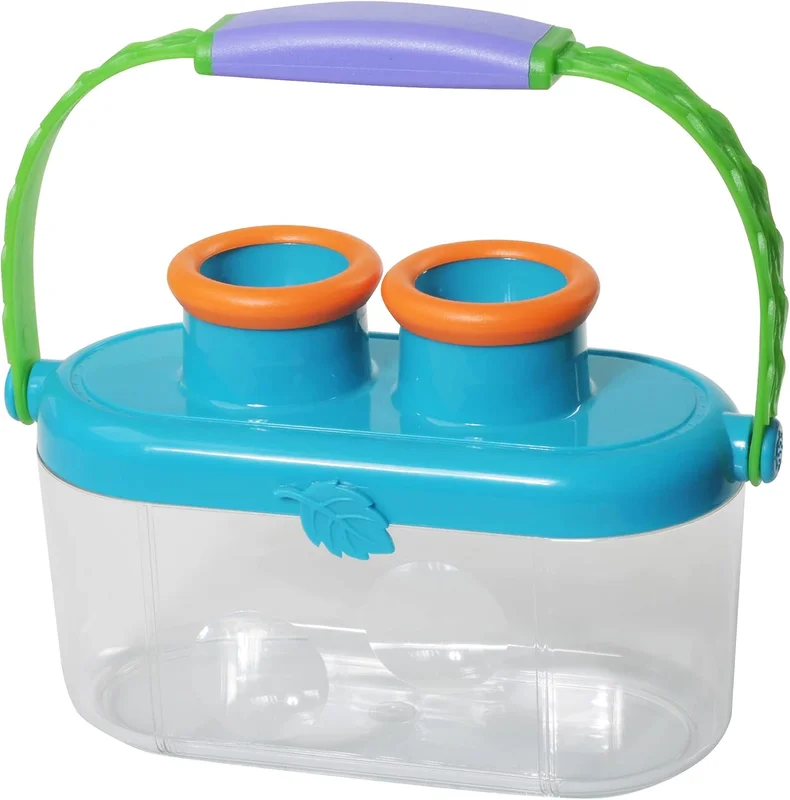
Educational Insights GeoSafari Bugnoculars
Compare the job, not the gadget
| If the child wants to… | Better starting point | Why | Boundary |
|---|---|---|---|
| Inspect bark, a leaf on the ground, or a fixed surface | Magnifier & Tweezers | Built-in stand and a broad listed viewing area can support a seated close look | Keep tweezers optional; do not pick living material |
| Watch a small moving insect briefly | GeoSafari Bugnoculars | Lidded container, air holes, and magnifying viewing points are designed for observation | Adult chooses the subject, time, route, and release place |
| Notice color, shape, or texture without touching | Bare eyes or a notebook | No capture, cleanup, or release step | Stay on the path and leave the subject alone |
Choose the hand lens for a look-only route
The Magnifier & Tweezers set is a better match when the child can sit beside a subject and describe what is visible. Its manufacturer-listed stand lets the lens rest for hands-free viewing, while the tweezers can stay in the kit. A hand lens does not make a moving insect easier to catch, and it does not justify approaching wildlife.
Use nature texture hunt or leaf observation activities for an outing that needs no container. A simple observation route is often easier to supervise than a capture activity.
Choose the bug viewer only for a bounded routine
Bugnoculars are a specific product, different from Educational Insights’ plain GeoSafari Bug Viewer. The listing identifies model EI-5091 as Bugnoculars; the maker describes an air-holed lid and magnifying eyepieces. That supports a short, adult-led viewing step, not long-term keeping.
Before opening the lid, confirm the park rule and identify the release place. Do not handle stinging insects, spiders, caterpillars, nests, droppings, unknown animals, or anything a child wants to taste. Keep the container shaded, keep the look brief, and return the creature to the place where it was found.
Count the extra decisions
A hand lens asks the child to hold or rest one tool and leave the subject in place. A bug viewer adds capture, ventilation, a secure lid, carrying, cleaning, and release. If the child wants to run, chase, or touch, switch to a look-only game. If the adult cannot stay beside the activity, skip the viewer.
The best bug catcher kit guide compares larger sets by the tools they add. More pieces do not remove the need for an adult boundary.
Research note and sources
Product details were checked against current Amazon listings and manufacturer pages on 2026-09-12; availability, age labels, and specifications can change. The products above were not field-tested by this site.