Best Nature Explorer Kit for Kids: A Careful Comparison
A researched guide to nature explorer kits for kids, comparing tools, carry format, age labels, storage and whether each piece earns space.
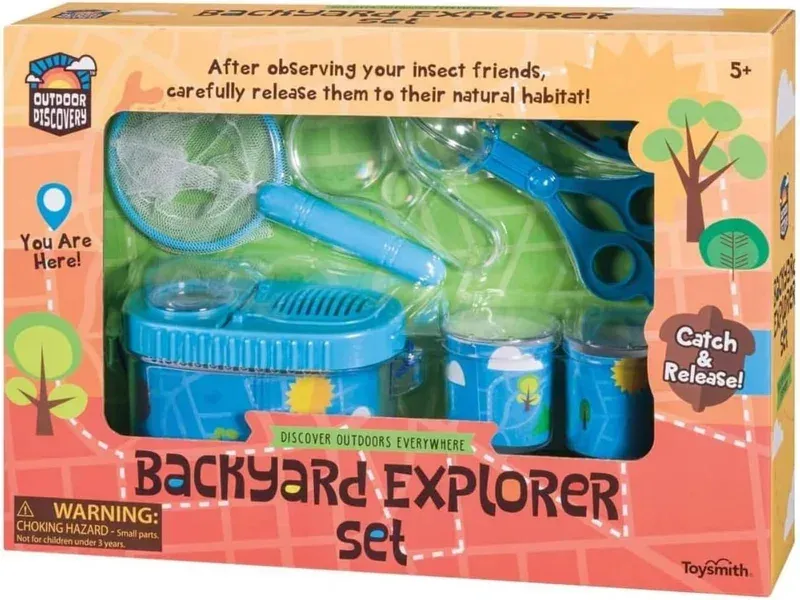
This is a researched comparison, not a field-tested ranking. The best nature explorer kit depends on whether the child wants to watch birds, inspect small subjects, or carry several tools. For ages 5–7, choose a kit whose pieces match one repeated activity; for ages 3–4, a notebook and one adult-managed tool may be enough.
For a broad park kit at age 5+, Toysmith Nature Explorer Set (6021) is the most complete match in this group. Toysmith’s manufacturer page lists seven tools, including a bug-viewing jar with air holes, magnifying glass, scoopers or tweezers, mesh net, and a critter case with air vents and a built-in magnifier. It uses no batteries.
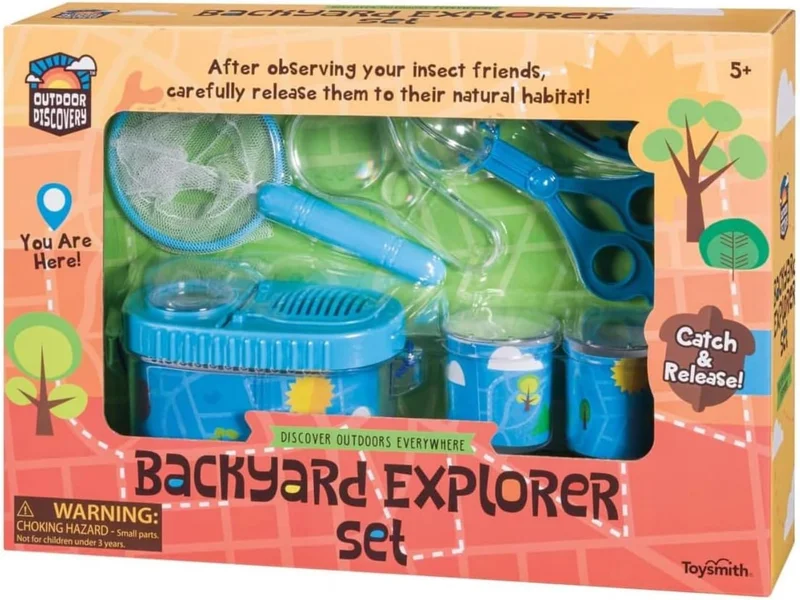
Toysmith Nature Explorer Set
Compare the kit formats
| Product | Best fit | Evidence-backed contents | Tradeoff |
|---|---|---|---|
| Toysmith Nature Explorer Set | Ages 5+ who want several kinds of close observation | Model 6021; seven tools, including viewing jars, magnifier, net, and handling tools; manufacturer lists ages 5+ | The larger tool count needs a carry plan and adult supervision |
| Toysmith Little Birder Set | Ages 5+ who keep stopping for birds | Model 6005; kid-sized binoculars, twenty-page pocket bird guide, bird ID cards, and bag according to Toysmith | It solves a birding job, not bug or leaf observation |
| HABA Terra Kids Insect Box | Ages 6+ who want one contained insect habitat | Carry handle, air holes in the lid, and a tight locking top; the listing gives an age range beginning at 6 | It is a narrower insect tool and is above the younger end of this audience |
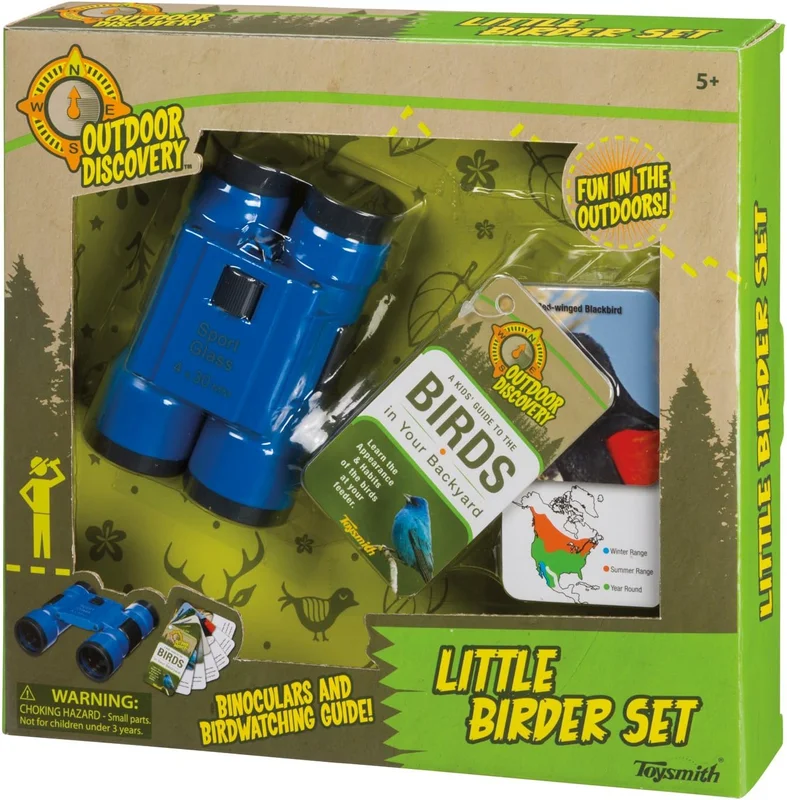
Toysmith Little Birder Set
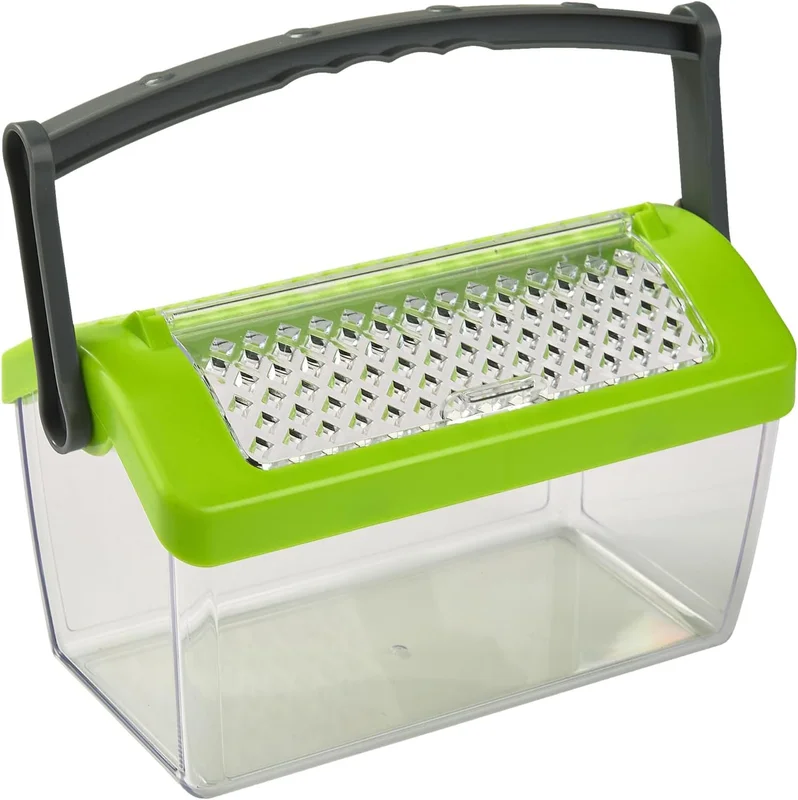
HABA Terra Kids Insect Box
The Toysmith set is the flexible choice for a child who changes questions from one visit to the next. The Little Birder Set is easier to justify when the child already notices birds and wants a guide beside the binoculars. HABA’s box is a focused choice for an older child who can follow a short observe-and-release routine.
Match the kit to the park
Count what the child can actually carry. A seven-tool set can become a sorting activity before the walk begins, but loose pieces can also slow a family down. Put one adult in charge of the container and release routine. Leave nets and tweezers home when a park requires look-only observation.
The Little Birder Set has a more obvious job: look toward a bird, compare a picture, and return the binoculars to the bag. Use bird watching with kids to decide whether a bird route will hold the child’s attention. The HABA box and Toysmith explorer set require a separate check of park rules because they invite close handling.
Decide what earns space
Buy the Toysmith Nature Explorer Set when at least two of its tool types will be used in the same month. Choose Little Birder when the bird guide will come out even on a walk without binoculars. Choose HABA when the child wants an insect habitat and is old enough for the listed 6+ guidance.
A DIY kit can use a pencil, notebook, and one household container for a no-purchase trial. The DIY versus store-bought nature kit guide compares that route with packaged tools.
Keep the observation low-impact
Do not use a kit to approach nests, touch wildlife, pick living plants, or enter restoration areas. A container is for a short adult-led look, not keeping an animal. Use the product instructions for cleaning and storage, then return every piece to the bag.
Product details were checked against current Amazon listings and manufacturer pages on 2026-09-12; availability, age labels, and specifications can change. The products above were not field-tested by this site.