Toy vs. Real Binoculars for Kids: Which Fits a Park Walk?
Compare toy and optical binoculars for kids by focus, eye placement, weight, frustration and whether borrowing is the smarter park choice.
This is a researched comparison, not a field-tested product ranking. “Toy” and “real” describe the amount of control and care a park walk requires. Choose a toy-style pair for pretend play and nearby scanning, a learning pair when a child wants a focus control, or an adult optical pair when the adult—not the child—will carry and manage it.
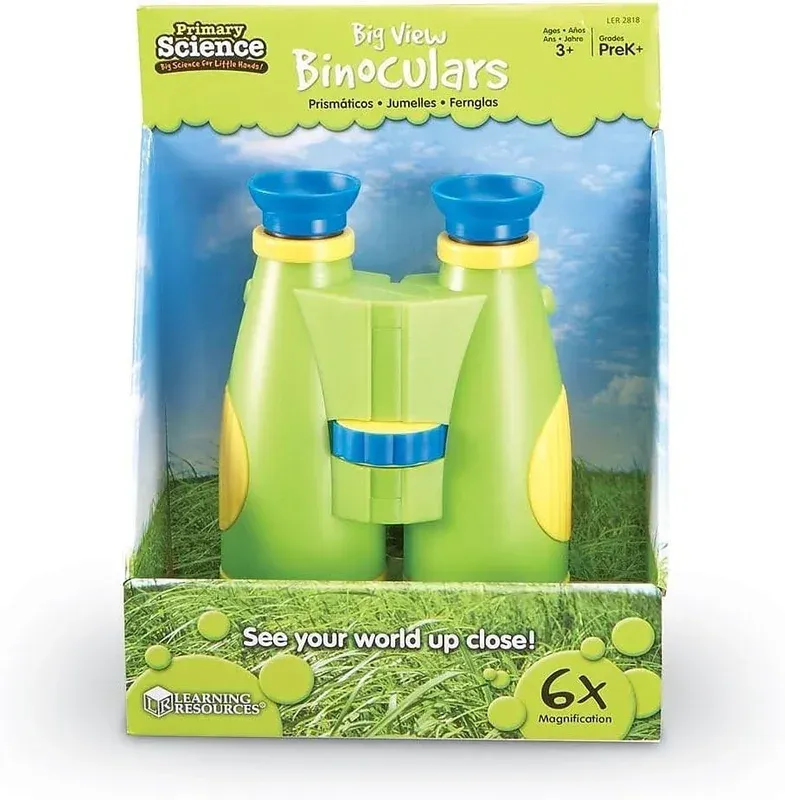
For ages 3–4, start with Educational Insights GeoSafari Kidnoculars. The maker lists ages 3+, focus-free 2x viewing, enlarged eyepieces, and a breakaway neck strap on the product page. For ages 3+ when the child is asking to adjust focus, Learning Resources Primary Science Big View Binoculars add a focus knob and soft rubber eyepieces; Learning Resources also lists a breakaway lanyard. For an adult who wants a true optical pair to share, Celestron Nature DX 8x32 is an adult-held choice.
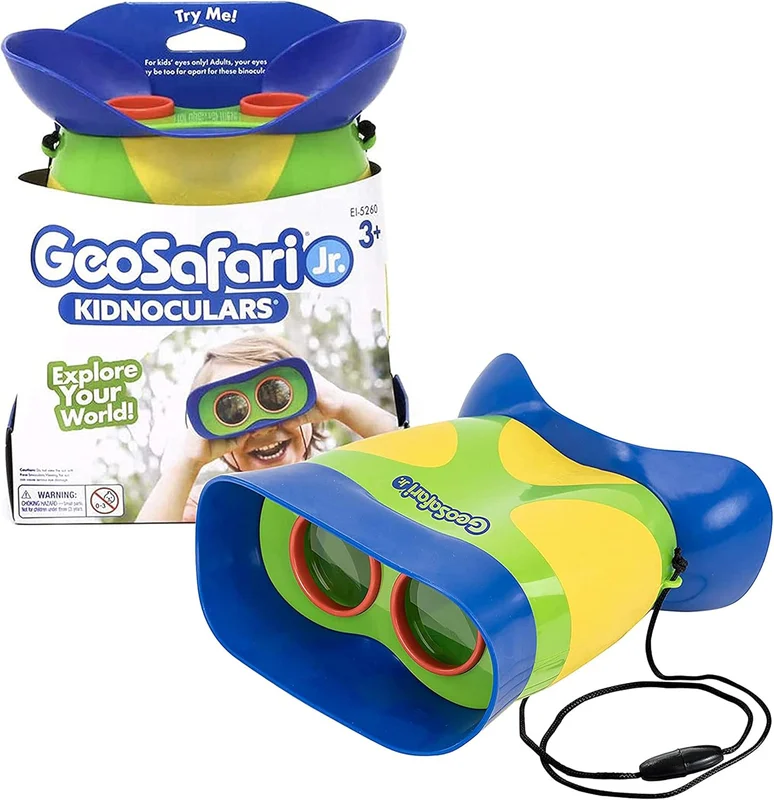
Educational Insights GeoSafari Kidnoculars
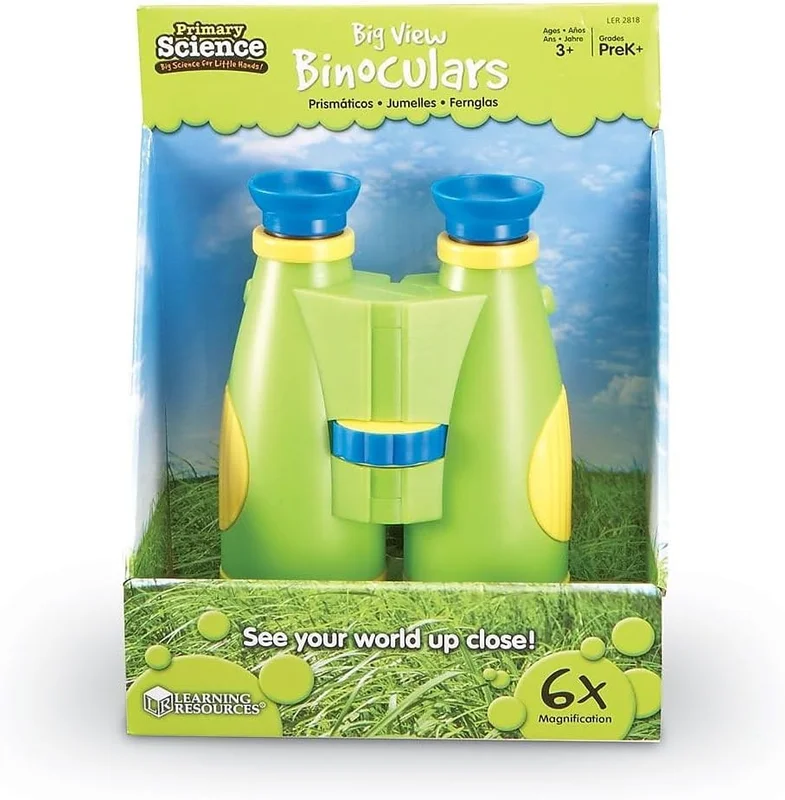
Learning Resources Primary Science Big View Binoculars
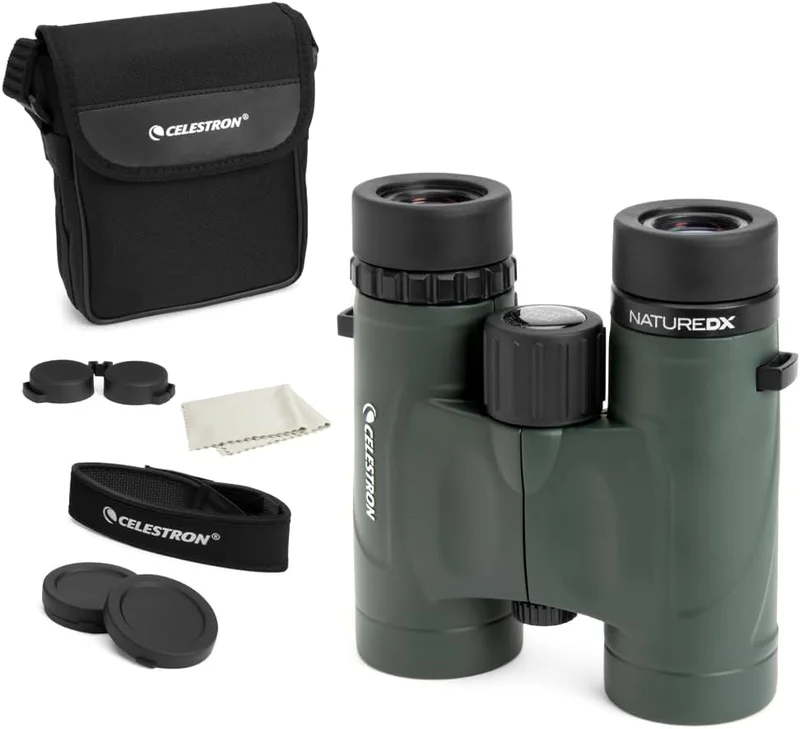
Celestron Nature DX 8x32
The decision in one table
| Question | Toy-style: GeoSafari Kidnoculars | Learning toy: Primary Science Big View | Optical: Celestron Nature DX 8x32 |
|---|---|---|---|
| Who is it for? | Maker lists ages 3+ | Maker lists ages 3+ | Adult-held shared viewing |
| What does the child control? | Eye placement only; focus-free 2x view | A focus knob plus eye placement | Focus and alignment handled with adult help |
| Best park job | Nearby tree, pretend “lookout,” short scan | Repeated tree or sign comparison | Adult-led bird or landscape viewing |
| Main friction | Not water resistant and limited reach | A knob can add frustration; marketing magnification is not a promise of easy viewing | 1.3-pound adult pair with more care and setup |
When the toy choice is the better choice
Choose Kidnoculars when the child wants a tool to carry, look through, and put away quickly. Focus-free eyepieces remove the most common control step, and the enlarged placement guides are designed to help small eyes find a view. That makes the pair useful for a short route where the goal is noticing, not precise identification.
A toy-style pair still needs an adult boundary. The child should use it while seated or standing still, never while running, climbing, or approaching an animal. If the child only wants to pretend, a pair that does not produce a dramatic close-up may still solve the real play problem.
When the learning toy is worth the extra control
Choose Big View when a child keeps asking to make a distant object clearer and can hold the pair steady long enough to turn the knob. The manufacturer lists a compact body, soft rubber eyepieces, focus knob, breakaway lanyard, and ages 3+. Use the child’s steadiness and the current product safety information as the final fit check.
Treat “real working” and magnification language as product description, not an independent optical test. A child who cannot find one view may get more from focus-free Kidnoculars or bare-eye observation.
When real optics belong with the adult
The Celestron Nature DX 8x32 product information lists 8x magnification, 32 mm objective lenses, and waterproof construction. Those features can suit an adult who wants a shared birding tool. They do not make the pair a child-sized toy. The adult should carry it, choose the viewing spot, set the controls, and hand it over only while the child is still and supervised.
Use bird watching with kids to decide whether the outing needs optics at all. A bird can be watched, heard, and described without a name.
Borrow and compare the job
Try one nearby landmark with a borrowed pair before buying. Ask: can the child find the object, keep it in view for a few seconds, explain what changed, and set the binoculars down safely? If the child wants to repeat the observation, choose the least complex product that solves it. If not, keep the outing gear-free.
The best binoculars guide covers fit, straps, weight, and carrying. Keep all binoculars pointed away from the sun and use a fixed adult-chosen boundary around wildlife, roads, water, and play equipment.
Research note and sources
Product details were checked against current Amazon listings and manufacturer pages on 2026-09-12; availability, age labels, and specifications can change. The products above were not field-tested by this site.