Best Binoculars for Kids: How to Choose for Park Walks
A researched guide to kids’ binoculars for park walks, comparing fit, focus, weight, strap design and when borrowing beats buying.
This is a researched buying guide, not a field-tested ranking. Choose by the job a child can do at the park: for ages 3–4, start with a focus-free toy pair; for a child who wants to turn a control, consider a compact learning pair; for serious distant viewing, let an adult carry an optical pair. Borrow first if the child has not asked for binoculars.
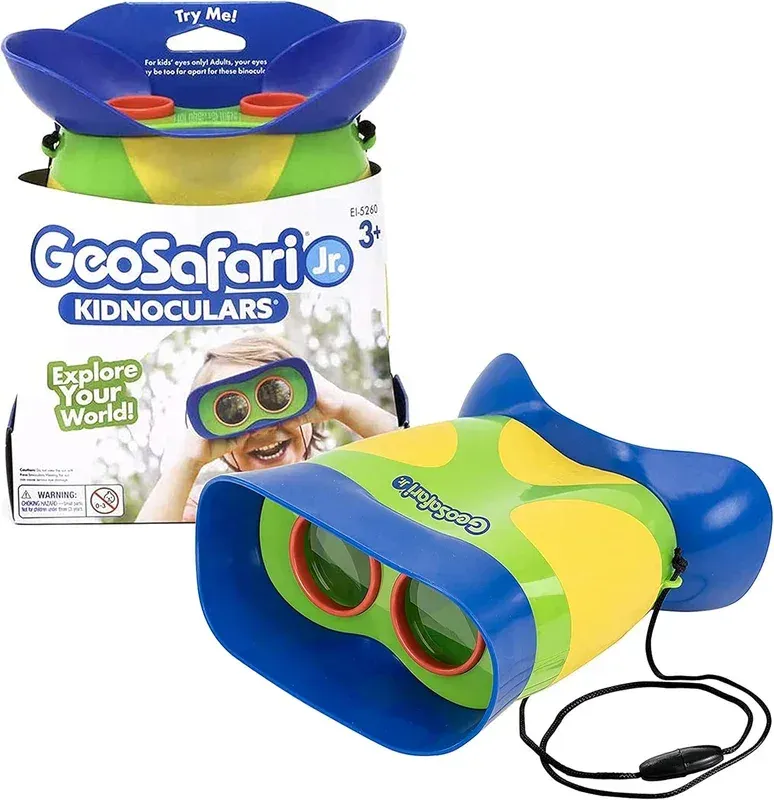
For a preschooler who needs simple eye placement, Educational Insights GeoSafari Kidnoculars are the clearest fit to investigate first. Educational Insights lists the model as ages 3+ with focus-free 2x viewing, oversized eyepieces, and a breakaway neck strap on its manufacturer page. For a child who wants a focus knob, Learning Resources Primary Science Big View Binoculars (LER2818) add that control, soft rubber eyepieces, a compact body, and a breakaway lanyard according to Learning Resources. Learning Resources lists this model for ages 3+; use the child’s ability to hold it as the final fit check.
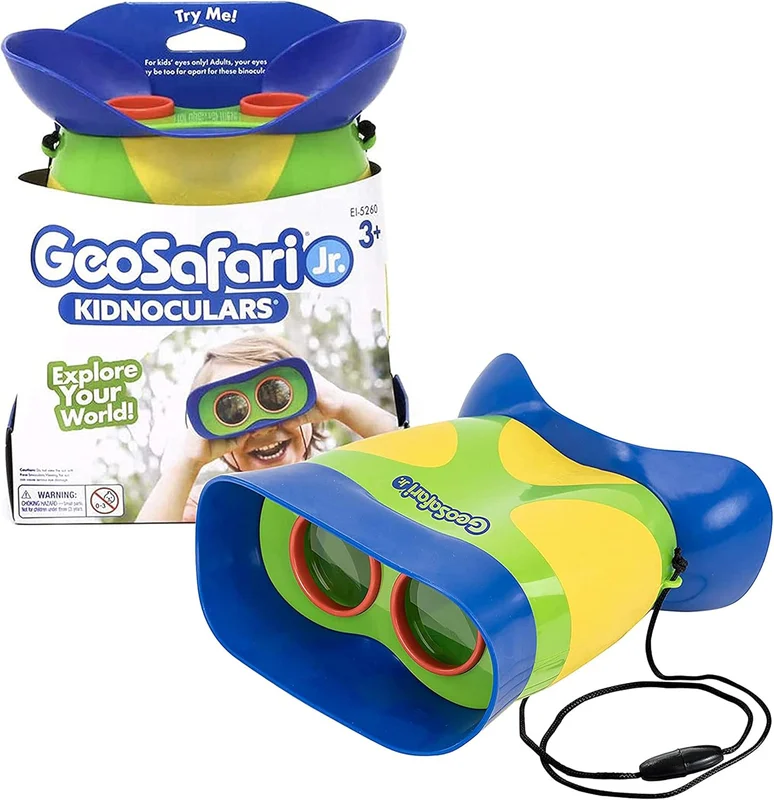
Educational Insights GeoSafari Kidnoculars
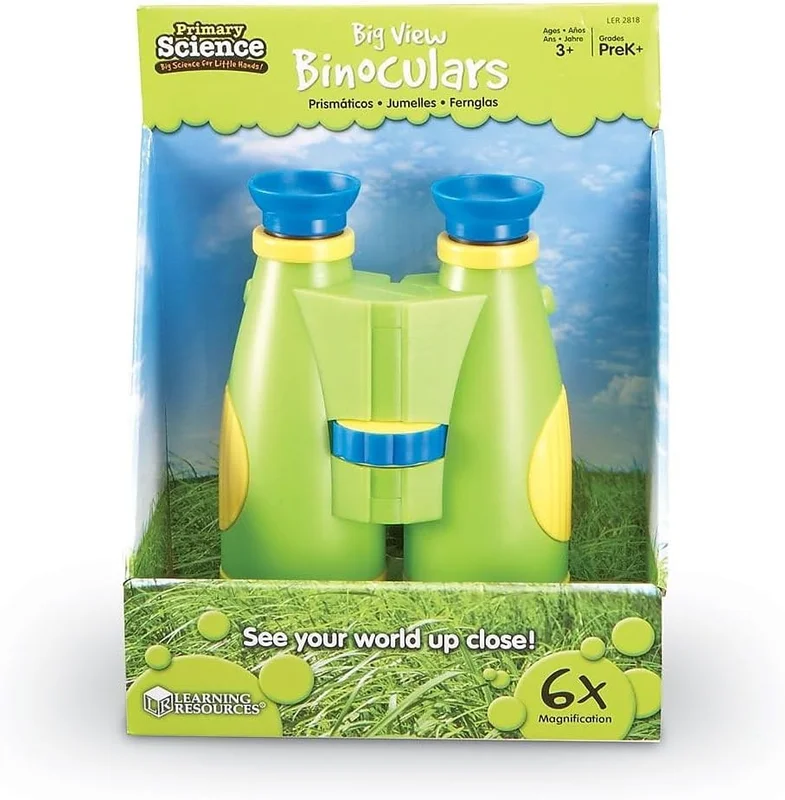
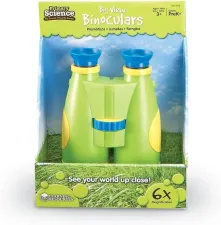
Learning Resources Primary Science Big View Binoculars
Quick product comparison
| Product | Choose it when | Evidence-backed details | Limit to plan around |
|---|---|---|---|
| GeoSafari Kidnoculars | Ages 3+ and the child wants easy, short looks | Focus-free 2x design, enlarged eyepieces, fixed focus, and breakaway strap; model 5260 | Keep it dry; it is a toy pair for nearby, simple viewing |
| Primary Science Big View Binoculars | A child wants to practice turning a focus knob | LER2818; soft rubber eyepieces, focus knob, compact 5.5-inch body, breakaway lanyard; manufacturer lists ages 3+ | A focus control does not ensure a child can find a steady view |
| Celestron Nature DX 8x32 | An adult wants a weather-ready optical pair to share | 8x magnification, 32 mm objectives, 7.4° field of view, waterproof body; model 71330-CGL | It is an adult-sized optical pair; the adult should carry and set it up for a child |
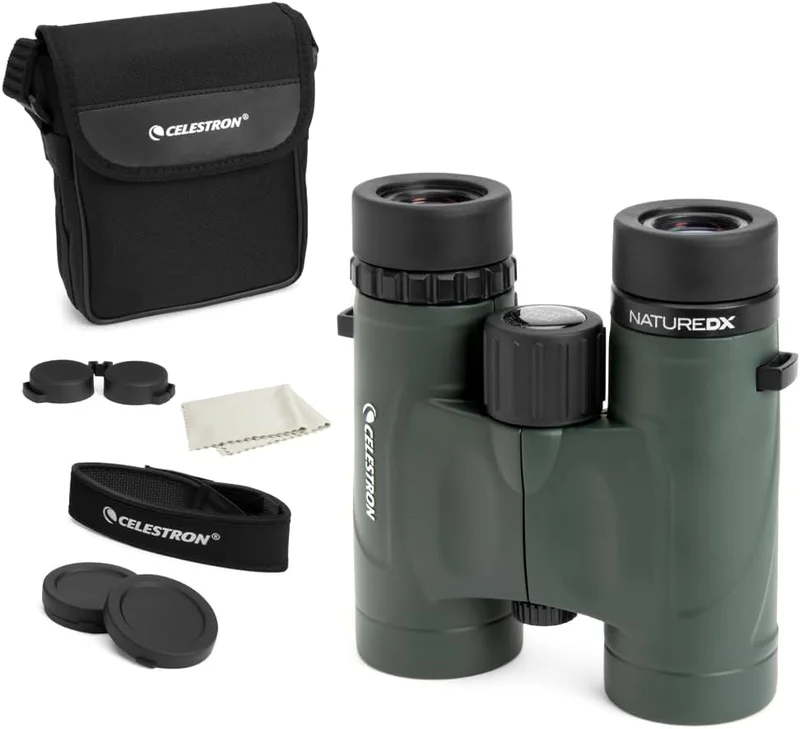
Celestron Nature DX 8x32
Compare fit before magnification
Eye placement is the first gate. A child should be able to bring both eyepieces to the eyes while seated, see one view, and lower the pair without dropping it. Kidnoculars remove the focus step, which can reduce frustration for a preschooler. Big View keeps the activity playful while adding a knob, so it suits a child who repeatedly asks how to make a distant tree clearer.
Optical binoculars involve more weight, alignment, and care. The Celestron Nature DX page describes an 8x32 optical pair for outdoor viewing, so treat it as an adult-held shared tool for this age group. Its waterproof claim describes the housing; it does not mean a child should carry it through water or leave it in wet grass.
Decide what the child wants to see
A simple pair supports pretend play, scanning a nearby tree, or looking at a large fixed landmark. A focus pair helps when the child wants to compare a treetop and a farther sign. An optical pair earns consideration when an adult is already interested in birds and can choose the route, carry the tool, and handle the controls.
Use the bird-watching-with-kids guide to build a look-and-listen routine before adding gear. The toy-versus-real binoculars guide separates simple play from adult-held optics.
Borrow before buying
A library, nature center, or friend can provide a useful trial without turning one difficult outing into a purchase decision. Let the child try one large, distant landmark while seated. Ask whether the child wants another look, can keep the image in view, and can put the binoculars down safely. If the child prefers pointing, listening, or drawing, use the bird identification games and skip the gear.
Never point binoculars at the sun. Keep the child beside the adult and away from wildlife, roads, water, and unstable edges. A strap is for carrying under supervision, not for wearing while climbing or running.
Research note and sources
Product details were checked against current Amazon listings and manufacturer pages on 2026-09-12; availability, age labels, and specifications can change. The products above were not field-tested by this site.