Nature Activities for Preschoolers: Simple Park Invitations
Try calm nature activities for preschoolers ages 3–5 using color, sound, shape and seasonal change without collecting or naming everything.
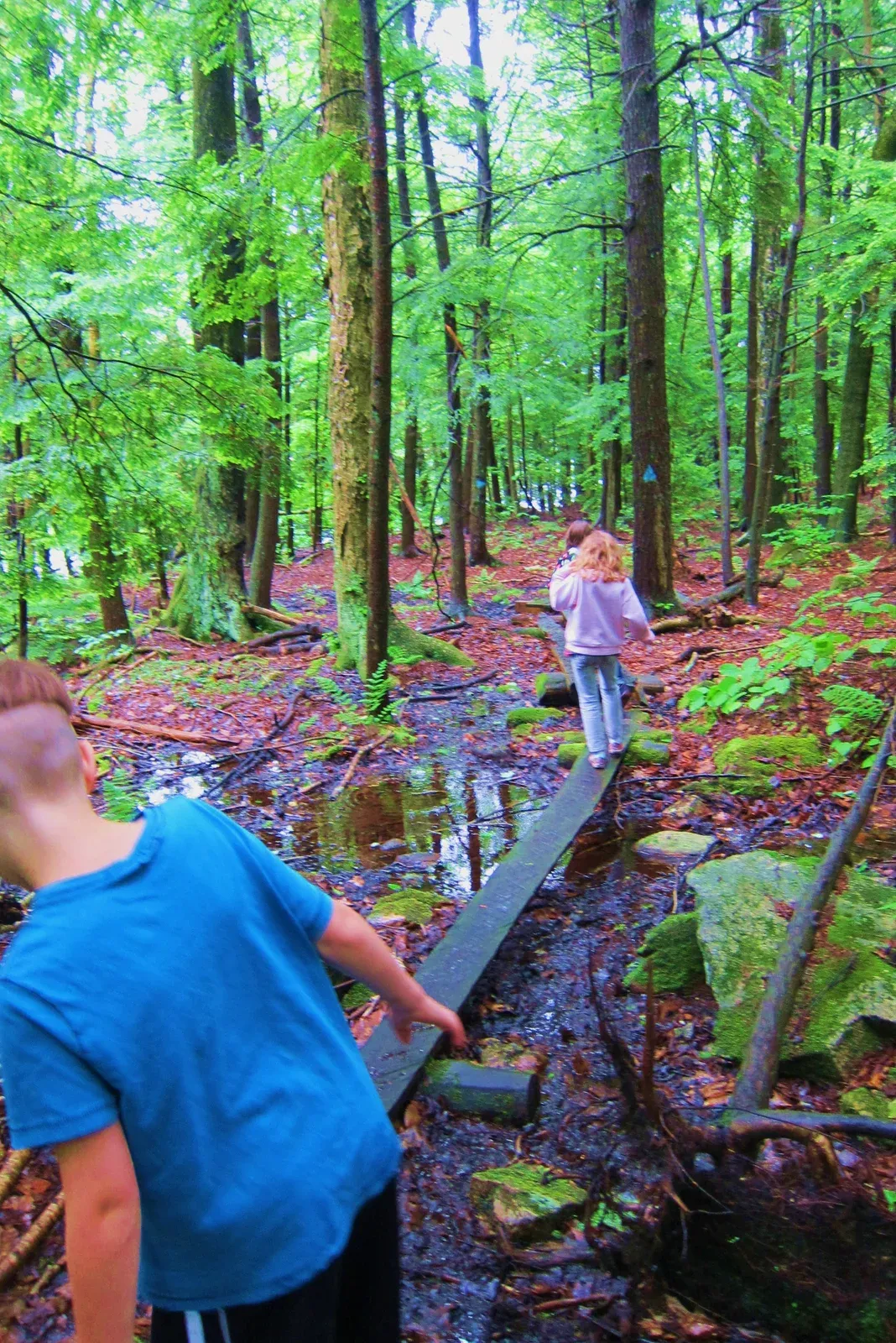
Preschool nature play can be as simple as sitting beside one tree and noticing what changes. Offer one invitation at a time: find a color, listen for a sound, compare two shapes, or draw one line. The child does not need to name a species or finish a long activity.
The National Park Service’s K–2 phenology lesson uses repeated observation and recording to help children notice seasonal change. For preschoolers, “recording” can mean a drawing, a dictated sentence, or a photo an adult takes.
Four easy invitations
Find two colors. Choose a small view, such as one tree or a patch of grass. Ask the child to point to two greens, two browns, or a color that does not match the rest. Keep the activity look-only.
Listen and point. Sit quietly for a short count. When the child hears something, point toward the sound without calling back. Describe it as near, far, high, low, repeated, or single.
Follow a shape. Trace the air above a branch, a leaf edge, a crack in pavement, or a cloud outline. Ask where the line bends. This makes a drawing prompt without asking the child to draw perfectly.
Notice one change. Compare sun and shade, dry and damp ground, an open flower and a closed bud, or a bare branch and a leafy one. Phrase the observation carefully: “This one looks open,” not “This plant always opens.”
Build a short sequence
For a 15-minute visit, choose one invitation. For 25 minutes, use color, sound, and shape. Leave time for a child-led pause. Preschoolers often need extra time to turn a noticing into words.
Use a predictable rhythm:
- Adult demonstrates one observation.
- Child finds a second example.
- Adult asks one follow-up question.
- Everyone moves or rests.
The nature scavenger hunt can provide a few picture-like clues, while nature drawing activities gives a quiet follow-up when a child wants to stay in one place.
Keep the work open-ended
Avoid correcting every guess. If a child calls a sound a bird and you cannot see the source, say, “It could be a bird. What else could make that sound?” If the child names a leaf incorrectly, focus on the visible clue: “You noticed a point at the end.”
A child who is not ready to talk can point, imitate a line with a finger, or hold the adult’s hand while looking. These are valid ways to participate. Do not promise that nature play creates a particular developmental outcome; simply describe the activity children can do.
Set gentle boundaries
Tell the child where feet can go before the activity starts. Stay on a path when the park asks visitors to do so. Do not pick flowers, taste berries, touch wildlife, or poke holes in bark. If a child wants to look more closely, move your body closer only where the park allows it, or use a tool with adult help.
The National Park Service Leave No Trace principles support leaving natural objects and giving wildlife space. Those rules make the activity easier to repeat.
Sources and related reading
- National Park Service, Phenology K–2
- National Park Service, Leave No Trace Seven Principles
- Try a nature walk built around four observation formats.
- For a shorter activity, use nature play in a small park space.
Explore more nature play.