Outdoor Christmas Scavenger Hunt for Kids: Free Picture List
Run an outdoor Christmas scavenger hunt on a park loop or neighborhood walk with a free picture list for ages 2 to 7, clue ideas, and look-only rules.
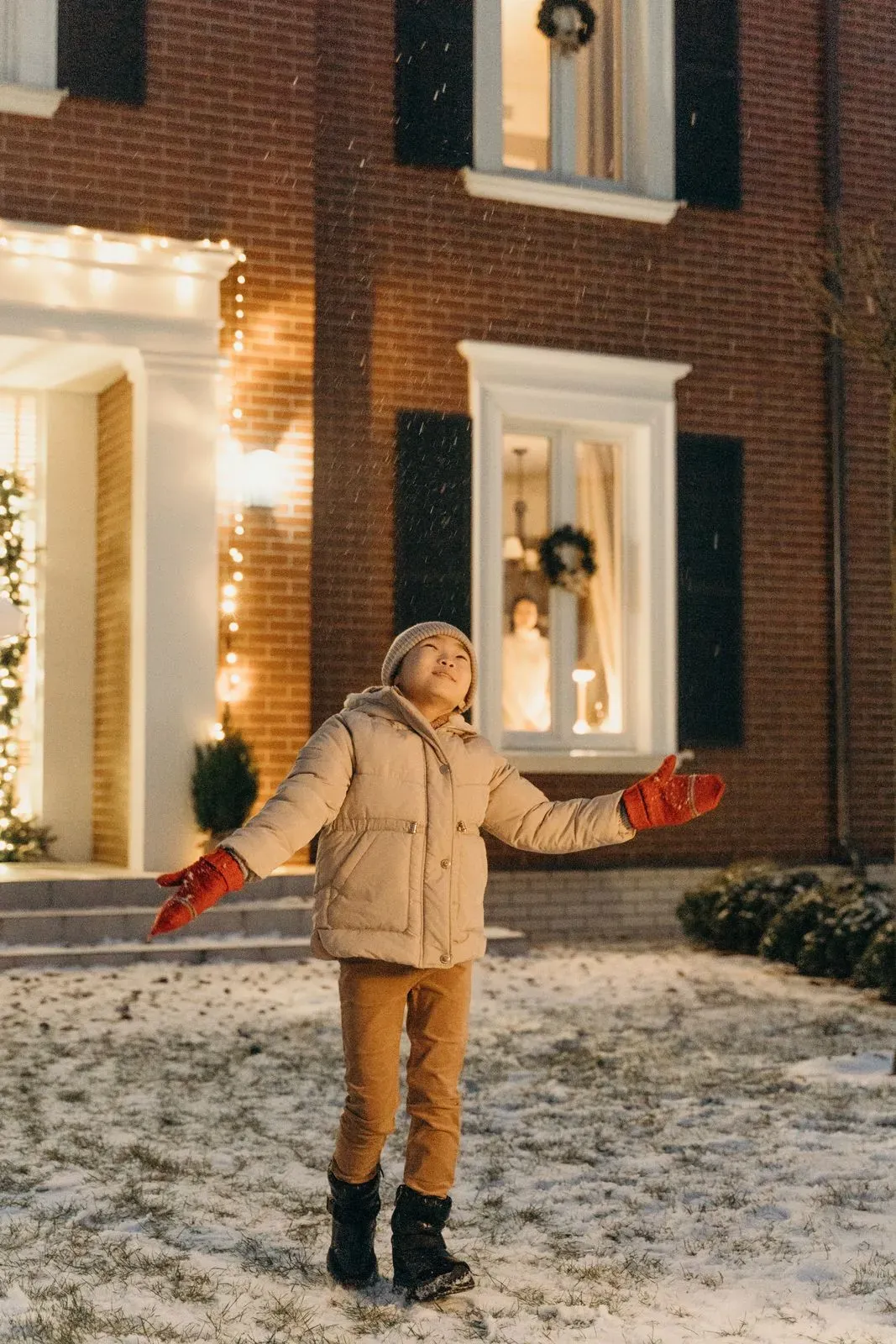
An outdoor Christmas scavenger hunt is a short walk with a picture list. Children look for twelve holiday things, such as a wreath, a string of lights, a star, a red bow, an evergreen tree, and red berries, and check each one off when they spot it. Pick a park loop or a few blocks with decorated houses, keep the walk to 20 to 40 minutes, and use one rule for everyone: find it, point to it, leave it where it is.
Print the free picture list on one letter-size page. Every square has a simple drawing and one word, so a two-year-old can play beside a seven-year-old.
The 12-item picture list
The printable uses these items. Most show up on a decorated street, and the nature items fill in when a park has fewer decorations.
- Evergreen tree. Any pine, spruce, or fir counts, decorated or not.
- Wreath. Doors, fences, lamp posts, and park gates often carry one.
- Lights. A string on a porch, a tree trunk, or a shop window.
- Red bow. Look on wreaths, mailboxes, railings, and garlands.
- Star. Tree toppers, window cutouts, and light displays.
- Candy cane. Path markers, window art, or a striped pattern.
- Snowman. A real one, an inflatable, or a picture in a window.
- Bell. Hanging decorations or a bell shape in a light display.
- Red berries. Holly and other shrubs keep berries into winter. Look only and never taste.
- Pinecone. On the ground under a conifer or tucked into a wreath.
- Gift box. Wrapped boxes under porch trees or in shop displays.
- Reindeer. Wire light figures, yard signs, or window decals.
Add a blank square at the bottom for “my favorite find.” The printable leaves room for a drawing, which gives fast finishers something to do while others catch up.
Plan a park or neighborhood route
Choose a loop that ends where it started, such as a lap around a park path, a walk past a decorated town square, or two or three residential blocks. A loop gives children a clear finish, and the car, stroller, or front door is never far away.
Walk the route in your head first. Look for sidewalks on both sides, crosswalks with signals, and a place to stop for water. Skip routes that make you walk in the road or cross a busy street several times. In a park, stay on paved or packed paths so wet grass and mud do not end the hunt early.
Plan for 20 minutes with toddlers and up to 40 minutes with older children. The cold-weather park outing prep guide covers layers, a dry backup set, and a quick exit, which matter more on a slow walk than on an active one.
Make it work for ages 2 to 7
The same list works for every age when each child gets a different job.
| Age | How they play | Adult role |
|---|---|---|
| 2–3 | Point at the picture, then point at the real thing | Carry the sheet, name what you see, stop after 6 finds |
| 4–5 | Check the box themselves and count how many of each item | Hold the pencil between finds, keep the group together |
| 6–7 | Read the word, solve clues, and draw the favorite find | Give one clue at a time, let them lead the route |
Toddlers do best with a half list. Fold the sheet so only the top six squares show, and celebrate when those are done. Preschoolers enjoy counting, so ask “how many wreaths can we find on this block?” before moving on. Older children like a challenge, such as finding the items in order or spotting three different stars.
For siblings, play as one team. The younger child points, the older child checks the box, and both choose the next direction at each corner. This keeps the hunt from turning into a race.
Clue cards for older kids
Searches for Christmas scavenger hunt clues usually lead to indoor gift hunts. Outdoors, a clue simply points children toward something to find. Read one aloud and let the child figure out which picture it matches.
- “I am round and green, and I hang on a door.” (wreath)
- “I am bright at night, and I come in a long string.” (lights)
- “I stay green all winter, and I have needles, not leaves.” (evergreen tree)
- “I have five points, and I sit at the very top.” (star)
- “I am red and small, and birds may eat me, but you must not.” (red berries)
- “I am brown and bumpy, and I fell from a tall tree.” (pinecone)
Six- and seven-year-olds can write one new clue for a parent to solve on the way home.
Try a Christmas lights version at dusk
A lights hunt works well in the early evening, because in December the sun sets before 5 p.m. in much of the US. Start just after sunset and finish before the usual bedtime routine.
- Keep the route short and well lit, with sidewalks the whole way.
- Put a light-colored or reflective layer on each child, and carry a small flashlight.
- Hold hands at every driveway, since cars back out without seeing small children.
- Count colors instead of items for toddlers. “Find red lights, then blue lights” is enough.
If the park closes at dusk, run the lights version on a residential street and save the park for the daytime list. The Christmas light scavenger hunt has an evening checklist, a bingo card, and clues by age for that walk.
Look-only rules for decorations and nature
Set the rules before you leave, and repeat them at the first find.
- Stay on the sidewalk or path. Admire yards from the edge.
- Do not touch decorations, inflatables, or cords.
- Leave berries, cones, and branches where they are. Never taste berries.
- Stop and wait at every driveway and crossing.
The National Park Service Leave No Trace principles ask visitors to leave natural objects in place and to respect other people outdoors. The same rule keeps a neighborhood hunt friendly. A child who wants to collect something can take a photo or draw it in the favorite-find box.
Keep the hunt warm and short
Children lose heat faster than adults, and the American Academy of Pediatrics winter guidance recommends thin layers, mittens, a hat, warm boots, and regular indoor breaks. It also advises against outdoor play when the temperature or wind chill is below -15°F. A slow walk generates less body heat than running games, so dress children a little warmer than you would for a playground visit.
End the hunt while children are still having fun. Count the checked boxes, ask for the favorite find, and head home. A hunt with eight finds that ends happily beats a full list that ends in tears.
More winter outings
- Try the winter scavenger hunt for the park on days without decorations or snow.
- Use nature bingo when a grid game suits your group better than a checklist.
- Look for seasonal clues with winter nature activities for kids.
- Pick a warm-up game from the park games collection for the start of the walk.
For more ideas by age and equipment, see our list of playground games for kids.
Sources
- American Academy of Pediatrics, Playing Outside in Winter: Tips to Keep Kids Warm & Safe
- National Park Service, Leave No Trace Seven Principles
Explore more park games.