Winter Scavenger Hunt for Kids at the Park (Snow or No Snow)
A winter scavenger hunt for ages 2 to 7 that works with or without snow, with a free picture list, no-snow swaps, movement challenges, and look-only park rules.
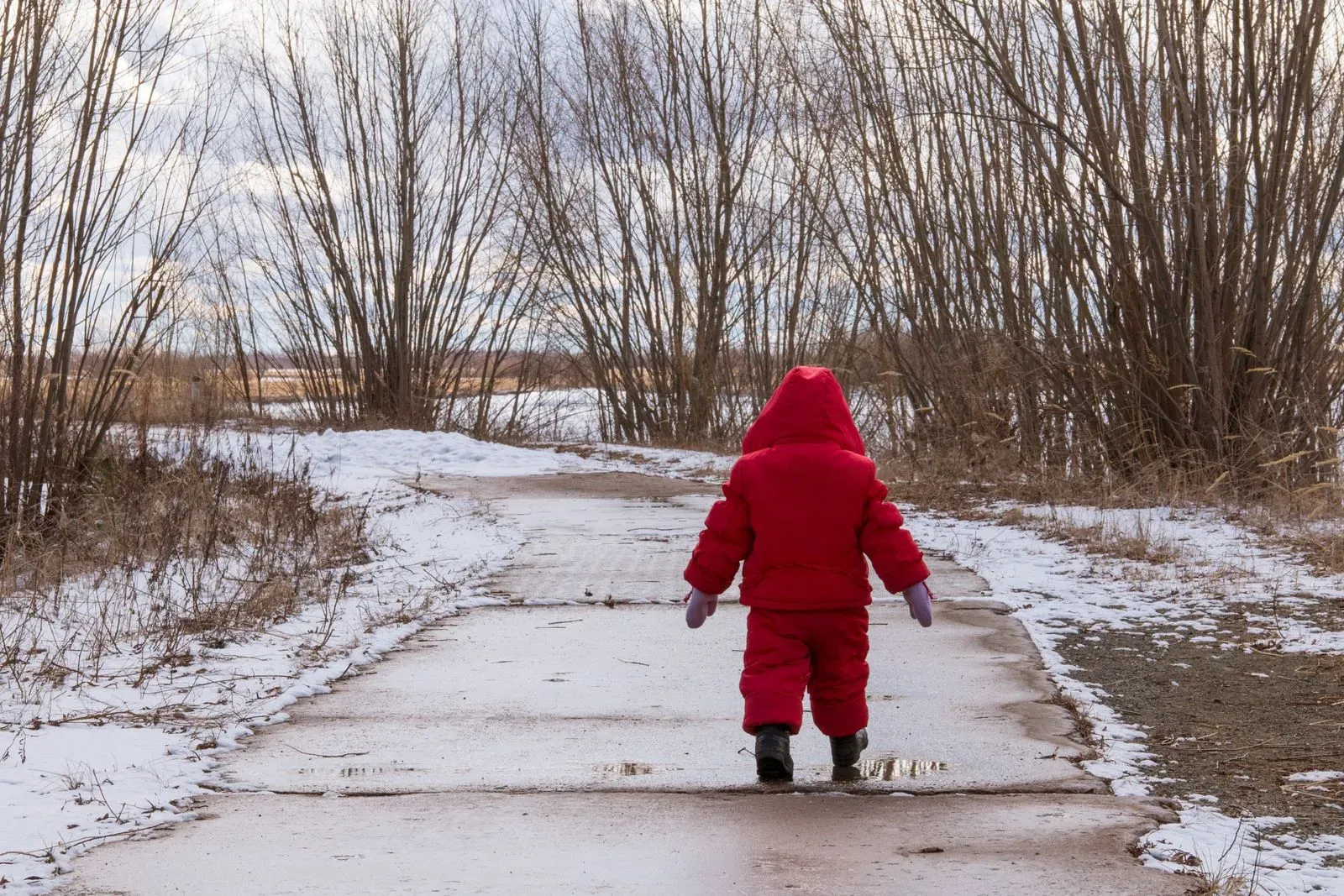
A winter scavenger hunt gives children a list of cold-season things to find on a park walk: a bare tree, an evergreen, a pinecone, a bird, tracks, a brown leaf, a puddle, a cloud, their own shadow, their foggy breath, moss, and snow or frost. Eleven of those twelve show up in a park with no snow at all, so the hunt works in Minnesota and in Georgia. Walk one loop, check off each find, and leave everything where it is.
Print the free winter picture list on one letter-size page. Each square has a drawing and one word, so pre-readers can play on their own.
The 12 things to find
- Bare tree. A tree that has dropped its leaves. Trace the branch shapes against the sky.
- Evergreen. A tree or shrub that stays green. Compare it with the bare tree next to it.
- Pinecone. Look under conifers. Leave it on the ground after you find it.
- Bird. Any bird counts, seen or heard. Winter branches make birds easier to spot.
- Tracks. Footprints in snow, mud, or frost, from people, dogs, birds, or squirrels.
- Brown leaf. A dry leaf on the ground or one still clinging to a branch.
- Puddle. Look from the edge. A frozen puddle is look-only and stand-off.
- Cloud. Name its shape or color.
- My shadow. Winter sun sits lower in the sky, so shadows stretch longer than in summer.
- Foggy breath. Breathe out on a cold morning and watch the cloud.
- Moss. Green patches on rocks, roots, or the shady side of a trunk.
- Snow or frost. The only square that needs freezing weather. Leave it empty on a mild day.
These items reward looking rather than knowing names. A three-year-old does not need to tell a pine from a spruce to find “a tree that stays green.”
Snow day or no snow, swap the clue
Some families search for a winter hunt and then wake up to bare, wet grass. Others get a foot of snow that buries half the list. Keep a swap ready for each case.
| If the clue is | With snow, look for | Without snow, look for |
|---|---|---|
| Tracks | Prints in fresh snow | Muddy boot prints or wet paw prints on a path |
| Brown leaf | A leaf resting on top of the snow | Leaf piles along a fence line |
| Puddle | A melt line where snow meets pavement | A rain puddle after a wet night |
| Snow or frost | Snowflakes on a dark mitten | Frost on a bench in early morning, or skip it |
| Pinecone | A cone sitting on the snow surface | Cones under the tree on bare ground |
In mild climates, winter often means rain, wind, and shorter days rather than snow. A hunt on a gray, damp morning still counts as a winter hunt. The rainy-day nature observation guide has ideas for wet days.
Add movement between finds
A standing hunt gets cold quickly. Add a movement challenge each time a child checks a box, so bodies stay warm between finds.
- Leap like a hare to the next tree.
- Waddle like a penguin for ten steps.
- Stomp like a bear until you see a bird.
- Tiptoe like a fox past the puddle.
- Flap like a goose back to the path.
Use the animal walks guide for more movement ideas. Keep the moves on flat, dry ground. Skip running on icy paths or packed snow.
Run the hunt in three rounds
Split the walk into short rounds so toddlers stay with it and older children do not finish in five minutes.
- Look round. Stand still for one minute. Find anything on the list you can see from where you stand.
- Walk round. Walk to a landmark, such as a bench, a big tree, or a gate. Find two more items on the way.
- Bonus round. Older children pick one item and find three different versions, such as three kinds of tracks or three shapes of cloud.
For ages two and three, stop after the look round and one short walk. Ages four and five usually finish a walk round of 15 to 20 minutes. Six- and seven-year-olds can add the bonus round and draw the coldest-looking thing they saw in the box at the bottom of the printable.
Keep it look-only and off the ice
Set two rules before the first find. Everything stays where it is, and frozen water is look-only from the bank. Do not step onto frozen ponds, creek edges, or icy puddles, and stay away from steep snowbanks near roads, where plowed snow can hide ice and traffic.
The National Park Service Leave No Trace principles ask visitors to leave natural objects in place and to watch wildlife from a distance. Winter food is scarce for birds and squirrels, so do not feed them or follow their tracks toward them.
Dress for a slow walk
A scavenger hunt has lots of standing still, which cools children faster than a game of tag. The American Academy of Pediatrics winter guidance recommends several thin layers, insulated boots, mittens, and a hat, changing out of wet clothes right away, and regular breaks indoors. It advises against outdoor play when the temperature or wind chill is below -15°F.
Bring a dry pair of mittens in a bag. Wet mittens end more winter hunts than the weather does. The cold-weather park outing prep guide has a full layering and exit plan.
How this hunt differs from our other hunts
- The nature scavenger hunt uses open observation prompts that work in any season.
- The fall nature scavenger hunt focuses on leaves, seeds, and autumn color.
- Nature bingo turns the same looking into a grid game.
- For slower, quieter winter observations, use winter nature activities for kids or snow nature activities.
When the decorations go up in December, switch to the outdoor Christmas scavenger hunt for a holiday version of the same walk.
Sources
- American Academy of Pediatrics, Playing Outside in Winter: Tips to Keep Kids Warm & Safe
- National Park Service, Leave No Trace Seven Principles
Add a longer to-do list with the winter bucket list for kids. Bare trees make good hunt clues, and the winter bark walk shows how to describe bark by texture and color.
Explore more nature play.