Nature Gifts for Kids Who Love the Outdoors (Ages 3–7)
Nature gift ideas for kids ages 3–7, from a butterfly kit and a window bird feeder to kid binoculars, a bug house and first field books, sorted by age.
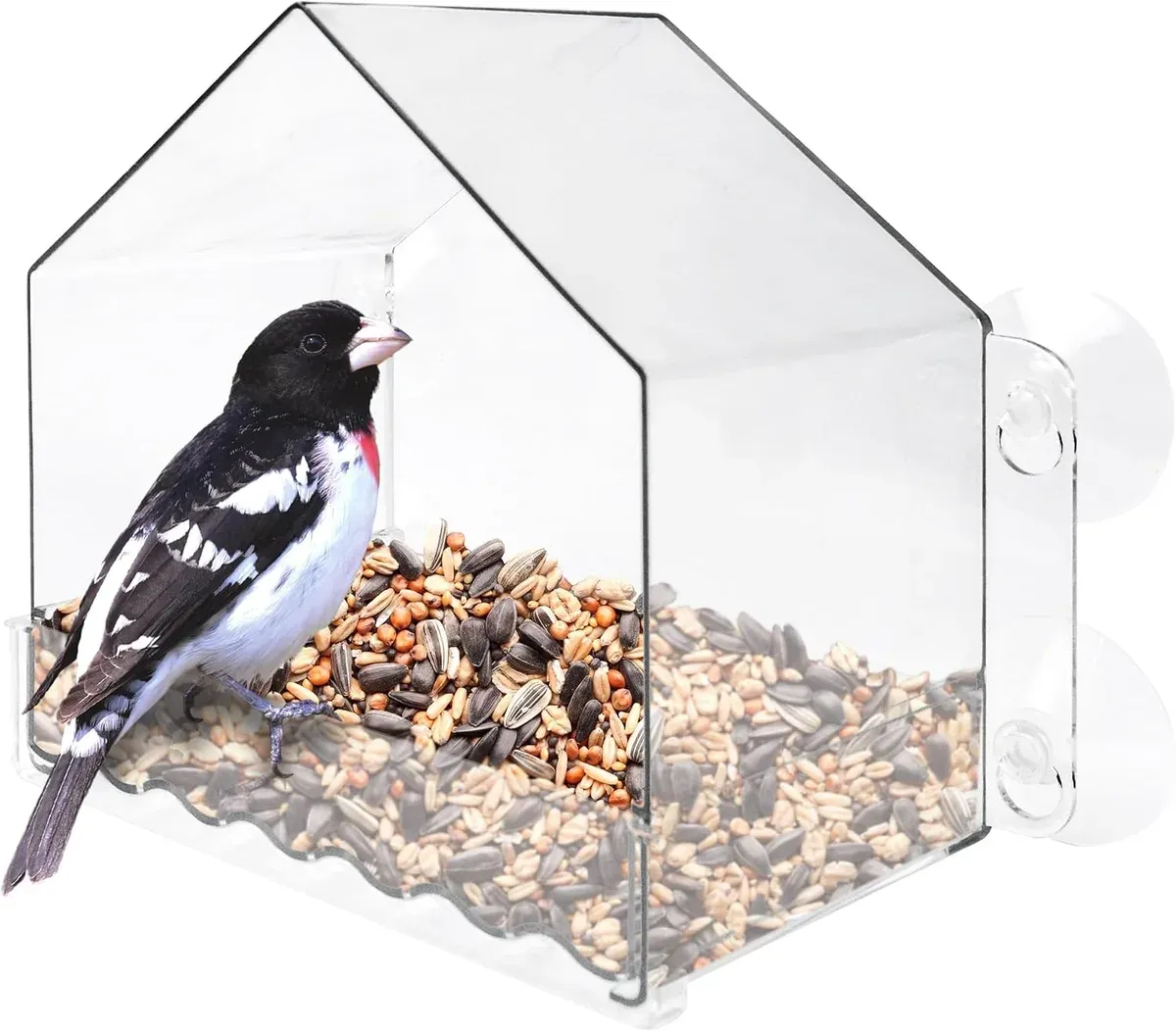
A good nature gift gives a child something to watch, find, or care for after the wrapping comes off. For a child who loves bugs, a butterfly kit with a prepaid caterpillar code turns a winter gift into a spring project. For a bird watcher, a window bird feeder brings birds close enough to watch from the couch. For a 3- or 4-year-old, focus-free Kidnoculars or a bug house are simple first tools. For a spring basket, see the best Easter basket stuffers for outdoor play guide. For a child who wants to catch and release, see the best butterfly nets for kids.
This is a researched gift guide. We compared manufacturer pages and Amazon listings checked on 2026-11-13, and we did not field-test these products. Age labels and contents can change, so check the exact listing before you order.
Nature gifts by age
| Age | Gift | Why it fits |
|---|---|---|
| 3–4 | GeoSafari Kidnoculars | Ages 3+; focus-free, so a small child just looks |
| 3–4 | B. toys Bug Bungalow | Listed for 36 months to 8 years; a short look, then release |
| Any age, adult-installed | Nature’s Way WIN-3 window feeder | Birds come to the window; nothing for the child to hold |
| 4–5 | Insect Lore Butterfly Garden | Ages 4+; the caterpillar code waits until spring |
| 4–7 | Backpack Explorer: Discovering Trees | Reading age 4+; stickers, games, and a magnifying glass |
| 6–7 | National Geographic Kids Bird Guide | Reading age 6–9; a real reference for a growing birder |
Best gift for a bug lover
The Insect Lore Butterfly Garden Early Learning Edition (model 1035) comes with a prepaid code instead of live caterpillars. Insect Lore’s product page lists ages 4+, a dome-shaped habitat with a clear viewing panel and a pull-out learning panel, a flower-shaped feeder, a feeding dropper, and an 11-page journal. The family redeems the code for a cup of 5 baby caterpillars when they are ready.
That delay makes the kit a good winter gift. Insect Lore advises raising butterflies when daytime temperatures are between 50 and 90 degrees Fahrenheit. It also says it cannot ship live insects to Mexico, Canada, Hawaii, Puerto Rico, or APO, FPO, and DPO addresses. Check the recipient’s address before you buy. The Amazon listing says the kit ships to the mainland United States only.
The painted lady butterflies are released at the end of the project. Plan the release for a mild day and a spot with flowers. The insect observation ideas help a child keep watching after the butterflies leave.
Best for bug lovers
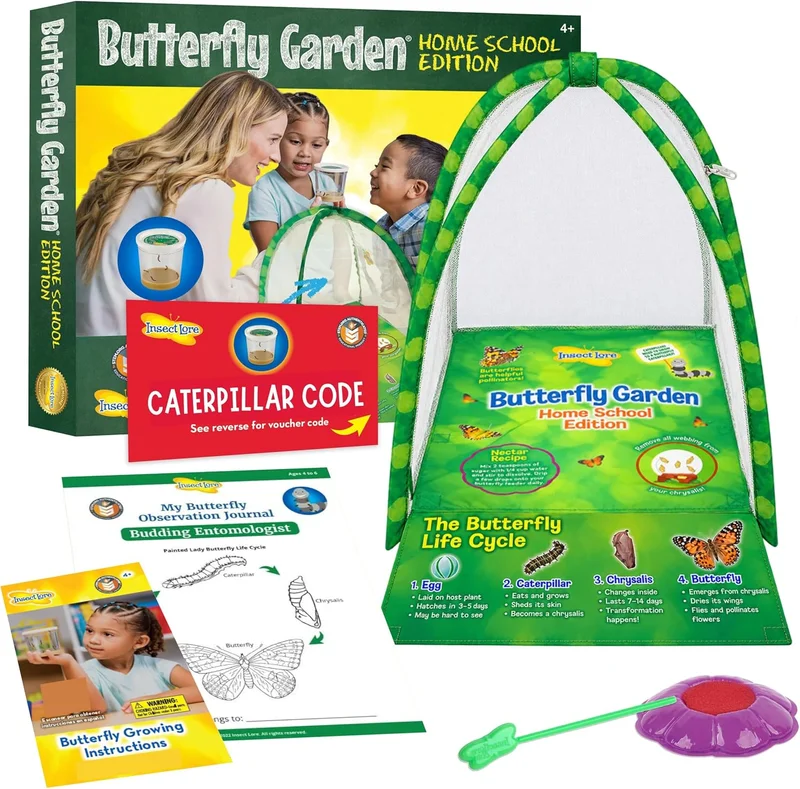
Insect Lore Butterfly Garden Early Learning Edition
Best for: A winter gift that becomes a spring project
- Listed age
- 4+
- Caterpillars
- Prepaid code for 5
- Best season
- Daytime 50–90°F
Trade-off: Live insects ship only to some U.S. addresses; check before gifting.
Check price on AmazonBest gift for a bird watcher
The Nature’s Way WIN-3 Clear View Window Feeder sticks to a window with four suction cups. Nature’s Way’s WIN-3 page lists a 2-cup capacity, a removable seed tray, and a size of 6.75 by 9.25 by 5 inches. The maker suggests sunflower seed, safflower, nuts, mixed seed, or mealworms. It lists cardinals, chickadees, nuthatches, juncos, finches, and wrens among the birds it can attract.
A window feeder suits a child who is too young to hold binoculars still. The birds come close, and the child watches from inside. An adult should mount and refill the feeder. Birds can still hit a window that has a feeder on it. The Cornell Lab of Ornithology recommends marking the outside of the glass, with decals or other markings spaced about 2 inches apart.
Pair the feeder with the bird watching with kids routine so the child learns to watch quietly and name what they see.
Best for bird watchers
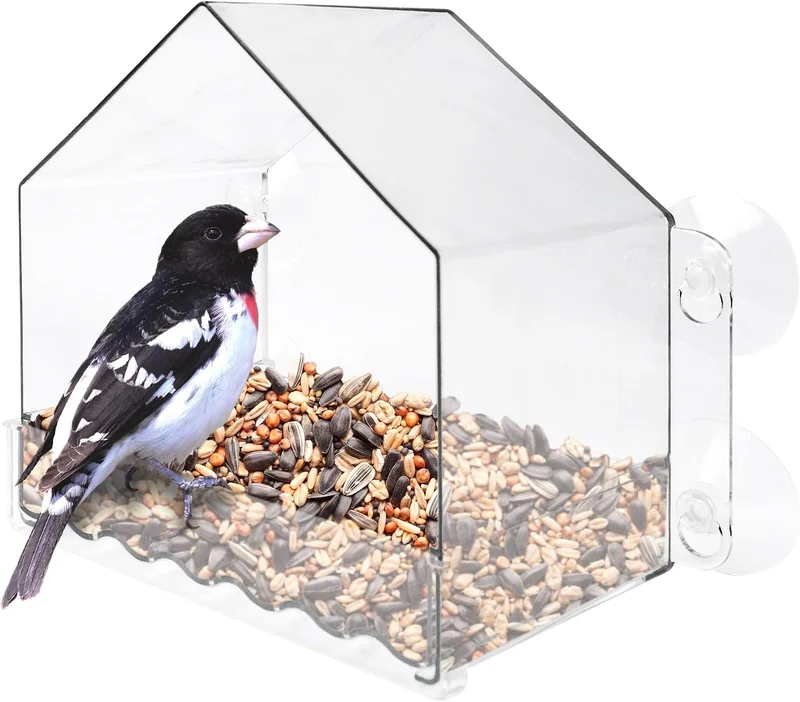
Nature's Way WIN-3 Clear View Window Bird Feeder
Best for: Watching birds up close from inside the house
- Capacity
- 2 cups
- Mount
- 4 suction cups
- Tray
- Removable for cleaning
Trade-off: An adult mounts it, refills it, and treats the glass so birds see it.
Check price on AmazonBest first nature gifts for ages 3–4
Educational Insights GeoSafari Kidnoculars are toy binoculars with no focus knob. Educational Insights lists ages 3+, 2x viewing, oversized eyepieces, and a breakaway neck strap on its Kidnoculars page. A small child can raise them and look without adjusting anything. The binoculars guide compares them with focus models for older kids.
Best for ages 3–4
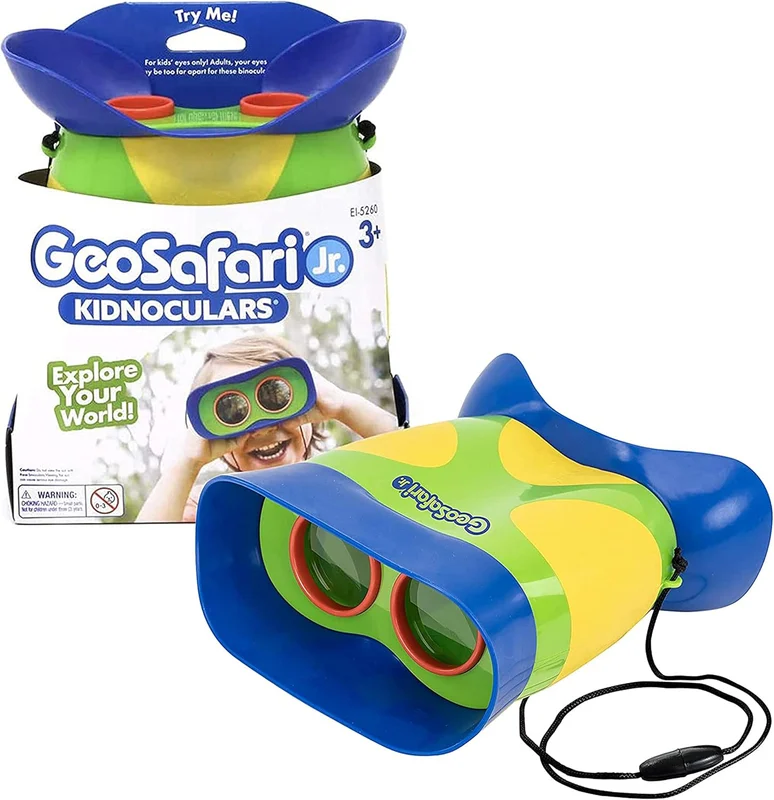
Educational Insights GeoSafari Kidnoculars
Best for: A first look-far-away tool for small hands
- Listed age
- 3+
- Magnification
- 2x, focus-free
Trade-off: A toy pair for nearby viewing, not a real optical binocular.
Check price on AmazonThe B. toys Bug Bungalow (BX1524Z) includes a mesh case, a magnifying container, a magnifier, and tweezers. The listing gives a manufacturer age range of 36 months to 8 years. Use it for a short look, then let the insect go where it was found. The bug catcher kit guide compares it with kits for older children.
Best bug gift for ages 3–4
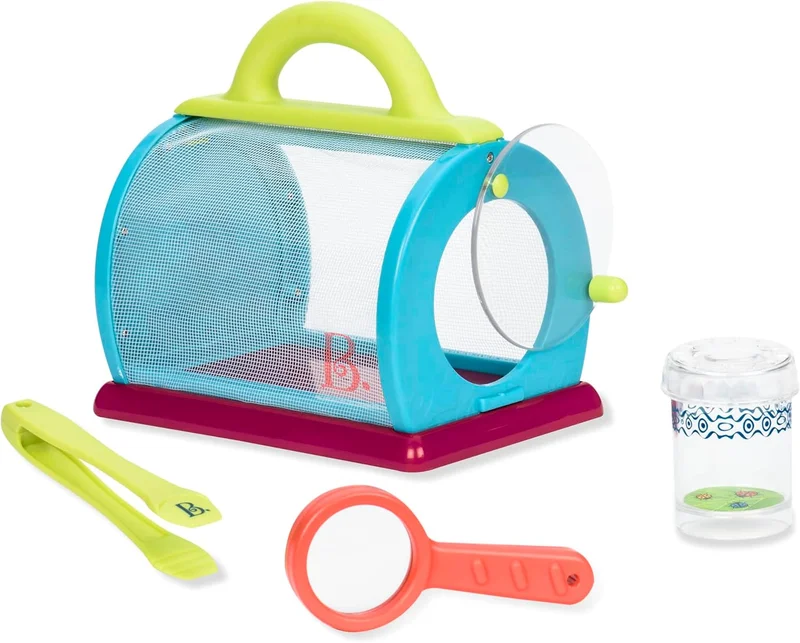
B. toys Bug Bungalow
Best for: Short, gentle looks at insects in the yard or park
- Listed age
- 36 months–8 years
- Pieces
- Case, container, magnifier, tweezers
Trade-off: An adult handles the tweezers and the release.
Check price on AmazonBest book gifts for ages 4–7
Backpack Explorer: Discovering Trees is listed with a reading age of 4 and up. The listing describes 12 interactive tree field guides, 50 stickers, six outdoor games, three sensory scavenger hunts, a real magnifying glass, and a pull-out journal. Hachette lists the title on its Storey Publishing page. It makes a good gift for a child who wants something to do on every walk.
Best activity book, ages 4–7
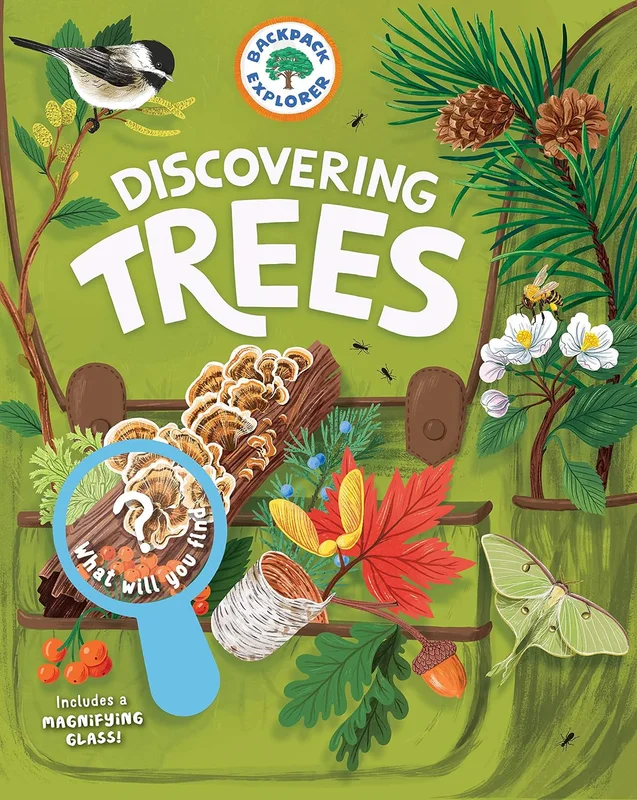
Backpack Explorer: Discovering Trees
Best for: A child who wants a game or sticker on every walk
- Reading age
- 4+
- Extras
- Magnifying glass, stickers, journal
Trade-off: Younger readers need an adult to read the prompts aloud.
Check price on AmazonThe National Geographic Kids Bird Guide of North America, Second Edition lists a reading age of 6–9. The listing describes 50 full profiles and 100 mini-profiles, for 150 species in all, with range maps and activities. The bird field guide comparison sets it beside other kids’ guides. Give it with the window feeder to a 6- or 7-year-old who already asks for bird names.
Best bird book, ages 6–7
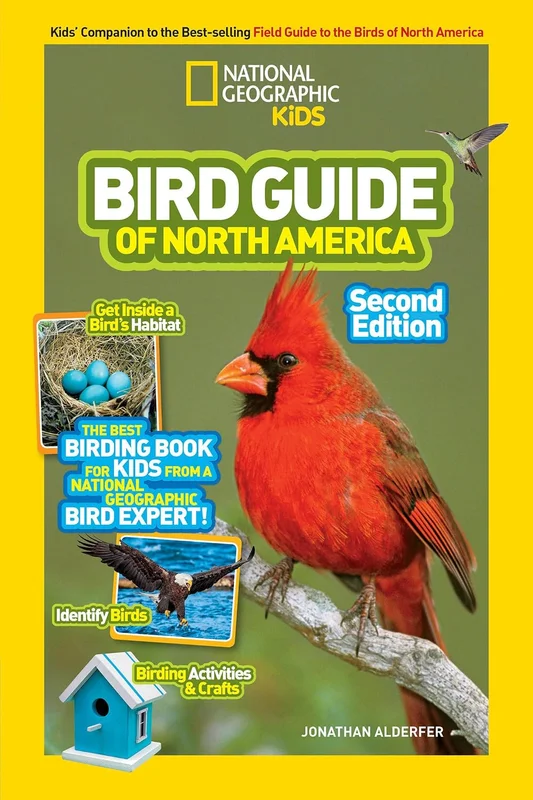
National Geographic Kids Bird Guide of North America
Best for: A child who asks for the name of every bird
- Reading age
- 6–9
- Coverage
- 150 North American species
Trade-off: A 3- or 4-year-old will need an adult to narrow the choices.
Check price on AmazonHow to pick a nature gift
Choose the gift by what the child already does outside. A child who flips rocks wants a bug house. A child who points at birds wants binoculars or a feeder. A child who asks “what tree is that?” wants a book with pictures and games.
Then check three things:
- The maker’s age label, which reflects small parts and how much the child must control.
- What the gift needs to work, such as seed, a window, warm weather, or an adult reader.
- Whether the family can use it this season or should plan it for spring.
Live-animal gifts need an extra check. Read the shipping rules and the temperature guidance, and plan where the animals will be released. The Leave No Trace principles ask visitors to watch wildlife from a distance and leave natural objects where they are.
How this guide differs from our kit guides
This page picks gifts by age and by the kind of nature a child likes. To compare full explorer kits, see the nature explorer kit guide. To build a set of everyday tools, see the nature observation tools guide. For a younger child who wants to ride or run rather than observe, the outdoor toys for 3-year-olds guide lists active gifts.
Sources
- Insect Lore, Butterfly Garden Early Learning Edition with Prepaid Code
- Nature’s Way Bird Products, Clear View Window Feeder (WIN-3)
- Cornell Lab of Ornithology, Why Birds Hit Windows
- Educational Insights, GeoSafari Jr. Kidnoculars
- Hachette Book Group, Backpack Explorer: Discovering Trees
- National Park Service, Leave No Trace Seven Principles
Explore more nature play.